
No. 01 (662) January 2026
Field Training in Water Management in the Context of Climate Change
In December 2025, a series of field training sessions were conducted in Namangan, Andijan, and Fergana provinces as part of the Ferghana Valley Water Resources Management Project, Phase 2. Avazbek Risbekov, leading expert of SIC ICWC, delivered a presentation “Water Resources Management in the Context of Climate Change” during the sessions.
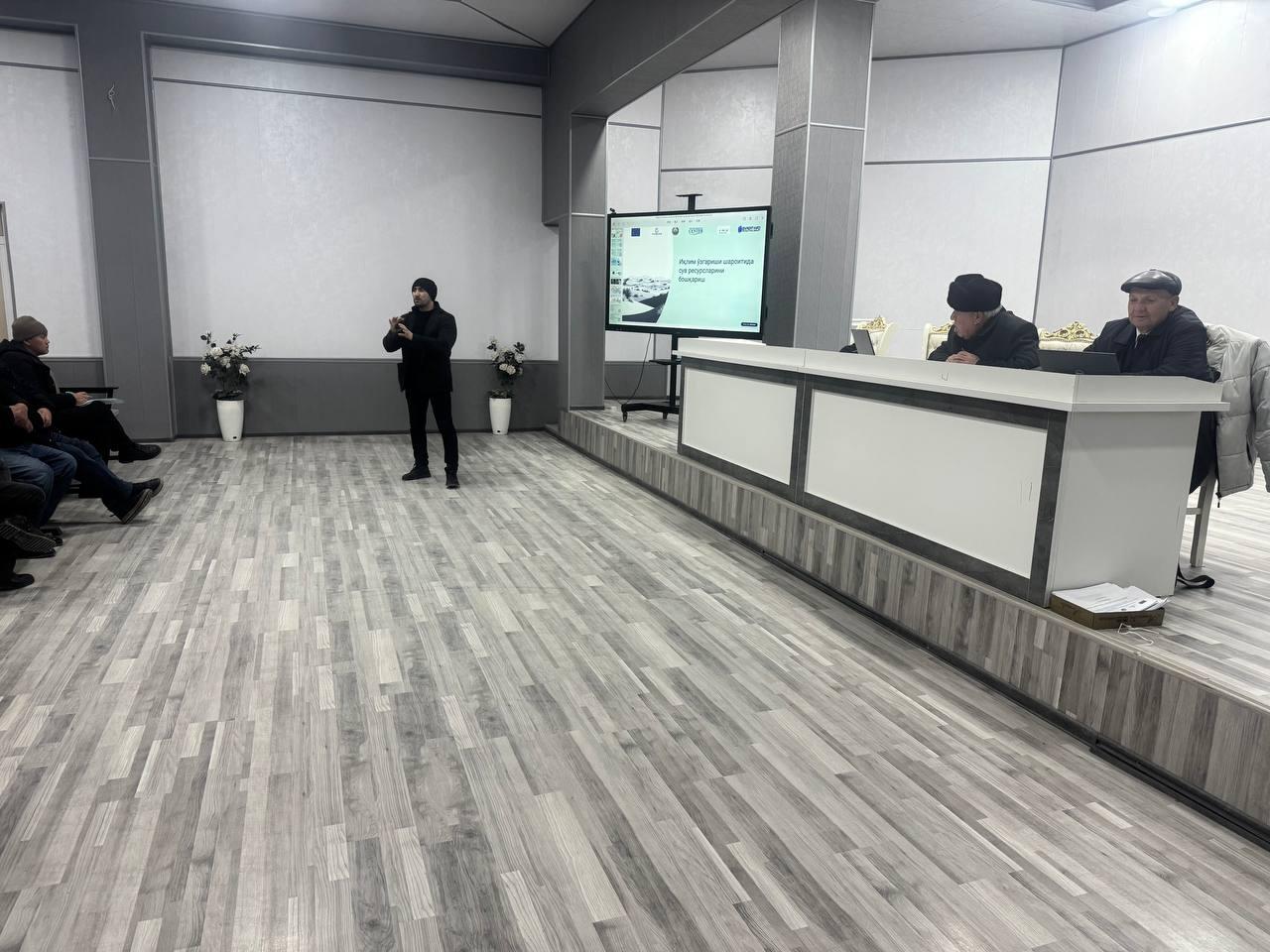
The presentation addressed key climatic factors affecting water availability in the region, including changes in temperature and precipitation patterns, increased evaporation, and the reduction of glaciers. Particular attention was paid to the impact of these factors on irrigation water supply and the sustainability of agricultural production.
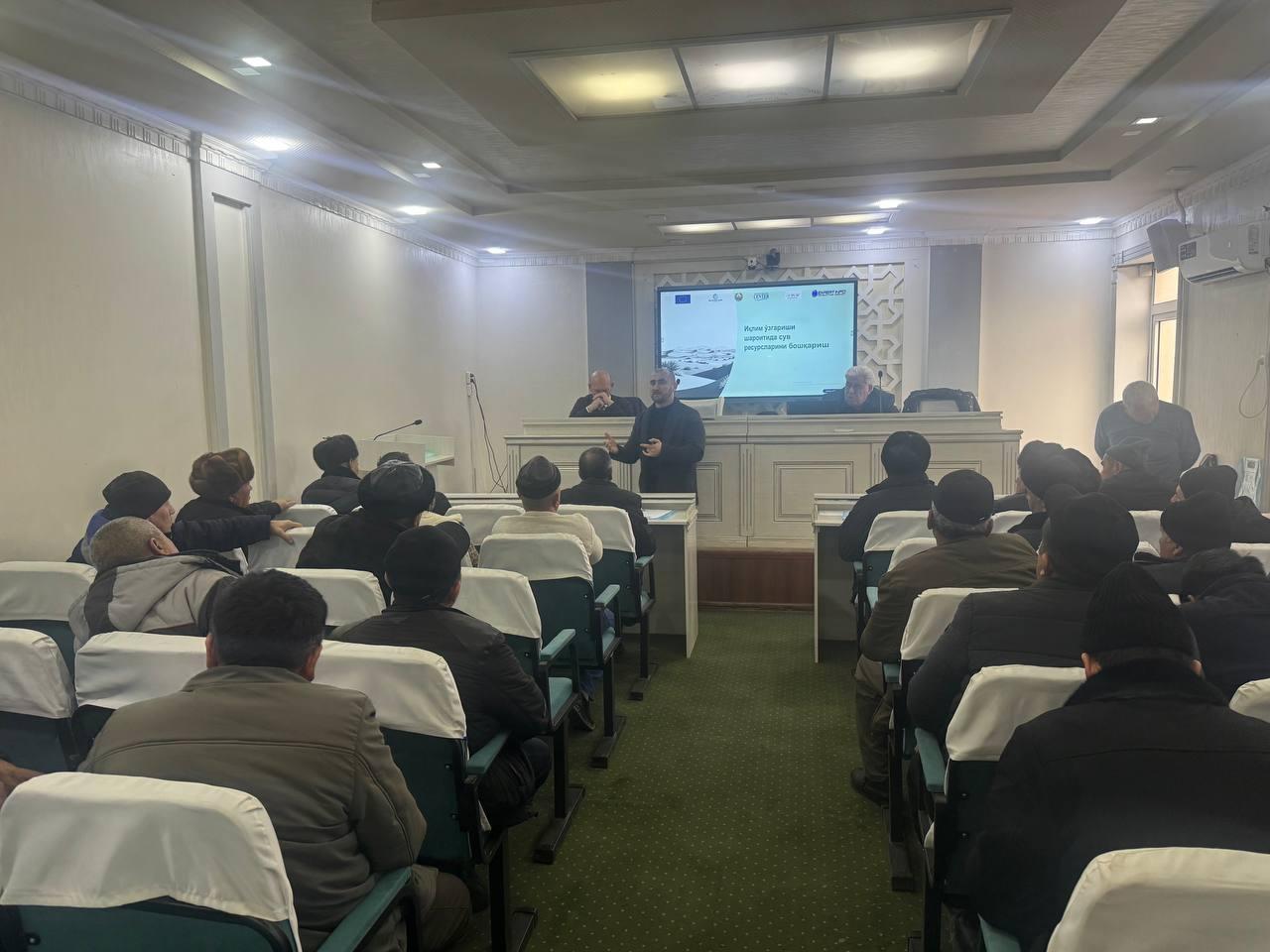
A part of the presentation was focused on transboundary water management in Central Asia. Participants were introduced to the existing legal and institutional framework governing water allocation in the Amu Darya and Syr Darya river basins, the principles of water sharing among riparian countries, and the factors influencing interstate water relations under conditions of climate change.
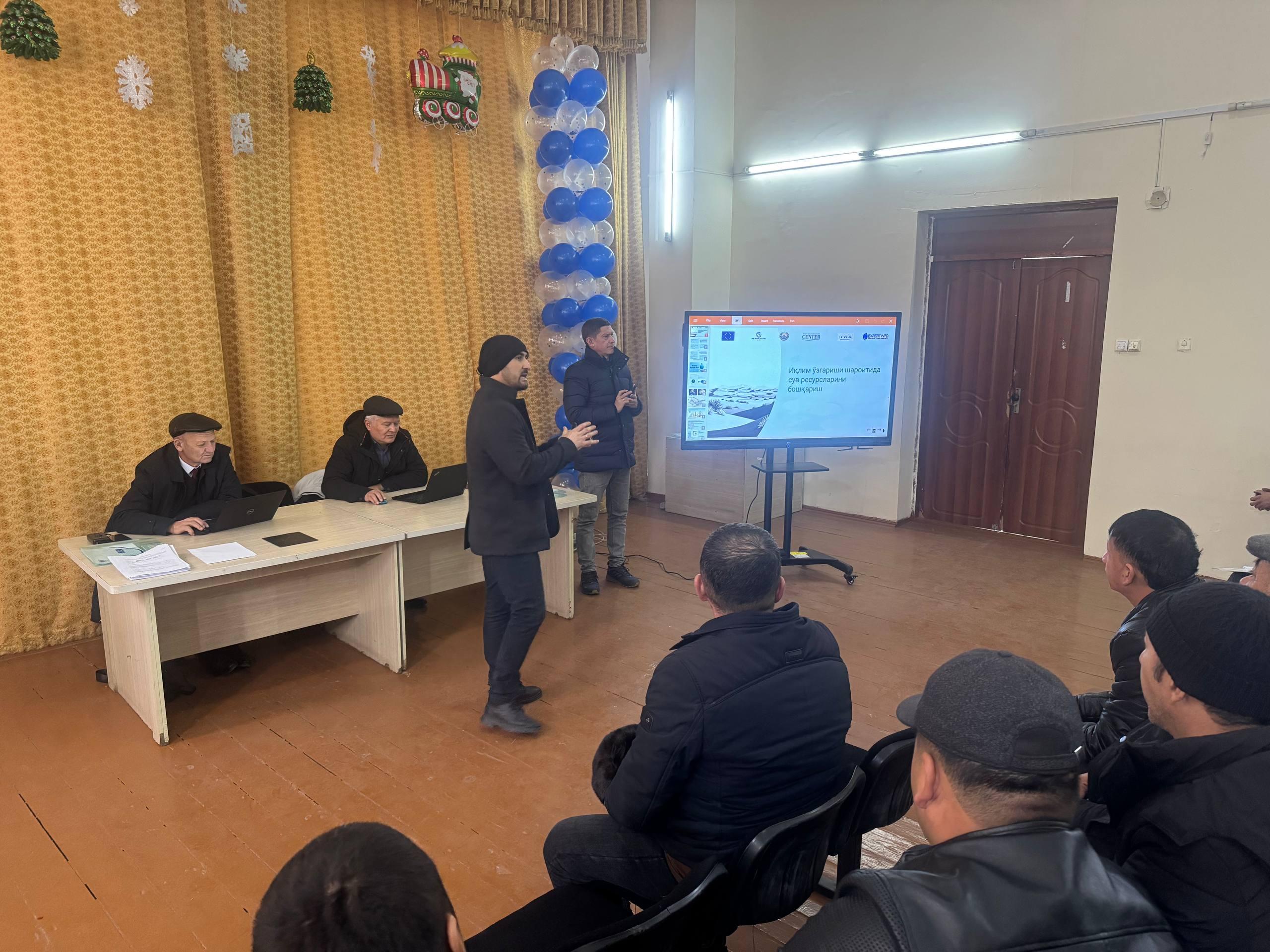
In the context of emerging regional challenges, special emphasis was placed on the analysis of new risks to water security. These included the Qosh Tepa canal in Afghanistan, its potential impact on water balance of the Amu Darya basin and water security of downstream countries, and the growing need to strengthen regional dialogue and cooperation around water management.
Geography of the training sessions
Namangan province:
- Yangikurgan district— December 23
- Chartak district — December 22
Andijan province:
- Kurgantepa district — December 24
- Bulakbashi district — December 25
- Djalakuduk district — December 26
- Khodjaabad disctrict — December 27
Fergana province:
- Kuvasay district— December 29
- Fergana district — December 30
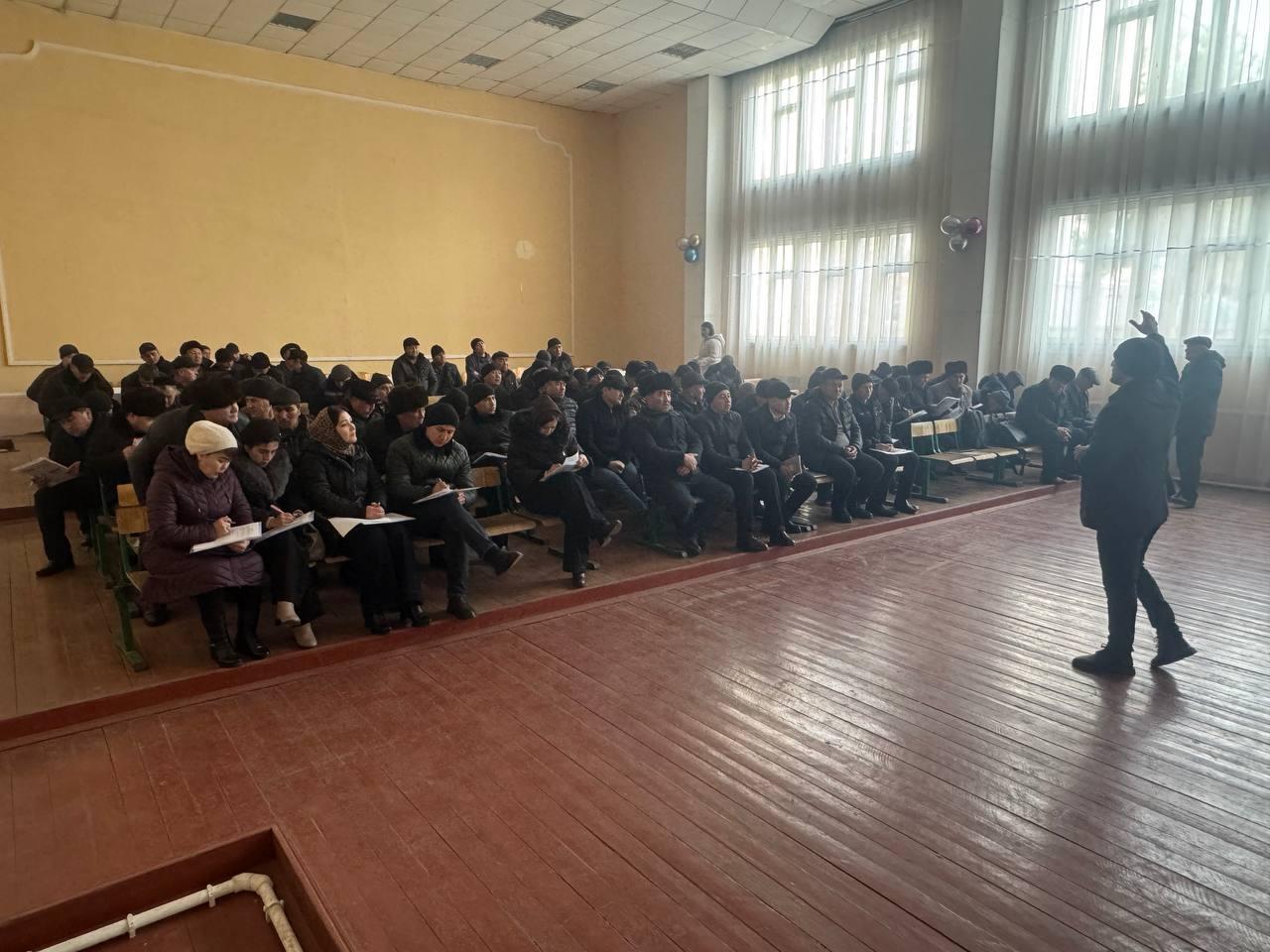
In total, the training cover around 800 participants, including water management specialists, farmers, and owners of dekhkan and subsidiary farms. The events contributed to raising awareness of climate-related risks and strengthening the capacity of local water users in sustainable water management.