
No. 11 (672) February 2026
Work meeting with EU representatives on the UNEP Project
On February 18, 2026, SIC ICWC organized an online work meeting with representatives of the European Union (EU) to discuss sub-projects on adaptation measures developed at the local level and prioritized by communities in three target countries: Kyrgyzstan, Uzbekistan, and Tajikistan. The meeting was organized within the framework of the EU-UNEP Partnership for Climate project "Facilitating region-specific approaches to addressing climate and environment-related risks for socio-economic stability" in Central Asia.
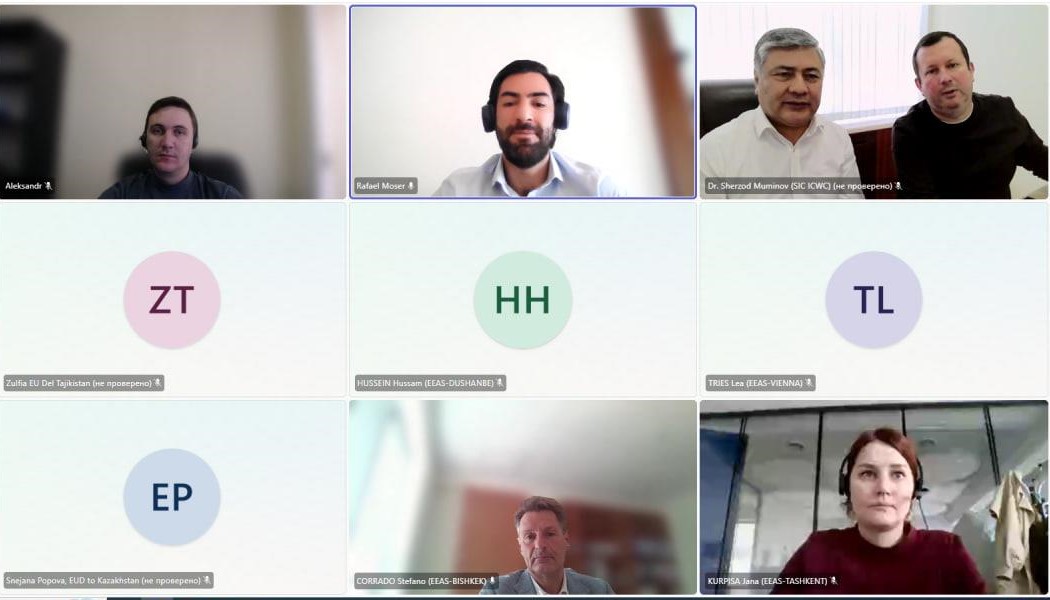
Based on an inclusive and conflict-sensitive consultation process, local organizations and communities have selected a portfolio of adaptation solutions focused on nature-based approaches. These solutions simultaneously address socio-economic issues related to land and water resources, as well as climate risks and ecosystem degradation.
In total, 17 local subprojects were selected on priority actions. They are distributed by sectors as follows:
- 6 actions focus on agroforestry, green infrastructure and ecosystem restoration, including forest shelterbelts, nurseries, eco-parks, and restoration of degraded landscapes;
- 6 actions focus on climate-resilient water management, including restoration of water catchments, improvement of irrigation, nature-based solutions for water conservation and distribution, as well as participatory mechanisms for water management;
- 4 actions contribute to climate-resilient agriculture and nature-based livelihoods, including restoration of degraded agricultural land, cultivation of drought-tolerant crops, support for pollinators, vermicomposting, and climate-resilient hothouse production;
- 1 action aims to rehabilitate pastures and meadows through ecosystem-based solutions that support moisture retention and vegetation recovery.
All sub-projects incorporate nature-based approaches to strengthen cooperation in sharing natural resources, reduce competition for land and water, improve livelihoods, and foster dialogue between communities and local authorities.
Following the approval of the proposed sub-projects, local NGOs will proceed to the implementation phase of the selected actions.