
No. 23 (684) April 2026
Strengthening Community Capacity for Climate Change Adaptation under the EU-UNEP Project
On April 11, 2026, a community-led ashar (collective voluntary work) was held under the EU-UNEP Partnership for Climate project "Facilitating region-specific approaches to addressing climate and environment-related risks for socio-economic stability" in Central Asia. The ashar was jointly organized by SIC ICWC and the project grantee OO “Orchun” in Suzak district of Jalal-Abad province. It brought together local authorities, relevant organizations, and community members, with a total of 53 participants.
The event was opened by representatives of OO “Orchun,” Mr. Soronkulov G. and Mr. Chataev A., who emphasized that the project aims to enhance the resilience of local communities to climate change impacts, including through the application of nature-based solutions to address pressing environmental and water-related challenges at the local level.
In his remarks, Mr. Tekebaev T.K., the Plenipotentiary Representative of the President of the Kyrgyz Republic in Jalal-Abad province, highlighted the importance of maintaining environmental balance and adapting to climate change. He called for scaling up such initiatives and expressed readiness to support them in the future.
Mr. Asatov M., the project coordinator in the Kyrgyz Republic, addressed the issue of declining water, noting the potential long-term risks of water scarcity. He also spoke about the importance of glacier preservation, as well as the rational use and monitoring of groundwater.
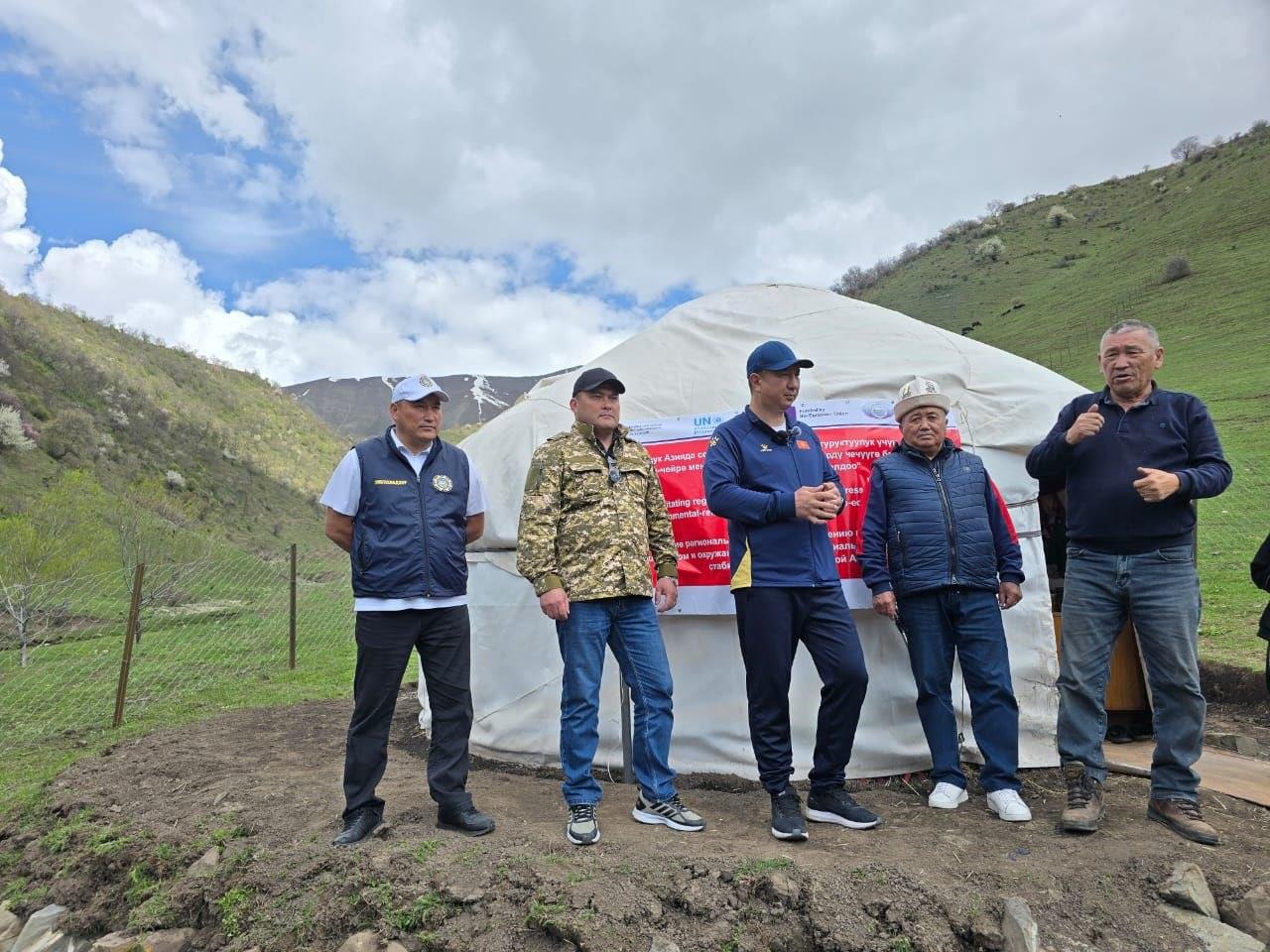
Subsequently, the Akim (governor) of Suzak district, representatives of the environmental inspectorate, local self-government bodies, and community members expressed their strong support for the project and underscored its significance for the region and local population.
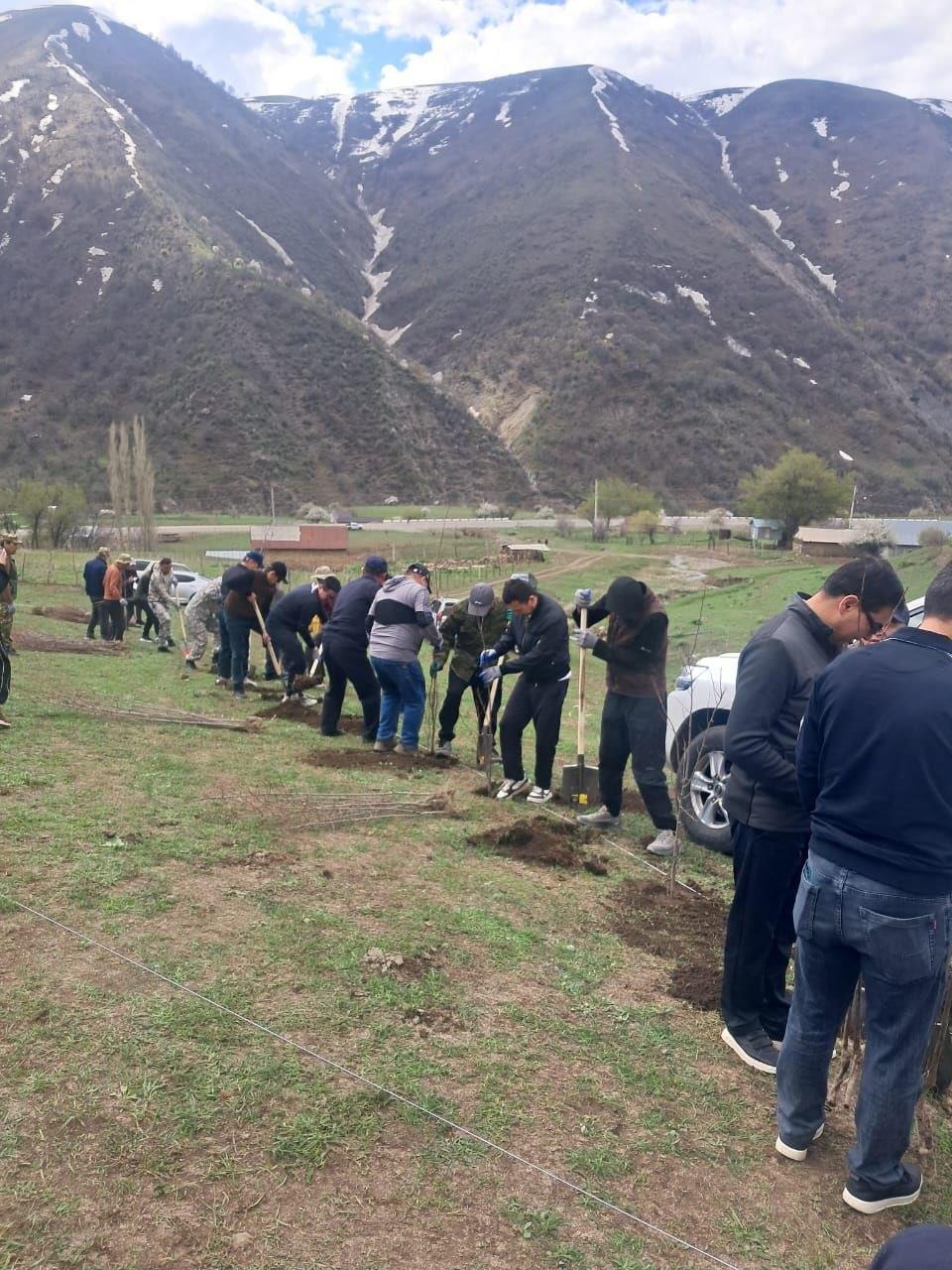
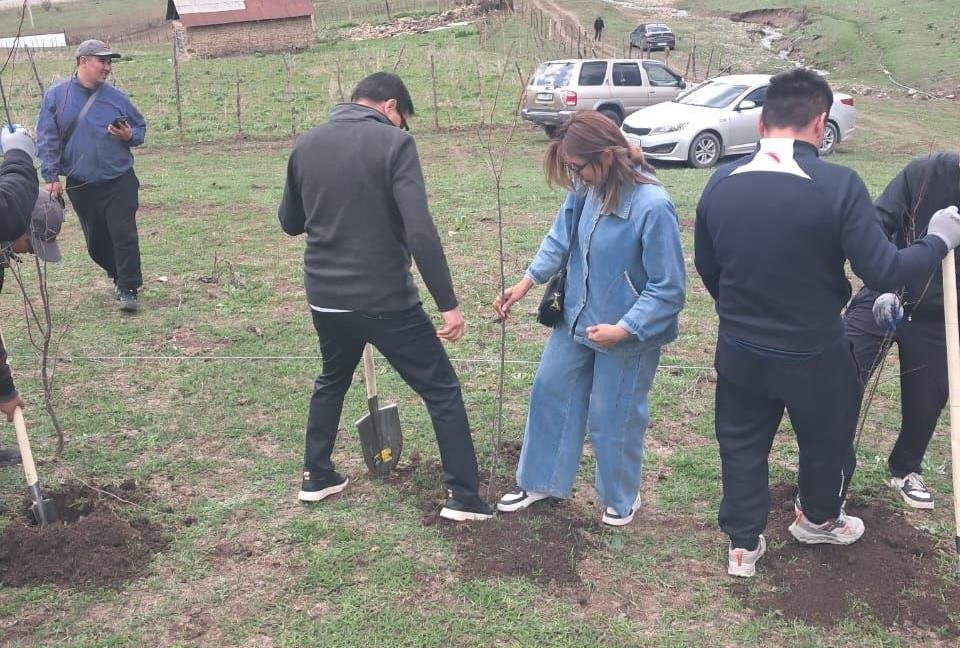
As part of the ashar, trees were planted on degraded slopes to stabilize the terrain through bioengineering approaches and to restore vegetation cover. In total, approximately 5,000 saplings were planted, including plum, wild apple, and walnut species.
Irrigation of the planted areas will be arranged through drip irrigation technology, ensuring efficient use of limited water resources and significantly improving plant survival rates. The planted sites will be under the supervision and protection of the local community.
All planned planting activities were successfully completed. The implementation of this initiative contributes to strengthening environmental resilience, reducing land degradation risks, and fostering community cohesion in adapting to climate change.