
No. 24 (685) April 2026
Monitoring Mission to EU–UNEP Project Sites in Kyrgyzstan and Uzbekistan
From April 5 to 10, 2026, as part of the EU-UNEP Partnership for Climate project "Facilitating Region-Specific Approaches to Addressing Climate and Environment-related Risks for Socio-Economic Stability" in Central Asia, a monitoring mission was conducted to the project sites in the Kyrgyz Republic and the Republic of Uzbekistan
The mission team included the Project Leader and Deputy Director of SIC ICWC, Sh. Muminov, and the Monitoring and Evaluation Manager, B. Gozhenko. In the Kyrgyz Republic, they were joined by the National Project Coordinator, M. Asatov, and the Environmental and Gender Specialist, Zh. Ubaydilaeva. In the Republic of Uzbekistan, the team was joined by the National Project Coordinator, Z. Saymatov, and the Environmental and Gender Specialist, O. Yakubova.
On April 5, the mission visited Aravan district in Osh province, where they reviewed the progress of work implemented by the OO “Central Asian Alliance for Water and Environment” (CAAWE) in two subprojects:
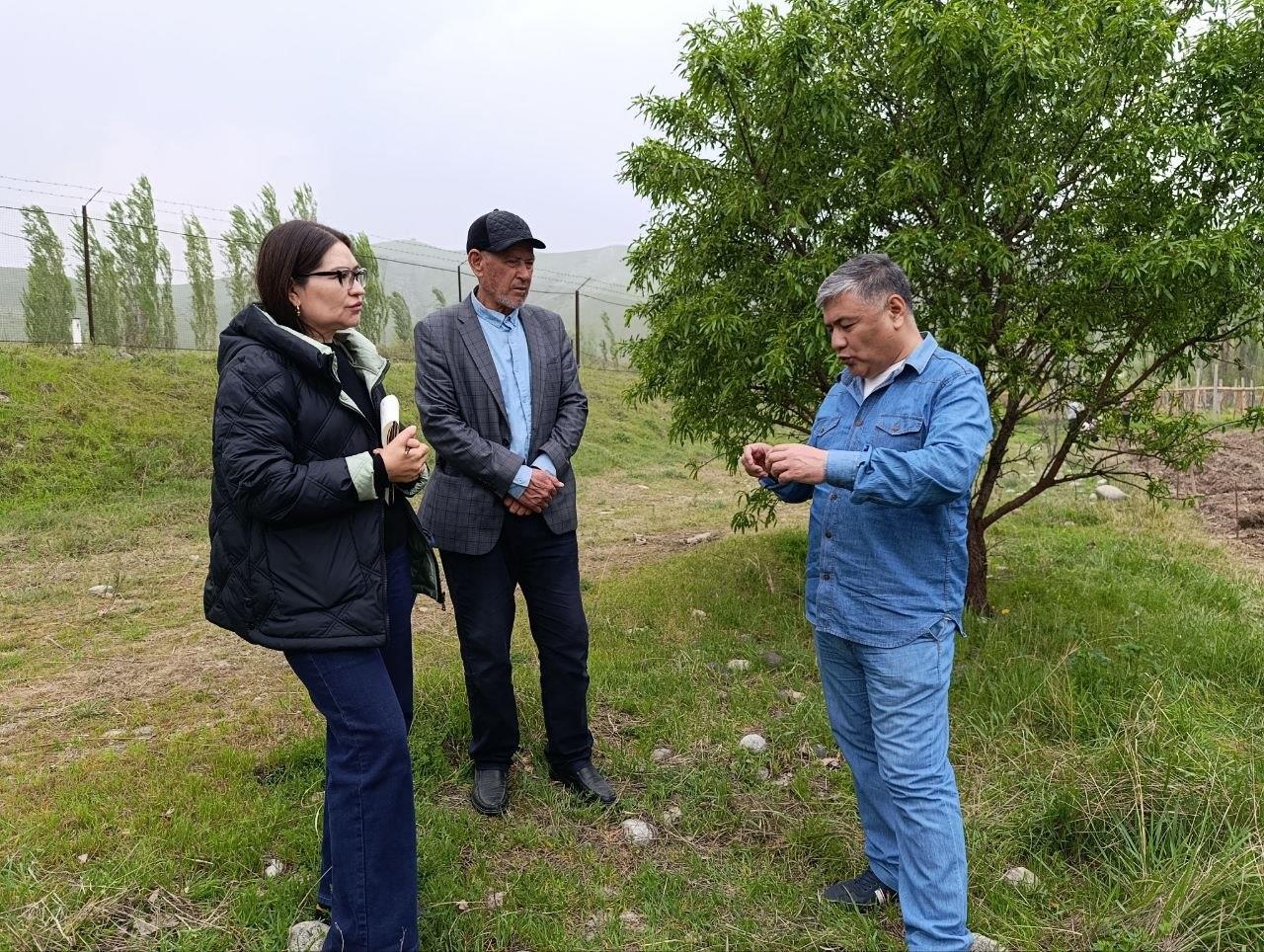
1. Restoration of the area surrounding the water intake in the S. Yusupova ayil aimak using nature-based approaches.
This subproject aims to restore and protect the area around the water intake to incresed infiltration and natural groundwater recharge, as well as to reduce vulnerability to drought.
2. Climate-resilient rehabilitation of an irrigation ditch using nature-based solutions in Dobo-Korgon ayil aimak.
This subproject aims to reduce erosion, siltation, and pollution in the irrigation ditch by planting native grasses, shrubs, and trees, while restoring ecosystem functions. In addition, the proposed adoption of a smart metering system will enhance the sustainability of these nature-based solutions, while ensuring equitable distribution of irrigation water.
On April 6–7, the mission visited Suzak district in Jalal-Abad province, where it reviewed the progress of work implemented by a consortium of OO “Orchun” and OO “Independent Eco-Expertise,” which is carrying out two subprojects:
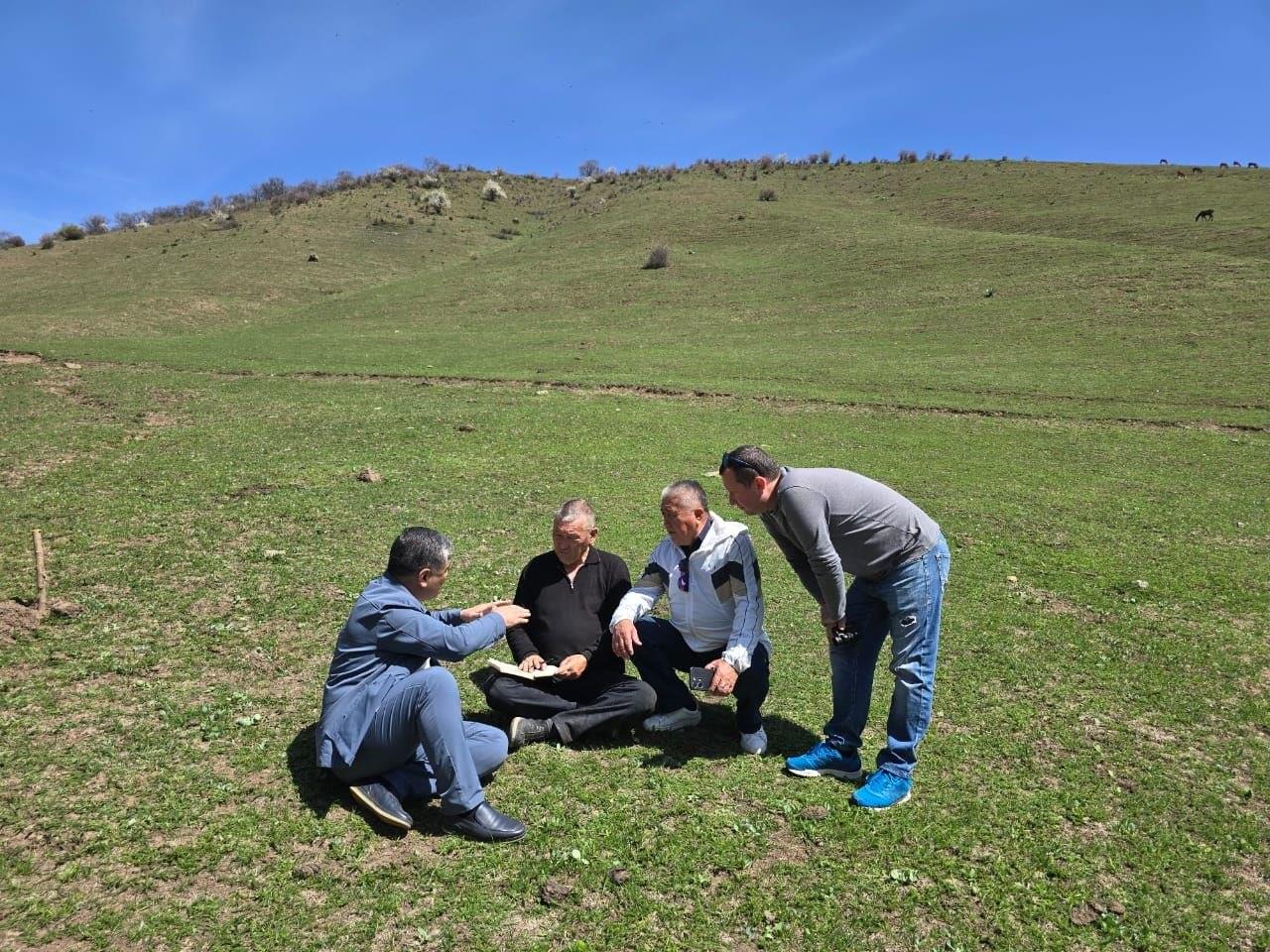
1. Reducing pasture degradation through the formation of an artificial glacier on the Uch-Tal slope and planting of trees in degraded pasture areas in the Bagysh and Kok-Art ayil aimaks.
This subproject aims to restore degraded pastures and vegetation cover through a combination of nature-based and climate-resilient measures. These include the formation of an artificial glacier to ensure water during dry periods, as well as the planting of trees in degraded pasture areas.
On the day of the mission’s visit, a community work day (khashar) was organized to clean and fence the site and to plant trees. Project experts actively participated in this work.
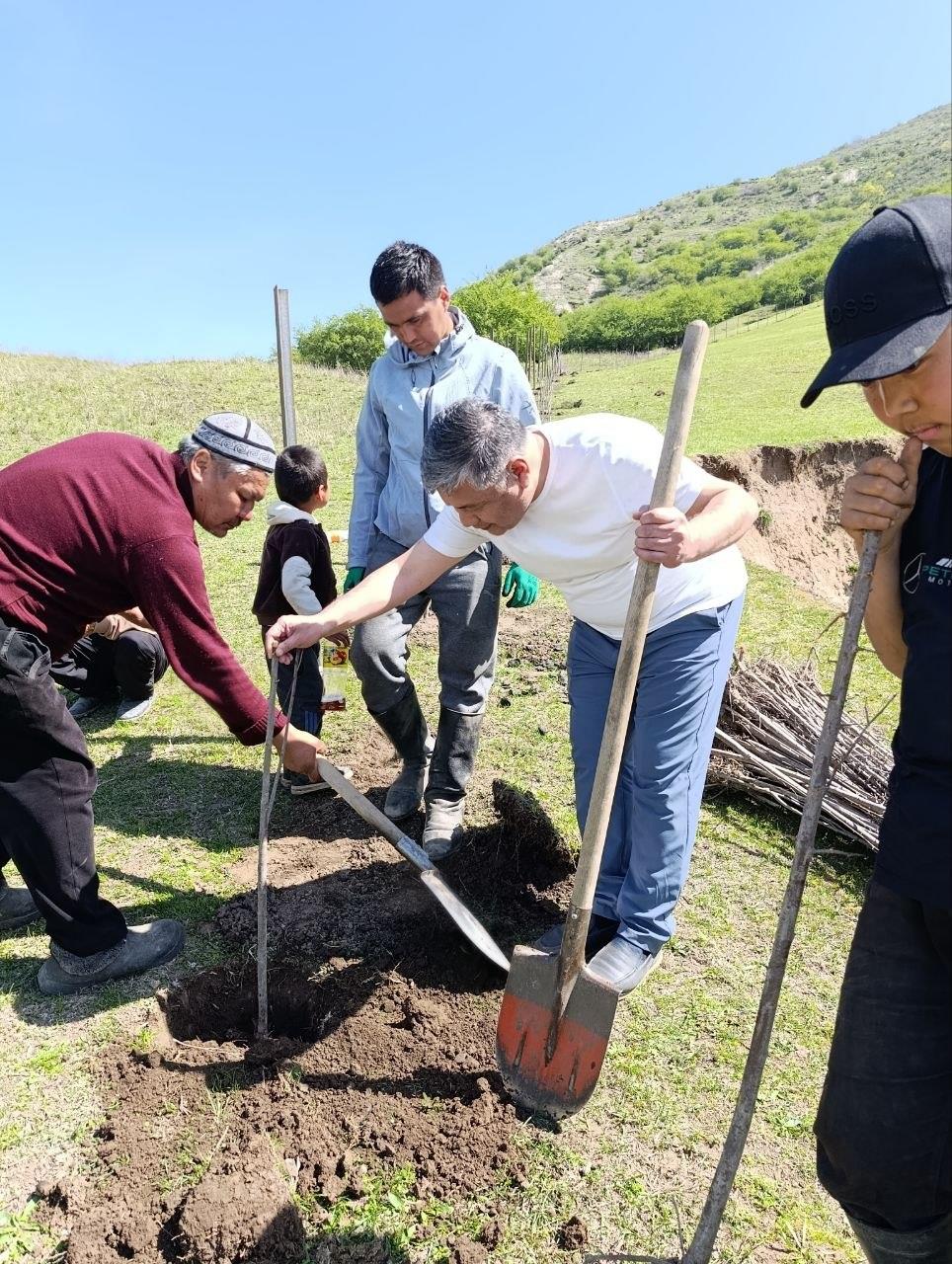
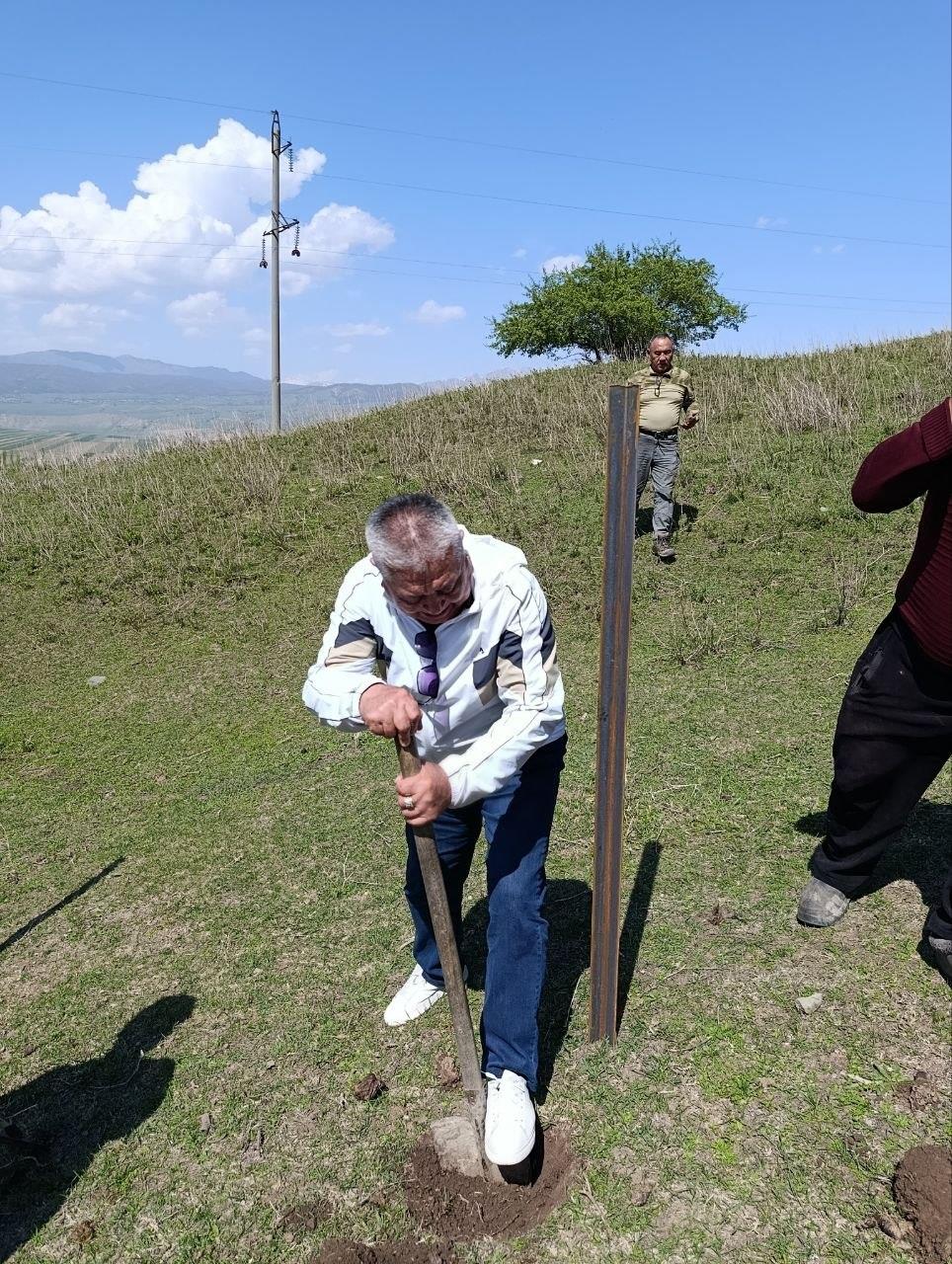
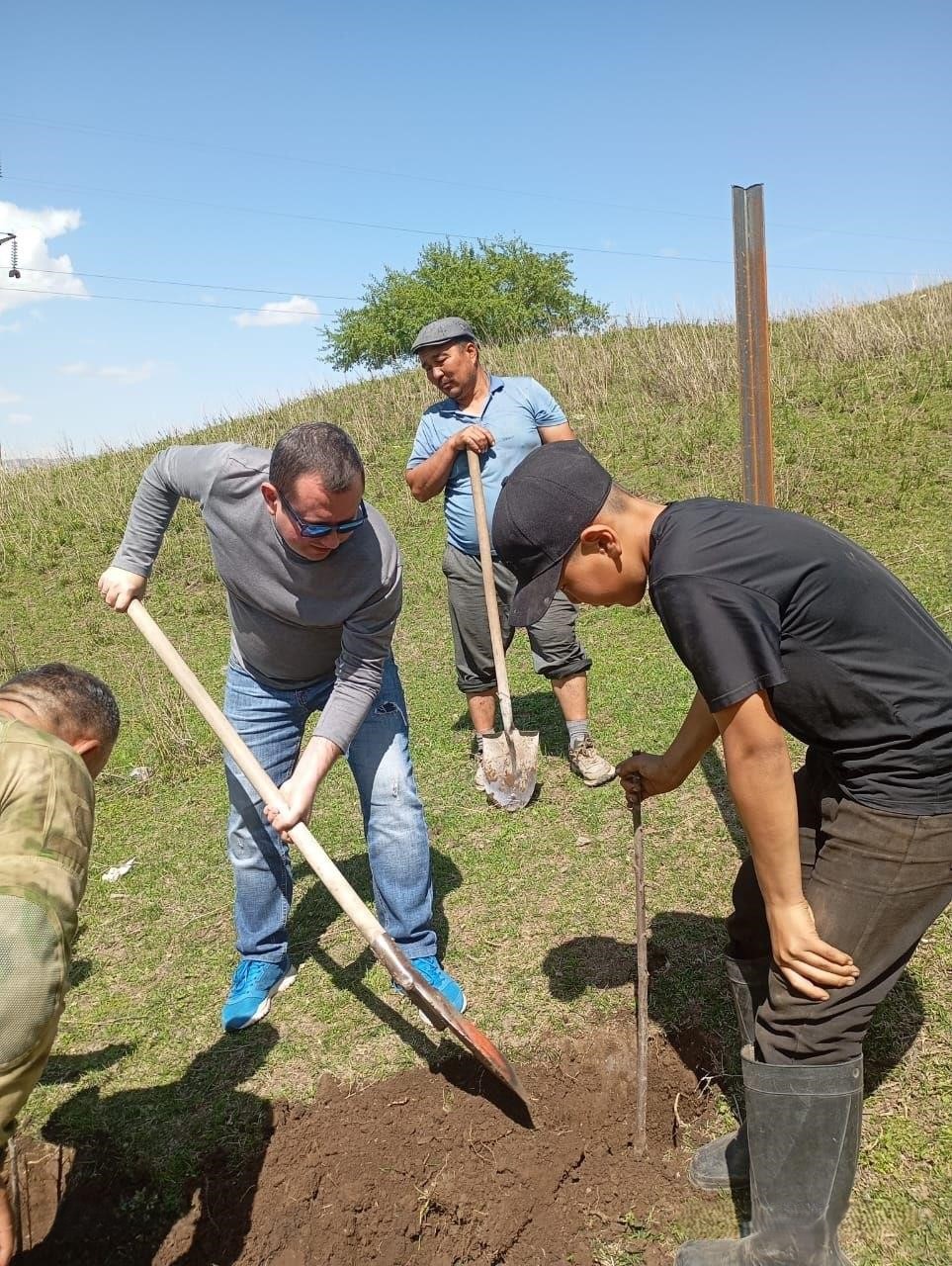
2. Establishment of an innovative, nature-based educational farm at the Bokonbaev Educational Complex in Safarovka ayil aimak, including a plant nursery, training in climate-resilient agricultural practices, and a greenhouse for vegetable production, as well as the construction of a greenhouse in Kok-Art ayil aimak.
This subproject is to promote the adoption of nature-based and climate-resilient approaches to land and water management, including also through capacity-building activities and the provision of drought-resistant seeds and seedlings to local communities.
On April 8, the mission visited Kara-Suu district in Osh province, where it reviewed the progress by OO “New Rhythm,” which is carrying out two subprojects:
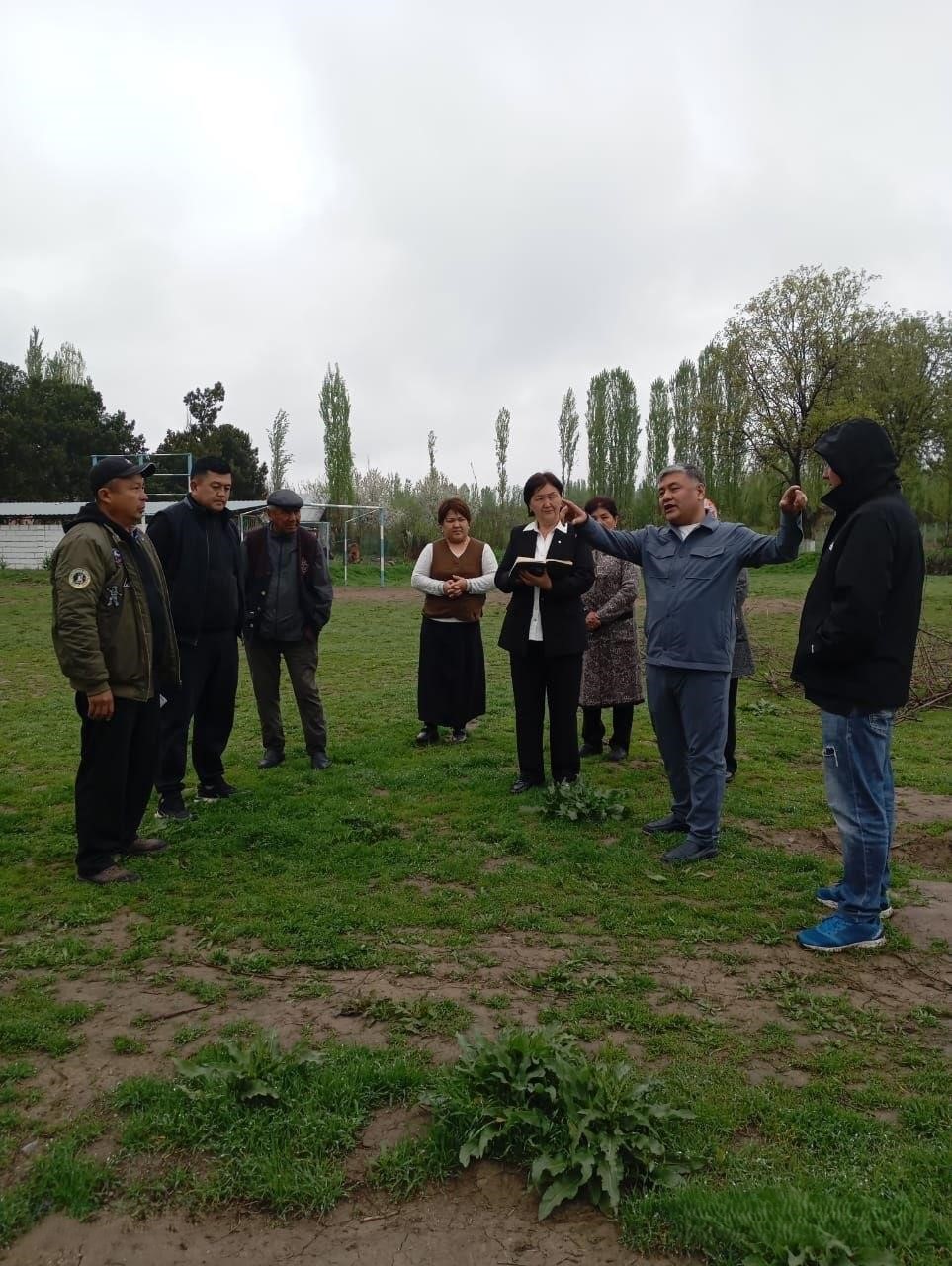
1. Nature-based solutions to reduce conflicts and enhance resilience through the creation of green zones (eco-park and nursery) in Kyzyl-Tal village, Kara-Suu district, Osh province.
This subproject aims to establish an eco-park (green zone) and a nursery of drought-resistant plants using drip irrigation and solar energy. It is designed to combat wind erosion and dust storms, improve the microclimate, and preserve soil moisture.
2. Establishment of nature-based agroforestry belts to protect a rural school from climate and environmental risks in Asanchek village, Kara-Suu district in Osh province.
This subproject aims to improve the local microclimate, restore ecosystems, and preserve soil moisture under conditions of drought and land degradation. It will also protect the school garden from early spring frosts and wind erosion.
On April 9, the mission visited Pakhtabad district in Andijan province, where it reviewed the progress by the consortium of NGO “Salomatlik Plus Ekologiya” and NGO “Hamroh,” which is carrying out two subprojects:
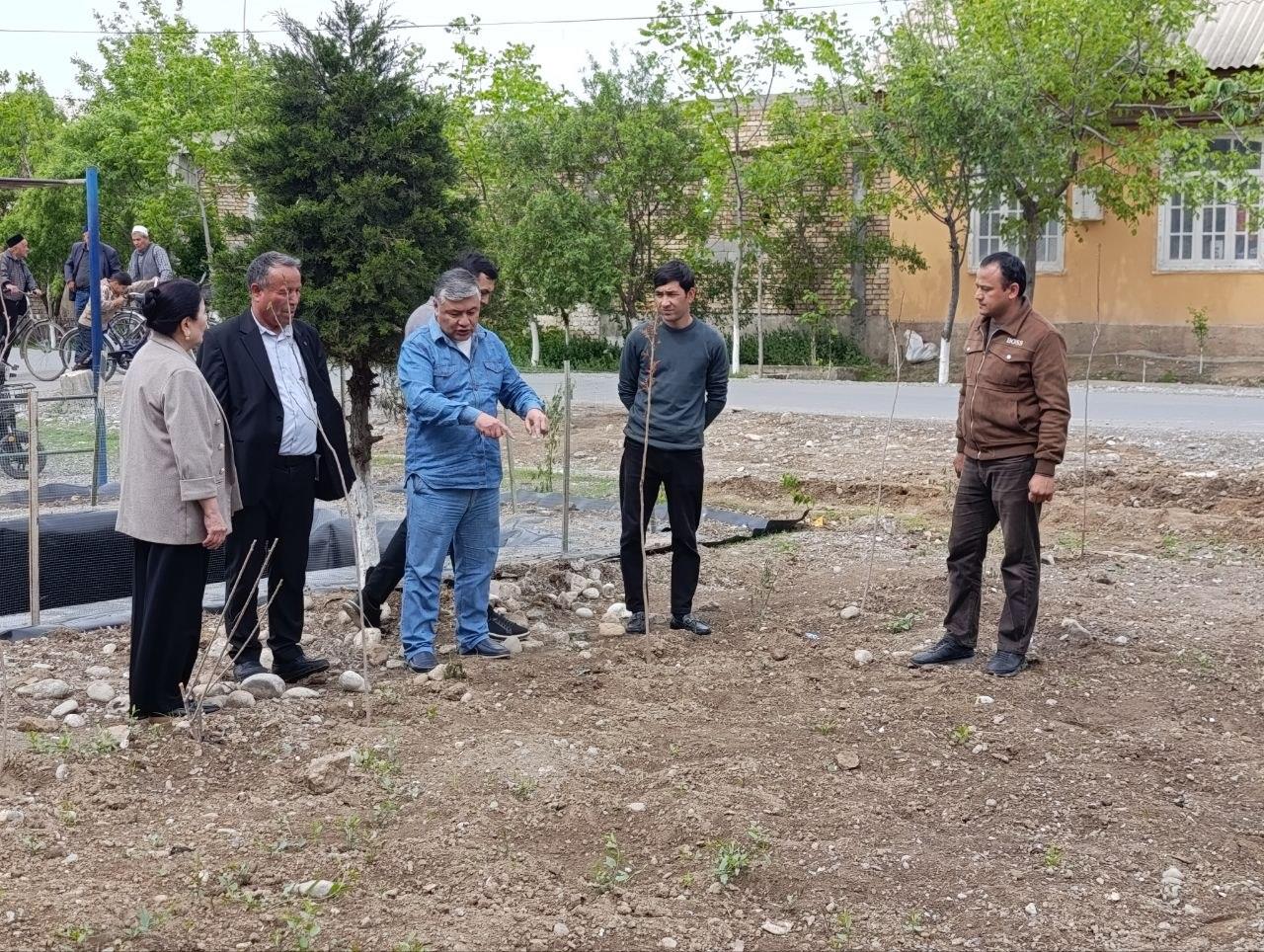
1. Establishment of a public demonstration site in the Soibuyi-Andijon mahalla to disseminate knowledge and build capacity of local communities in applying nature-based solutions.
This subproject focuses on enhancing climate resilience and supporting environmental restoration through the establishment of a demonstration site highlighting practical nature-based solutions in support of ecosystem services.
2. Rehabilitation of abandoned agricultural land through nature-based solutions to advance climate-resilient agriculture and encourage the return of migrant workers.
This subproject aims to rehabilitate degraded land by cultivating drought-tolerant legumes, which improve soil fertility by enriching it with nitrogen and enhancing biological activity. The initiative also includes the use of drip irrigation and a small water storage system.
On April 10, the mission visited Fergana district in Fergana province, where it checked the activities implemented by a consortium comprising the NGO “Huqandi Latif Kelajagi” and the Fergana provincial division of the Association of NGOs of Uzbekistan, which is carrying out two subprojects:
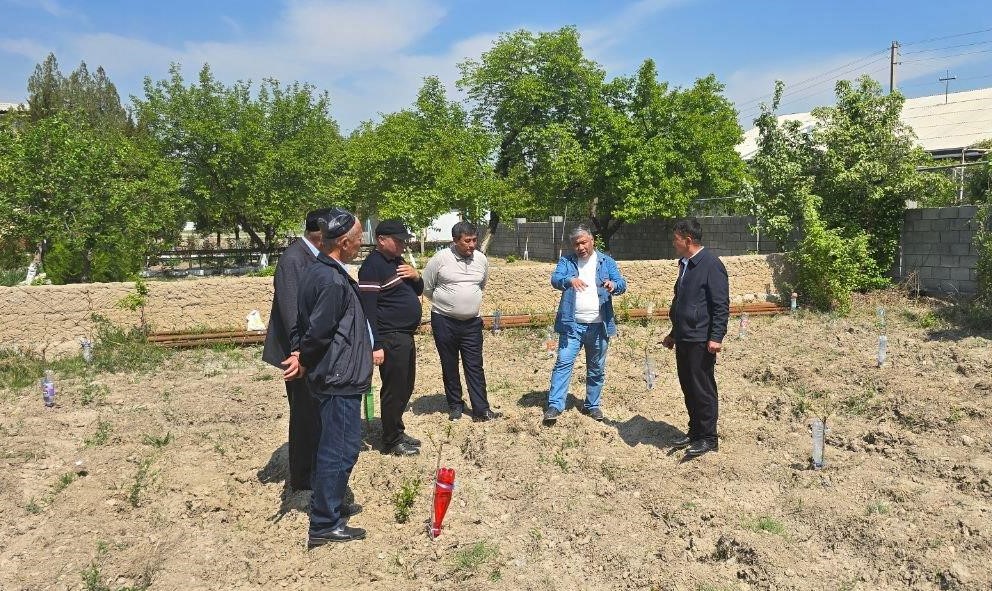
1. Establishment of agroforestry belts and restoration of vegetation cover in Okbilol mahalla through integrated water resources management.
This subproject involves the implementation of nature-based solutions, including the planting of drought-resistant trees to establish agroforestry belts around the mahalla, as well as the restoration of vegetation within the area using native grasses, shrubs, and trees.
2. Implementation of nature-based agroforestry and ecosystem restoration in Khuroba mahalla to enhance climate resilience and improve water management.
This subproject focuses on the creation of agroforestry belts around the water intake area by planting drought-tolerant grasses, shrubs, and trees. These measures aim to protect against wind and water erosion while creating a more favorable microclimate.