
No. 33 (694) April 2026
Monitoring Mission to EU–UNEP Project Sites in Tajikistan
From 20 to 24 April 2026, a monitoring mission was conducted to project sites in the Republic of Tajikistan under the EU–UNEP Partnership for Climate project “Facilitating Region-Specific Approaches to Addressing Climate and Environment-related Risks for Socio-Economic Stability” in Central Asia.
The mission included the Project Leader and Deputy Director of SIC ICWC, Sh. Muminov, and the Monitoring and Evaluation Manager, B. Gozhenko. In Tajikistan, they were joined by the National Project Coordinator, L. Sultonov, and the Environmental and Gender Expert, N. Khikmatullozoda.
On 20 April, the mission visited Djabbar-Rasul district in Sughd province, where they reviewed the progress achieved by the Rural Community Development Agency (RCDA) under three subprojects:
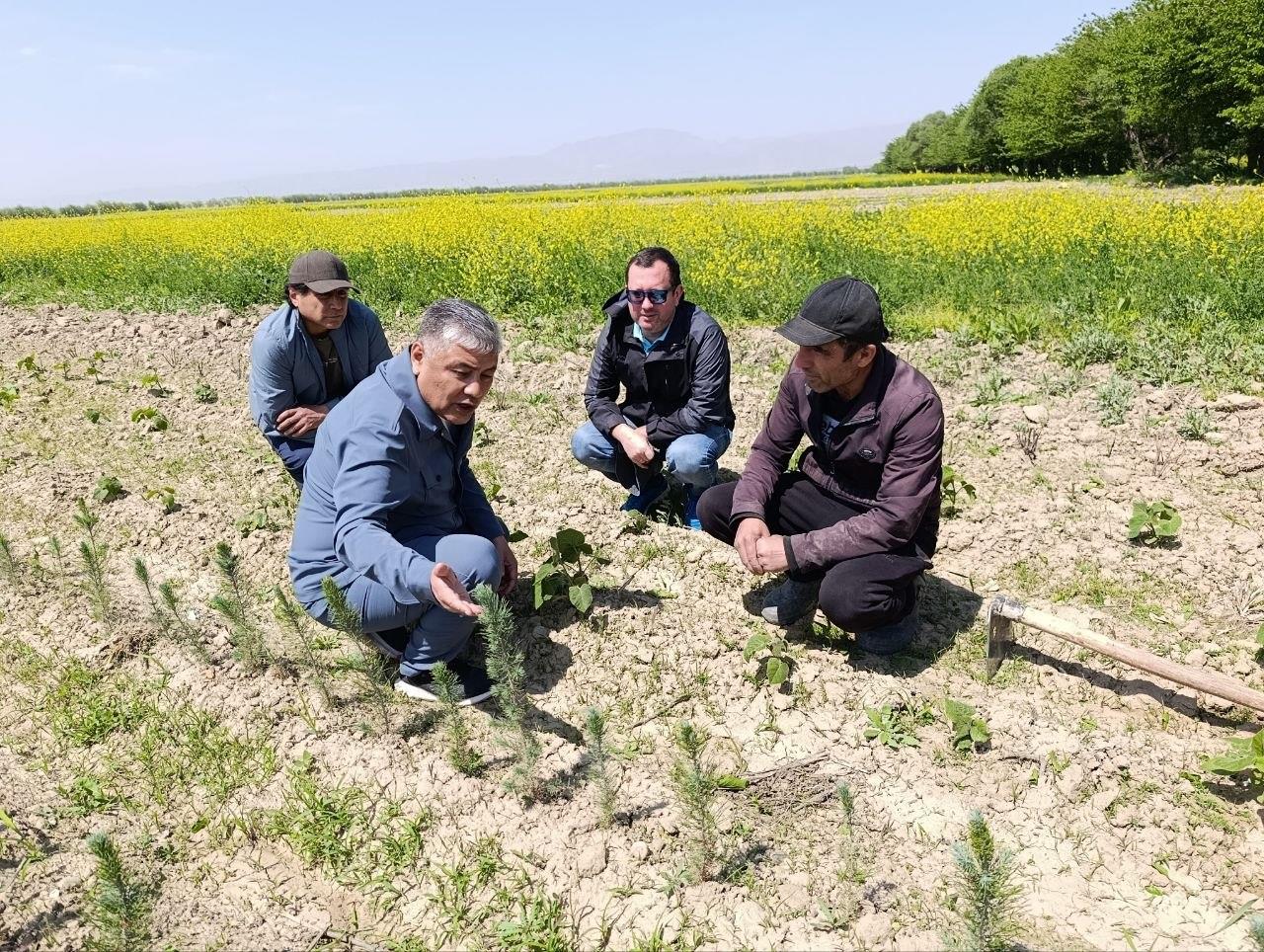
1. Establishment of a nature-based buffer zone in Gulafshon community. This subproject aims to protect a public irrigation reservoir from pollution, siltation, and evaporation through the establishment of a nature-based buffer zone. It also supports the restoration of degraded land on household plots through the cultivation of drought-tolerant legumes.
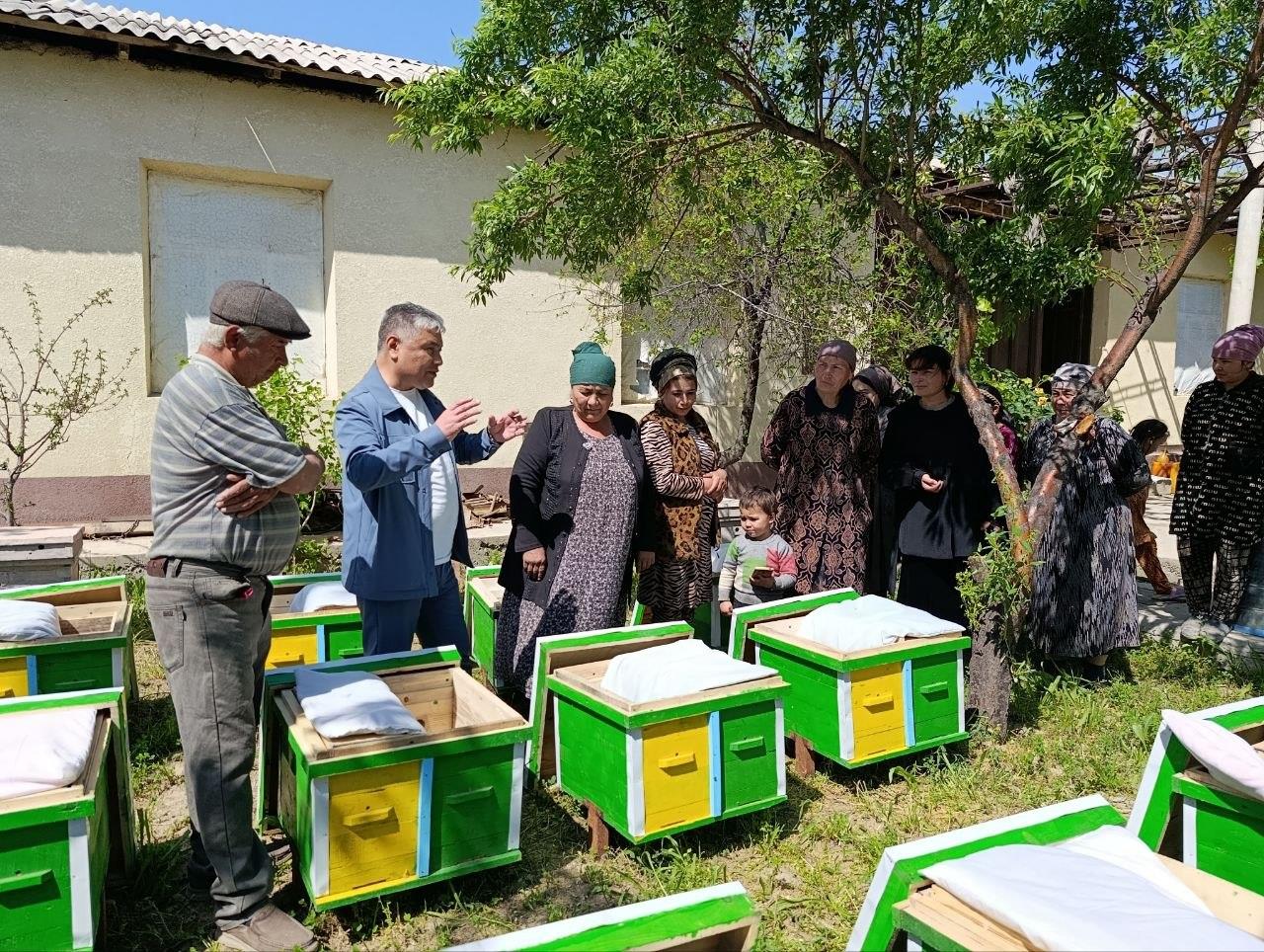
2. Climate-resilient, nature-based income generation in Uzbekkishlak village. This subproject promotes a range of nature-based solutions, including beekeeping, vermicomposting, plant nurseries, and greenhouses with drip irrigation. It is designed to create climate-resilient livelihoods for vulnerable groups, including women, youth, returned migrant workers, and low-income families, while also contributing to reduced social tensions within the community.
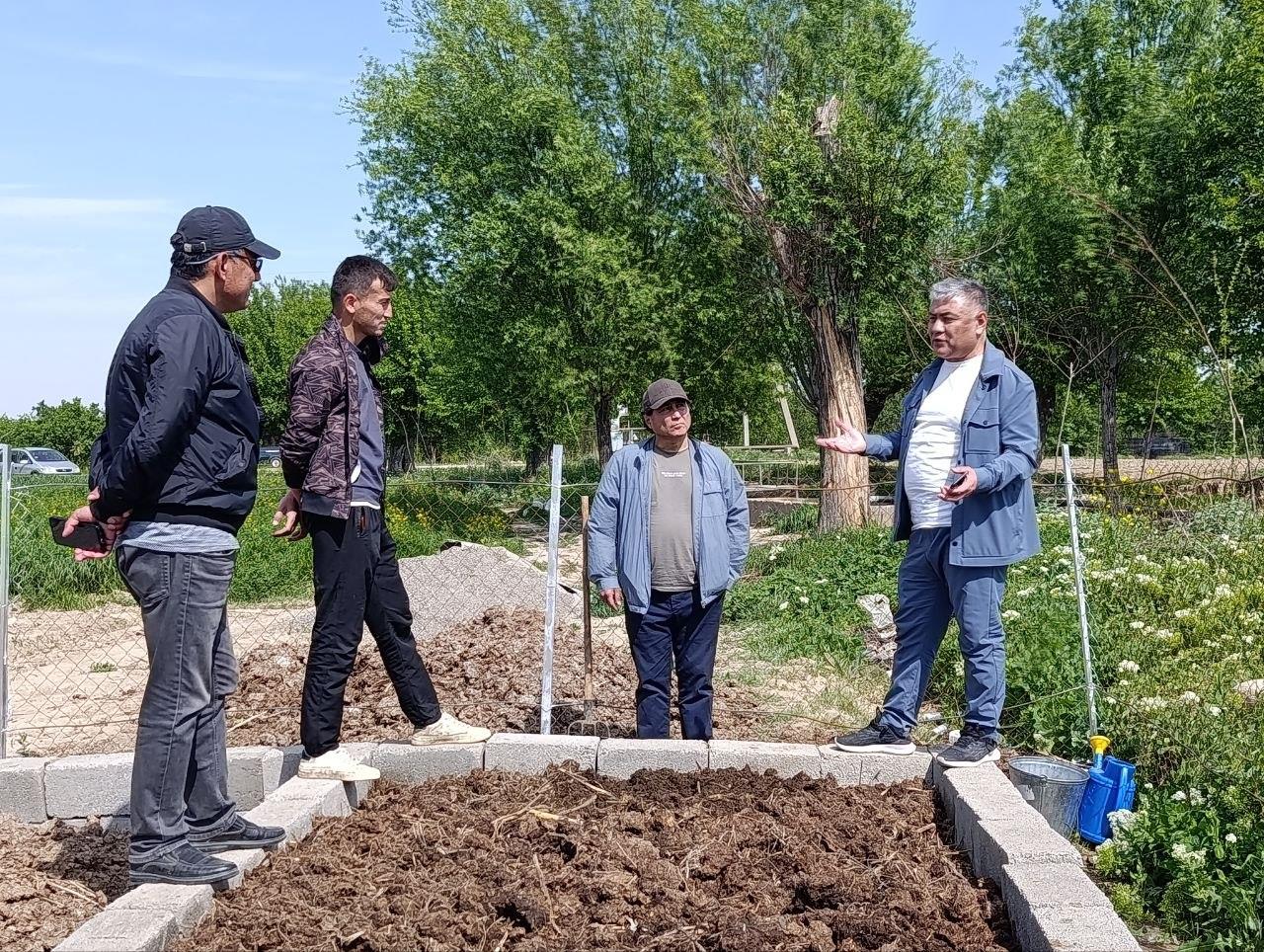
3. Biodiversity promotion and soil erosion prevention in Tajikabad village, Gulhon community This subproject focuses on restoring biodiversity and preventing soil erosion through nature-based solutions addressing challenges such as low rainfall, drought, irrigation water shortage, and land degradation.
On 21 April, the mission visited Kanibadam district in Sughd province. The team inspected progress at project sites of the NGO Youth Environmental Protection Group, which is carrying out two subprojects.
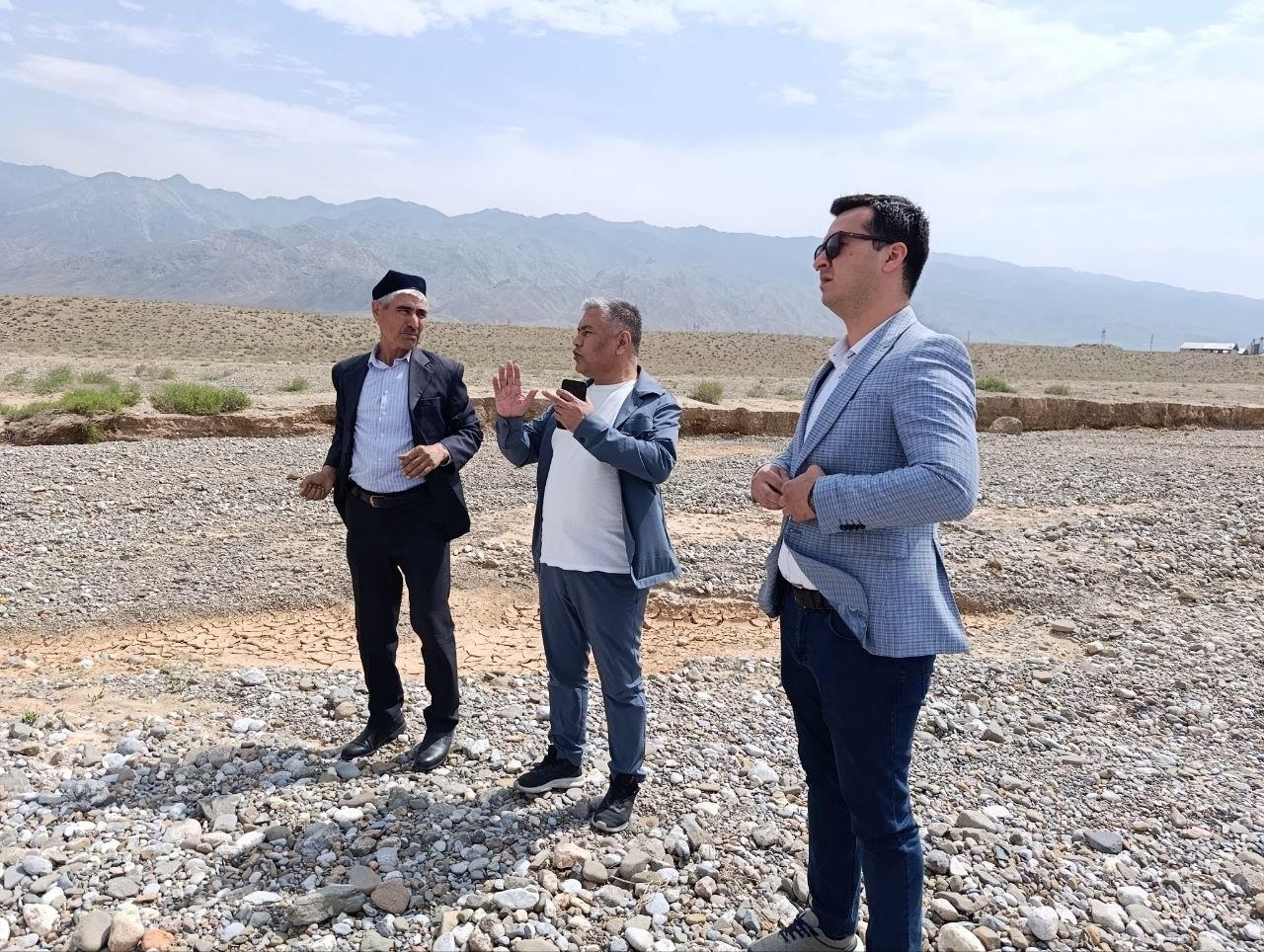
1. Reinforcement of the protective embankment along the mudflow channel in Kukhandiyor community. This subproject focuses on strengthening the protective embankment of the mudflow channel through nature-based solutions. Activities include the establishment of protective tree belts and the planting of riparian vegetation to prevent erosion and reduce the risk of damage caused by mudflows. In addition, the embankment is being reinforced in Kuchandiyor community through soil backfilling to support the successful establishment of forest plantations.
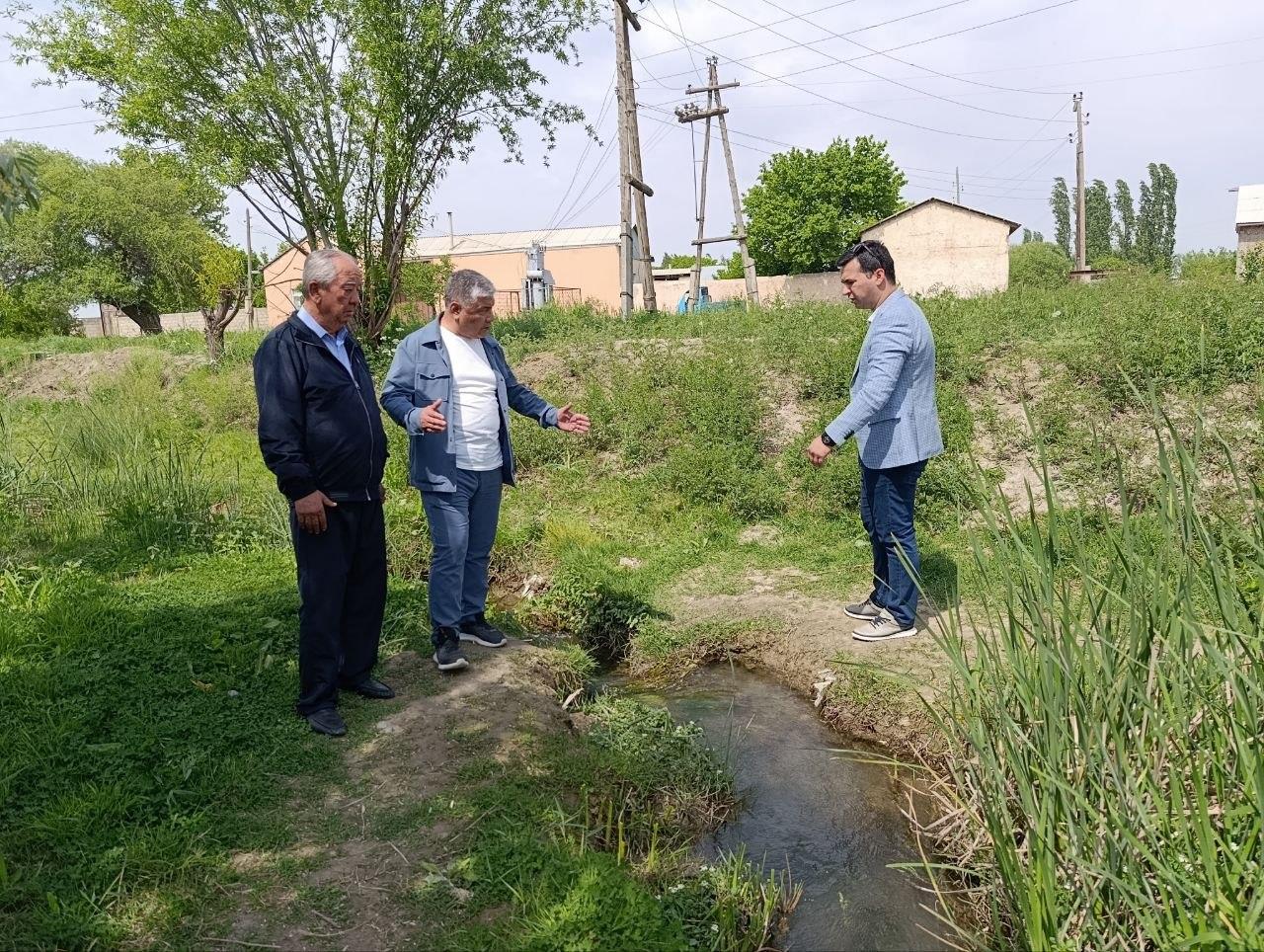
2. Restoration and conservation of natural resources in Patar community. This subproject aims to restore land productivity and enhance the climate resilience of local communities. It applies a combination of climate-resilient land management measures and nature-based solutions to address challenges such as secondary salinization, high water levels, drainage problems, and increased flood risk during extreme rainfall events. It also contributes to strengthening social cohesion within the community.
On 22–23 April, the mission visited Asht district in Sughd province. The team inspected progress at project sites of the consortium of the NGOs “Safi” and “Subhi Tandurusti”, which is carrying out two subprojects.
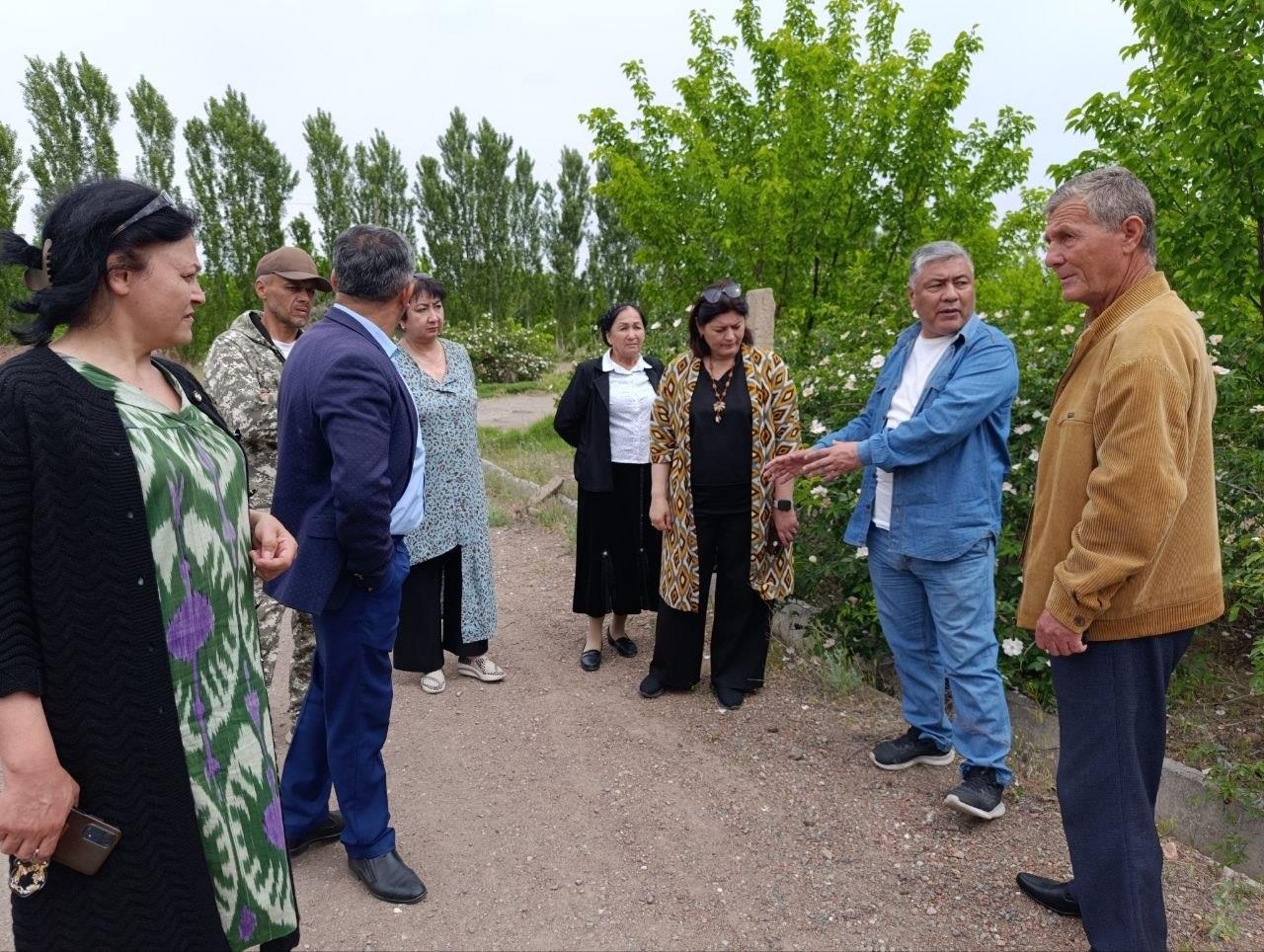
1. Establishment of protective tree belts around the kindergarten in Mehrobod community. This subproject aims to reduce wind erosion and the impact of dust storms through the establishment of protective tree belts around the perimeter of a kindergarten. It also includes the creation of a nursery for drought-tolerant tree and shrub species equipped with a drip irrigation system, as well as the promotion of a “plant ownership” initiative among children.
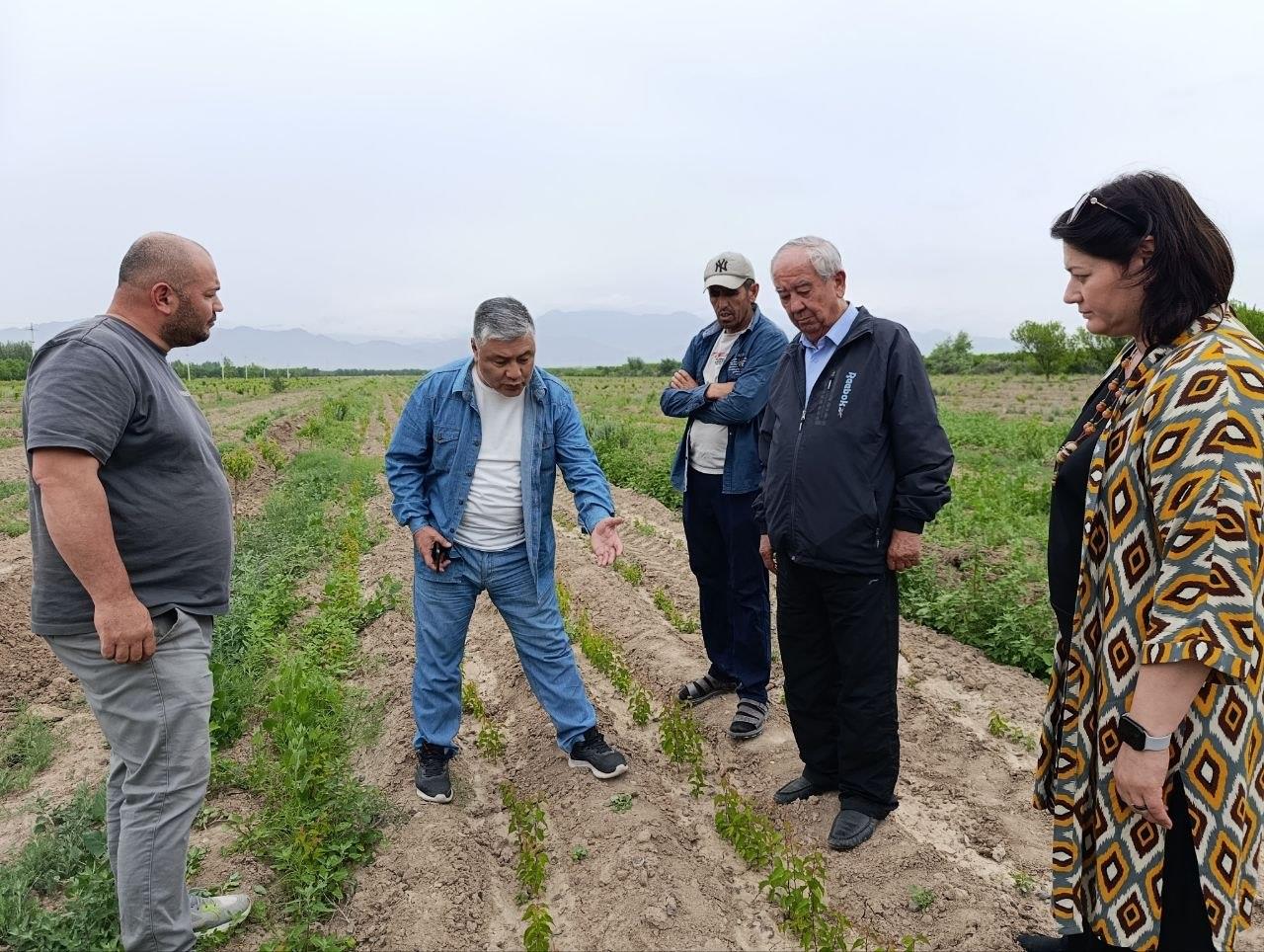
2. Demonstration plot of drought-tolerant crops and fruit trees in Mehrobod and Shodoba communities. This subproject focuses on establishing a demonstration site for the application of climate-resilient and nature-based agricultural practices. Activities include the cultivation of drought-tolerant crops and fruit trees, the restoration of orchards, and the introduction of agroforestry approaches to improve ecosystem stability.