
No. 45 (706) June 2026
SIC ICWC Participates in the Forum “Women and Water– 2026”
On 25 May 2026, the International Forum “Women and Water – 2026” was held as part of the Fourth High-Level International Conference on the International Decade for Action “Water for Sustainable Development” 2018–2028. The Forum brought together representatives of governments, international organizations, financial institutions, academia, and civil society to discuss the role of women in water management, climate resilience, and international cooperation. The Scientific-Information Center of the Interstate Commission for Water Coordination (SIC ICWC) was represented by Oygul Usmanova.
The Forum was organized by the Committee on Women and Family Affairs under the Government of the Republic of Tajikistan in cooperation with the UN Women Tajikistan.
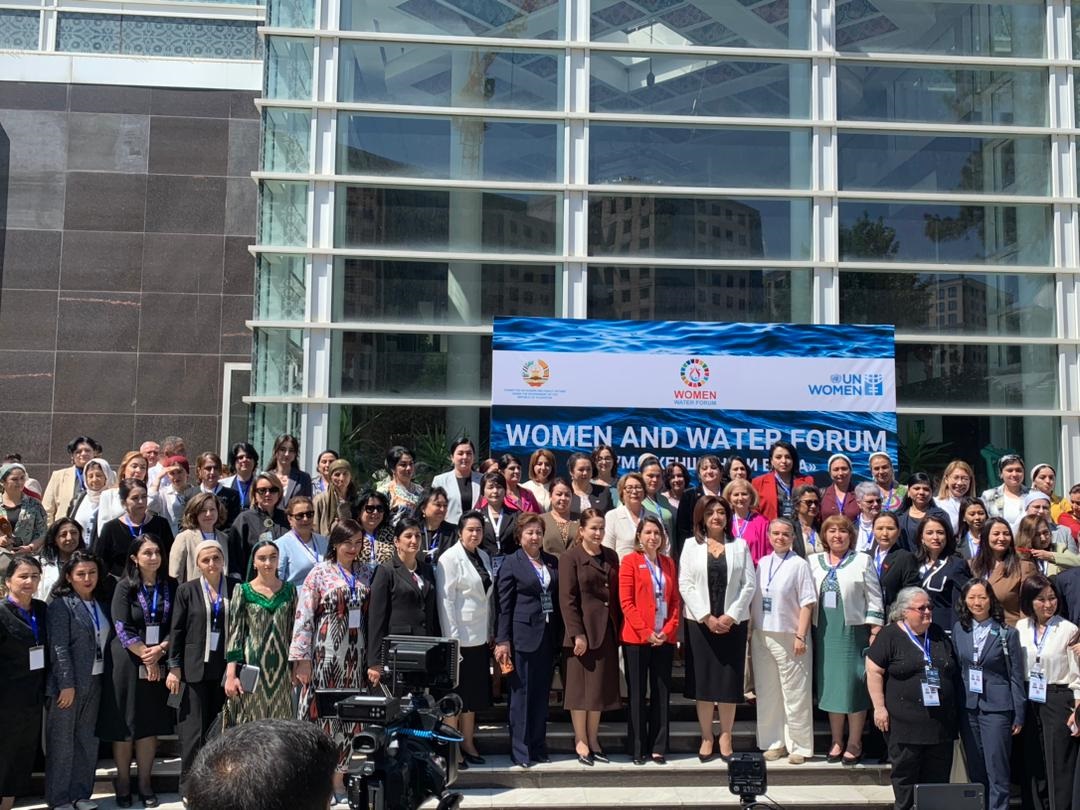
In her opening remarks, Deputy Prime Minister of the Republic of Tajikistan Dilrabo Mansuri emphasized that the current water crisis has a distinct gender dimension. Every day, women and children around the world spend an estimated 200 million hours collecting water for household needs - a figure increasingly recognized as an indicator of global social inequality. She stressed that effective responses to global water challenges are impossible without the full engagement of women in decision-making processes and water governance.
Participants noted that the global water crisis, exacerbated by climate change, growing water demand, environmental degradation, and inefficient water management, disproportionately affects women and girls. At the same time, women remain underrepresented in leadership and technical positions within the water sector, despite their significant contribution to community resilience and natural resource management.
The first session of the Forum focused on strengthening women’s economic empowerment through improved access to finance, innovation, and modern technologies. Experts discussed climate financing mechanisms, which currently do not virtually integrate gender equality issues, as well as support for women-led initiatives, digital transformation in the water sector, and the use of AI to enhance water management efficiency.
Particular attention was paid to women’s participation in water governance and public policymaking. Participants highlighted the need to remove persistent gender barriers, expand leadership opportunities for women, and strengthen their role in decision-making processes at local, national, and international levels.
During the session on women’s participation in water governance, Oygul Usmanova, speaking on behalf of the Women in Water Diplomacy Network, presented the findings of a regional assessment of the gender gap in Central Asia’s water sector. The study revealed continuing challenges related to women’s participation in decision-making, career advancement, and access to professional development opportunities. The findings underscored the need for stronger implementation of gender-responsive policies and expanded opportunities for women professionals across the water sector.
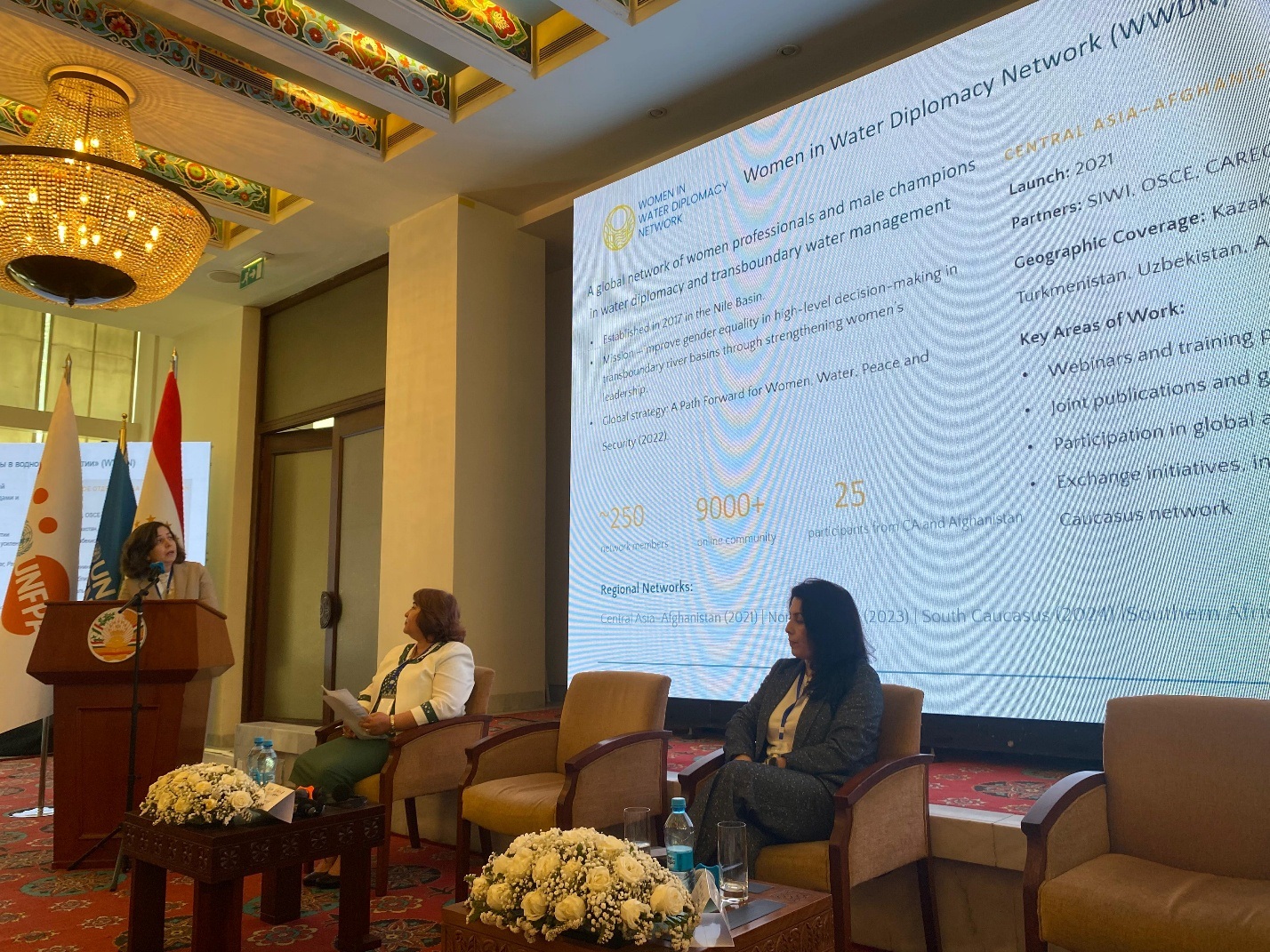
A separate session was devoted to transboundary water cooperation, glacier preservation, scientific collaboration, and social cohesion. Participants emphasized that effective water management requires an integrated approach based on international partnerships, scientific knowledge, and the active engagement of local communities.
A key outcome of the Forum was the adoption of the Dushanbe Declaration on Women and Water, which outlined recommendations for advancing gender equality in the water sector, strengthening women’s participation in decision-making, expanding access to finance and innovation, and enhancing international and regional cooperation on water and climate change. The Forum also officially launched the Women and Water Partnership Network and initiated the development of a joint regional action plan on gender-responsive water governance in Central Asia.