No. 46 (707) June 2026
International Workshop to Boost Transboundary Water Cooperation
Ahead of the Fourth High-Level International Conference on the International Decade for Action “Water for Sustainable Development” 2018–2028, a workshop “Promoting Collaboration over Shared Waters: Concepts and Approaches for Building Trust and Co-operation” was held in Dushanbe on May 22–24.
The workshop was co-organized by the OSCE Office of the Co-ordinator of Economic and Environmental Activities (OCEEA), the UN University Institute for Water, Environment and Health (UNU-INWEH), the Blue Peace Central Asia project, and the Regional Environmental Centre for Central Asia (CAREC). The event brought together members of the Women in Water Management in Central Asia and Afghanistan Network. Oygul Usmanova and Gulnoza Khamdamova from the Scientific-Information Center of the Interstate Commission for Water Coordination (SIC ICWC) of Central Asia actively participated in the workshop.
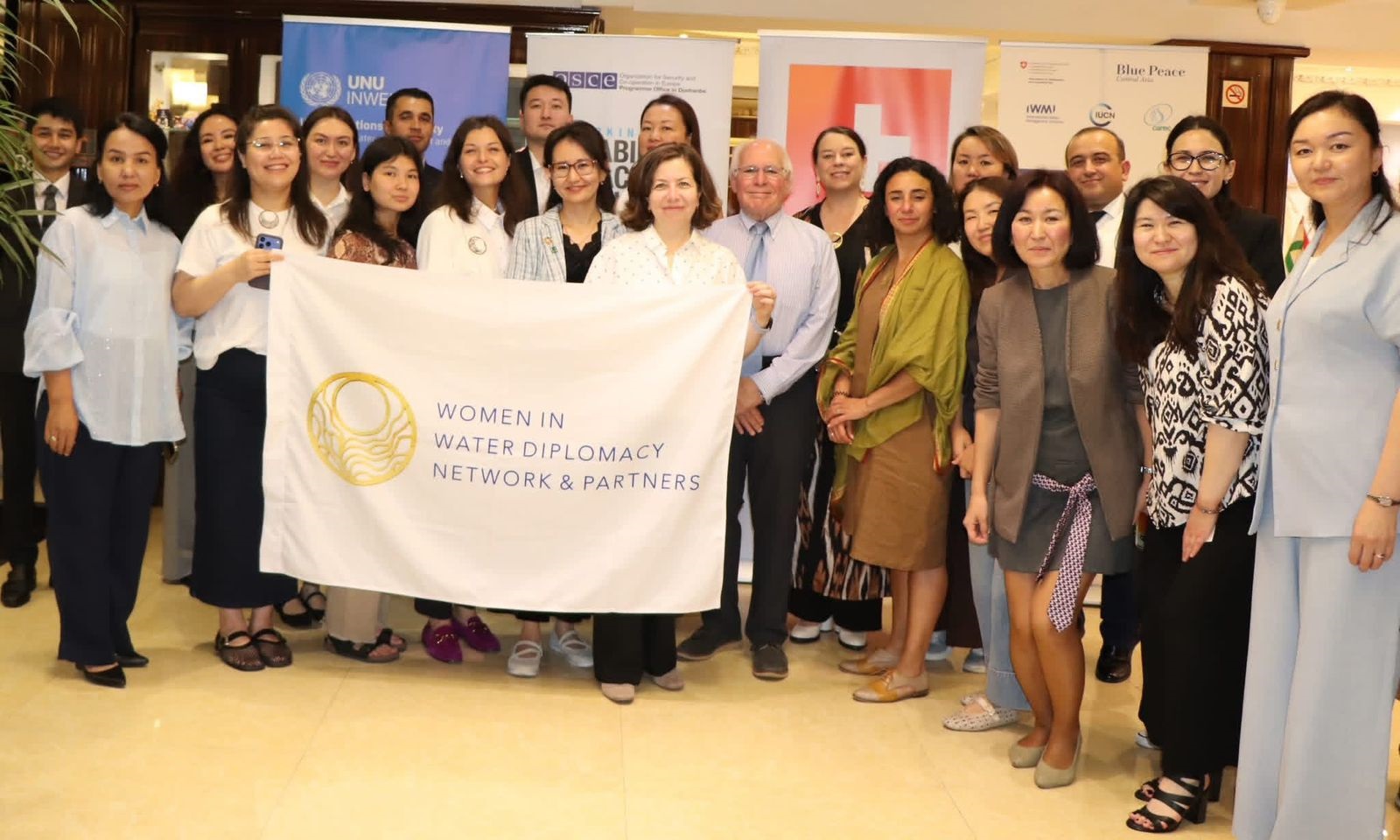
The primary goal of the workshop was to equip network members with the tools to leverage evidence-based data for policymaking, foster constructive dialogue, and co-create recommendations for sustainable regional water management.
Experts from UNU-INWEH aligned the workshop's goals with major global milestones, including the upcoming 2026 UN Water Conference. Drawing on case studies from the Middle East, Asia, Africa, and the Americas, participants explored analytical tools and proven methodologies for international water negotiations.
Interactive sessions led by the OSCE focused on turning dialogue into policy, sharpening participants' skills in active listening, finding common ground, and drafting policy documents.
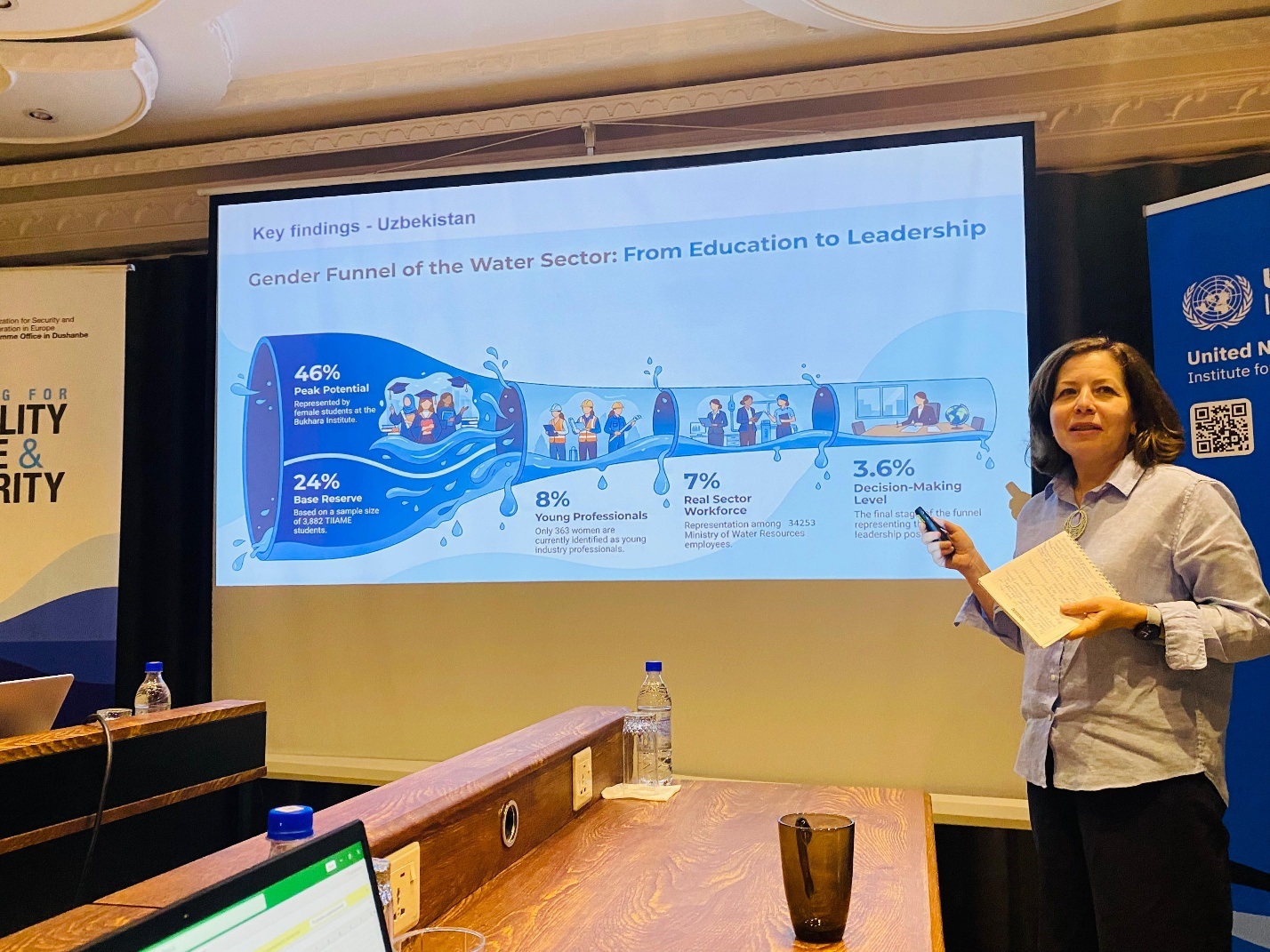
A core focus was evidence-based policy design. Representatives from CAREC and network members from across Central Asia presented findings from a comprehensive gender assessment funded by Blue Peace Central Asia. SIC ICWC’s Oygul Usmanova shared critical insights on addressing the gender gap in Uzbekistan’s water sector, spanning from specialized education to high-level decision-making.
The final days focused on action. Working in groups, participants tackled two critical tracks: inclusivity for water security and data sharing to support cooperation.
The concrete outcomes of these sessions - a set of policy messages and recommendations - will be elevated to the global stage, served as inputs for both the Dushanbe Water Conference and the UN Water Conference in December 2026.
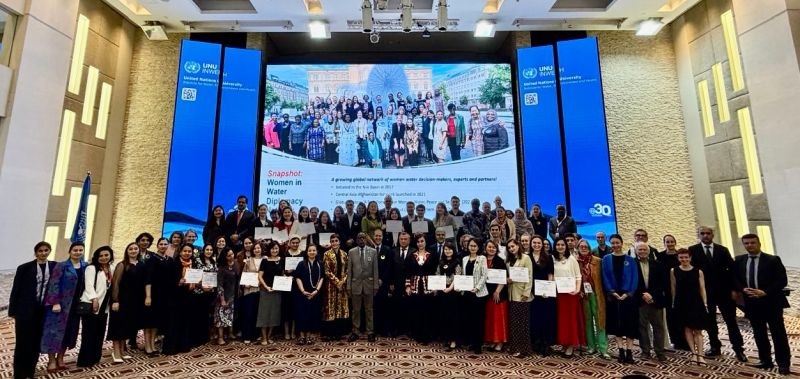
The workshop concluded with a reception celebrating Women in Water Diplomacy, hosted by UNU-INWEH in honor of its 30th anniversary.
The event gathered network members, government officials, UN representatives, and international experts. Keynote remarks were delivered by the Rector of the UN University and UN Under-Secretary-General, Professor Tshilidzi Marwala, alongside a representative for the Deputy Prime Minister of Tajikistan, Dilrabo Mansuri. The evening highlighted the workshop's final outputs on data sharing and inclusive water security, capping off a successful week of regional empowerment.