
No. 57 (718) June 2026
SIC ICWC Participated in the Fifth Gender Technical Working Group
On 12 June, the Ministry of Water Resources of the Republic of Uzbekistan hosted the fifth Gender Technical Working Group Meeting on implementation of the Gender Concept for the Water Sector. of the Republic of Uzbekistan. The meeting brought together representatives of national ministries and agencies, international organizations, and development partners, including the International Water Management Institute (IWMI), the Asian Development Bank (ADB), and the Swiss Agency for Development and Cooperation (SDC). SIC ICWC was represented by Dinara Ziganshina, who moderated the meeting, and Oygul Usmanova.
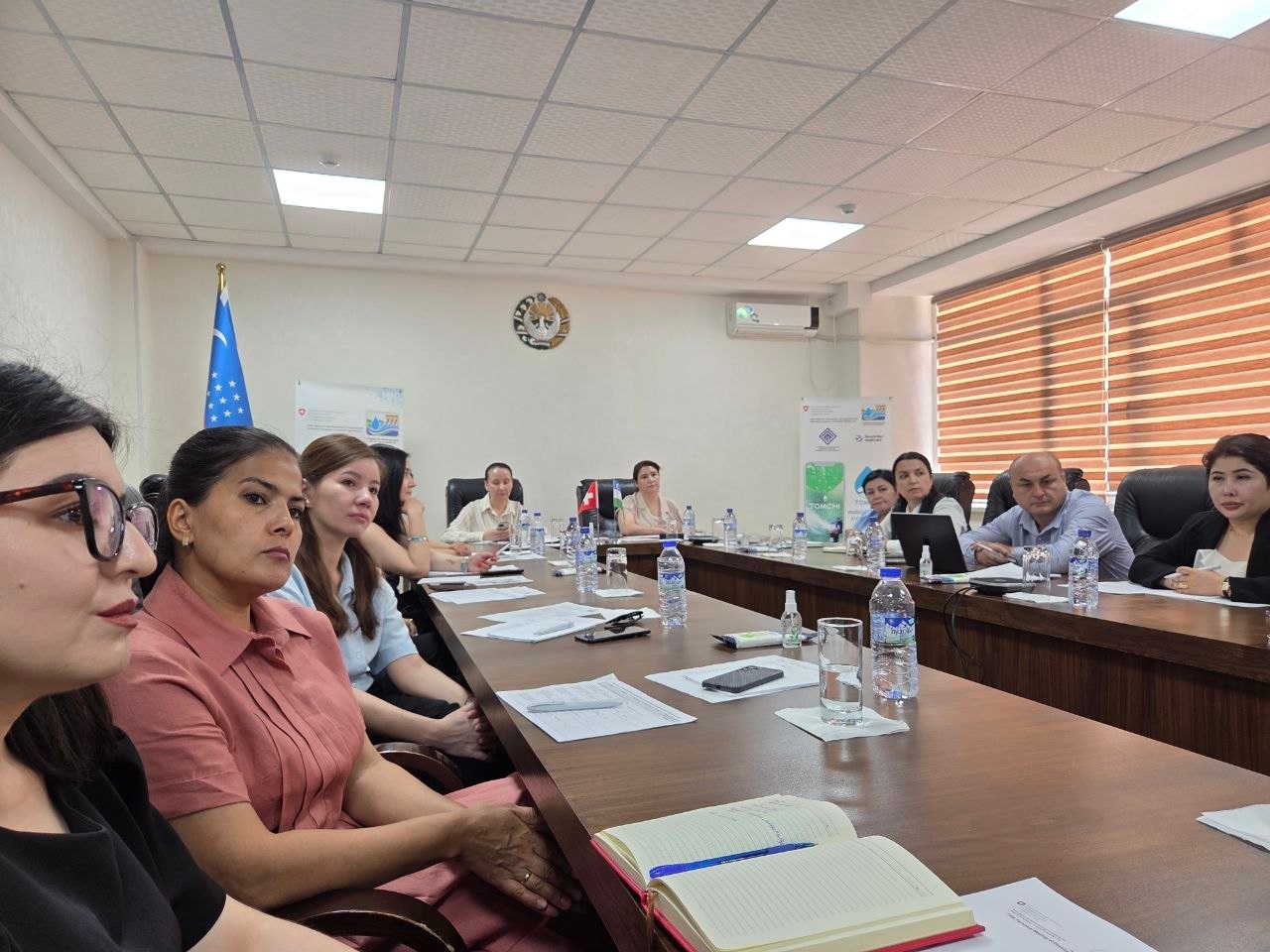
The main objective of the meeting was to discuss the progress achieved in implementing the Gender Concept and to explore opportunities for developing new partnerships for gender mainstreaming in water management.
During the meeting, Farzona Khashimova, representative of the international non-governmental organization ACTED, presented an assessment of progress on the Action Plan to the lGender Concept. The evaluation revealed that nearly 40% of the planned activities were completed during the first year of implementation.
Significant progress has been made in establishing the institutional framework required for implementing the Concept. In particular, gender coordinators have been appointed; 13 local gender trainers have been trained; individuals responsible for implementing and monitoring the Action Plan have been designated; gender considerations have been integrated into the activities of the Ministry of Water Resources and its subdivisions; and a system for monitoring key indicators has been launched to track implementation progress.
Positive results have also been achieved in the area of women’s capacity building. In particular, women’s participation in water diplomacy and international cooperation has expanded through relevant international platforms and the “Women in Water Diplomacy” network, including with the support of SIC ICWC. Considerable attention has also been devoted to the training and professional development of women through the implementation of grant-funded educational programs.
At the same time, the assessment identified several areas where significant gaps remain. These include the gender budgeting mechanisms, the systematic collection and analysis of gender-disaggregated data, the expansion of women’s engagement in water allocation at the local level, and the integration of gender considerations into climate change adaptation measures. Furthermore, it was noted that the existing monitoring system does not yet provide a sufficient basis for objectively assessing the actual impact of the measures being implemented.
In this context, participants emphasized the need to move beyond predominantly quantitative performance indicators and place greater focus on qualitative indicators that capture tangible changes and outcomes. During the discussion, participants highlighted the importance of developing a unified system of indicators, a common methodology, and standardized tools for collecting gender-disaggregated data, both within the Ministry of Water Resources and at the national level.
The recommendations voiced during the meeting included:
- Establishing a unified digital system for monitoring the implementation of the Gender Concept, along with an open online platform for publishing progress and results;
- Introducing mechanisms to assess the impact of projects and initiatives on women’s quality of life, economic empowerment, and income levels;
- Developing a framework for evaluating the effectiveness of gender budgeting;
- Developing gender indicators;
- Conducting regular gender audits;
- Strengthening mentoring and leadership development programs for women and expanding their participation in water diplomacy;
- Intensifying efforts to promote water-saving technologies among women and support women-led entrepreneurship in the water sector;
- Preparing and publishing an annual national report on the state of gender equality in the water sector.
The second part of the meeting focused on coordinating regional efforts on gender mainstreaming in the water sector. It was proposed that the “GWANET Central Asia” initiative’s website supported by SIC ICWC and established in 2007 with the assistance of the Asian Development Bank could be used as a common platform.
At the conclusion of the meeting, participants highly appreciated the outcomes of the session and unanimously called for further strengthening coordination mechanisms to support the implementation of the Gender Concept. Particular emphasis was placed on expanding cooperation with other ministries and government agencies beyond the Ministry of Water Resources.