
No. 58 (719) June 2026
Water and Climate as a Foundation for Sustainable Regional Connectivity: SIC ICWC Participates in the Afghanistan–Central Asia Think Tank Forum
From 15 to 18 June 2026, D. Ziganshina, Director of SIC ICWC, participated in the first Afghanistan–Central Asia Think Tank Forum at the invitation of the International Institute of Central Asia. The Forum was held on 16 June 2026 in Kabul.
The Forum “The Strategic Role of Think Tanks in Promoting Regional Cooperation,” was organized by the Center for Strategic Studies under the Ministry of Foreign Affairs of Afghanistan. It brought together representatives of research institutions from Afghanistan, the countries of Central Asia, and Azerbaijan.
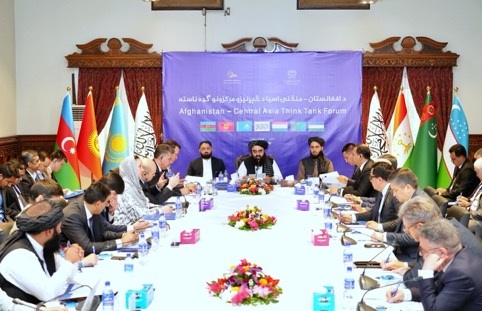
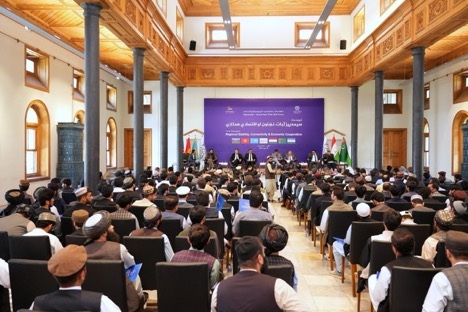
Discussions focused on strengthening cooperation among think tanks, promoting regional stability and connectivity, and advancing trade, economic cooperation, transportation, and energy projects. Particular attention was given to the role of the expert community in developing practical policy solutions, enhancing strategic foresight, and improving early warning systems.
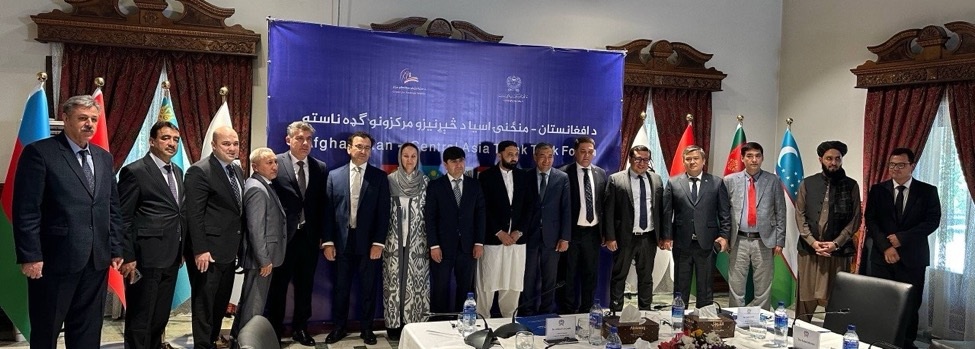
Speaking during the panel discussion, D. Ziganshina emphasized that sustainable regional connectivity depends not only on the development of transport corridors, power transmission lines, and trade routes.
"Today, we talk a great deal about bridges and connectivity. Yet every bridge requires a solid foundation and reliable supports on both sides. In a regional context, these supports include effective natural resource management, modern infrastructure, high-quality data, a skilled workforce, and the capacity to consider the climate risks,", she noted..
In this context, participants emphasized that environmental, climate, and water issues are assuming an increasingly important place in the dialogue among Central Asian countries. Afghan partners also highlighted climate change, water scarcity, and environmental degradation as shared challenges affecting food security, agricultural development, transport connectivity, and the sustainability of regional economies.
It was further noted that the countries of Central Asia are already implementing large-scale reforms aimed at improving water-use efficiency, adopting water-saving technologies, modernizing irrigation infrastructure, strengthening digital water accounting systems, and enhancing adaptation to climate change.
Using Uzbekistan as an example, the outcomes of comprehensive reforms in the water sector were highlighted. Water-saving technologies have been adopted on approximately 2.6 Mha, representing nearly 60% of the country's irrigated land, and are estimated to save about 2.5 billion m3 of water annually. The combined impact of these technologies, together with the modernization of canals and pumping stations, digitalization of water management, and improvements in water accounting, is estimated to generate annual water savings exceeding 10 billion m3. By 2030, this figure is projected to increase to 15 billion m3.
It was also noted that, in 2026, Uzbekistan was selected by UN-Water as one of the countries to showcase progress towards achieving SDG 6. This selection reflects international recognition of the comprehensive and systemic reforms being implemented to promote sustainable water management.
During her presentation, D. Ziganshina proposed several practical areas for strengthening expert cooperation between Afghanistan and the Central Asian countries. These include conducting joint climate and water assessments in the Amu Darya River basin; establishing regular technical dialogues on hydrological data, droughts, snow cover, floods, and dust storms; and undertaking collaborative research on irrigation, land reclamation, water conservation, and riverbank protection.
Particular attention was paid to the need to develop applied project proposals aimed at strengthening water accounting systems, early warning, promoting climate-smart agriculture, land reclamation, and supporting riverbank protection measures.
In the context of Afghanistan's water infrastructure, particular attention was given to the Qosh Tepa canal. It was emphasized that the project is of considerable importance for the country's socioeconomic development and, at the same time, requires professional support in the areas of basin planning, water-use assessment, salinity management, riverbank protection, and the integration of climate risk considerations. Such an approach would help reduce uncertainty, promote technical dialogue, and identify areas for international assistance that could contribute both to Afghanistan's development and the sustainability of the Amu Darya River basin as a whole.
The working program also included meetings at the Embassy of the Republic of Uzbekistan in Kabul and the Consulate General of the Republic of Uzbekistan in Mazar-i-Sharif. During these meetings, participants exchanged views on regional stability and prospects for strengthening connectivity between Central and South Asia.
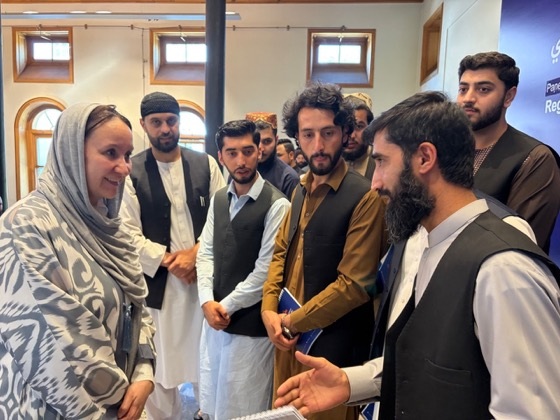
Educational cooperation emerged as another promising area for engagement. During meetings with representatives of the Kardan University in Kabul, students and faculty members of the Political Science and International Relations program expressed interest in expanding academic exchanges with universities in Central Asia through joint lectures, online seminars, and collaborative research initiatives.
The cultural program of the visit included tours of the Babur Garden (Bagh-e-Babur) in Kabul and the Blue Mosque complex in Mazar-i-Sharif. These visits underscored the shared historical and cultural heritage of the peoples of Uzbekistan and Afghanistan as an important foundation for mutual trust, humanitarian cooperation, and good-neighborly relations.
SIC ICWC expressed its readiness to develop joint research projects with Afghan and Central Asian experts as part of the Expert Platform for Water Security, Sustainable Development and Future established as a follow up to the initiative of the President of Uzbekistan.
The participation of SIC ICWC in the Forum reaffirmed the importance of practical, respectful, and evidence-based expert dialogue. Sustainable regional connectivity is strengthened when national efforts are complemented by shared knowledge, professional trust, and jointly developed solutions.