
No. 65 (726) July 2026
SIC ICWC took part in the 2nd Stakeholder Consultation Meeting of the 11th World Water Forum
On 28–29 June, the second SCM took place in Jeddah, Saudi Arabia as part of preparation to the 11th World Water Forum, to be held in Riyadh in 2027. The meeting brought together representatives of governments, international organizations, academia, business, and civil society to further shape the Forum’s thematic, regional, and political processes.
Central Asia was also represented in the ministerial process of the consultation. The region was represented by Mr. Jamshed Shoimzoda, First Deputy Minister of Energy and Water Resources of the Republic of Tajikistan, underscoring the commitment of the Central Asian countries to actively contribute to the preparation of the 11th World Water Forum and to advance shared regional priorities.
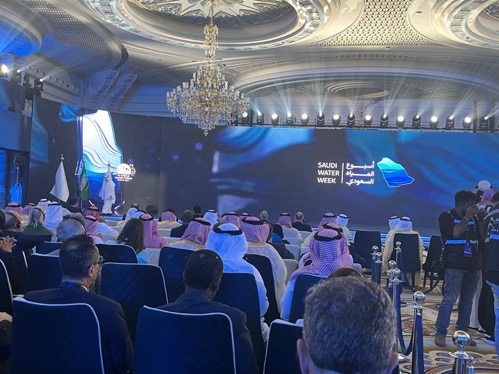
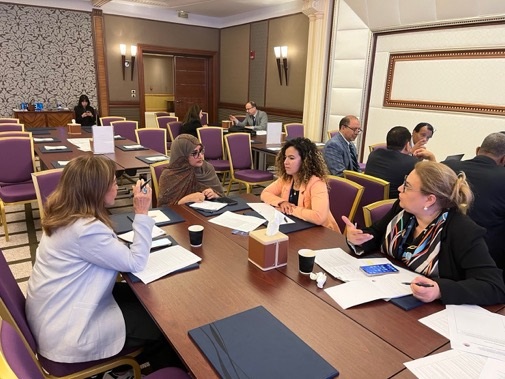
Ms. Dinara Ziganshina, Director of SIC ICWC Central Asia and Co-Coordinator of Theme 4 “Water governance and diplomacy”, participated in the meeting. The consultations focused on refining the scope of the future sessions, defining expected outcomes, and strengthening coordination among the Forum’s processes. Discussions under Theme 4 addressed ways to enhance water diplomacy, strengthen cooperative institutions, promote basin management, improve the role of data and evidence-based decision-making, and advance practical tools for preventing and managing water-related risks.
SIC ICWC contributed to ensuring that the global agenda remains closely aligned with the practical needs of transboundary basins. Particular emphasis was placed on fostering long-term interstate cooperation, improving policy coherence across sectors, and developing institutional mechanisms capable of translating political commitments into coordinated action at the basin, subregional, and regional levels.
Ms. Ziganshina also participated in the Regional Process Dialogue as a representative of the Central Asia subregional process. During the discussions, she highlighted the region’s key priorities, including strengthening transboundary water cooperation, enhancing climate resilience of water infrastructure, promoting coherent water, energy, food, and environmental policies, and advancing regional mechanisms of data sharing, joint planning, and coordinated implementation of practical solutions.
As part of the technical program, participants visited the Rabigh Research & Innovation Water Oasis. The complex is being developed as a hub for research, technology development, capacity building, startup incubation, and innovation across the entire water management chain - from water production and distribution to treatment, reuse, and digital management.
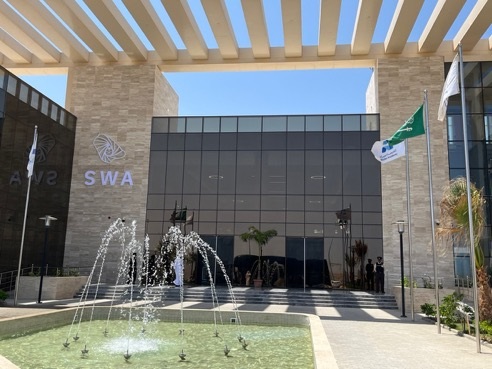
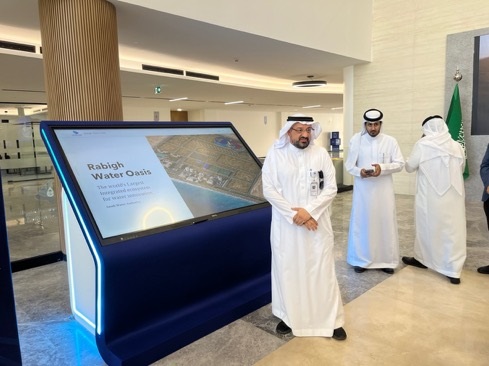
A distinctive feature of the initiative is its well-integrated innovation ecosystem. State-of-the-art laboratories in chemistry, biology, materials science, mechatronics, and related disciplines are complemented by pilot-scale facilities where new technologies are tested under conditions close to real-world operation. A central component of the complex is the Water Academy, which employs advanced simulation and virtual technologies to train water professionals.
Particular attention is paid to youth. The complex offers students, graduates, and early-career researchers opportunities to engage in laboratory and pilot-scale research, collaborate with universities and private sector, acquire practical skills, and contribute to applied research. Strong emphasis is also placed on scientific publications, patent development, commercialization of promising technologies, and international scientific and technological cooperation.
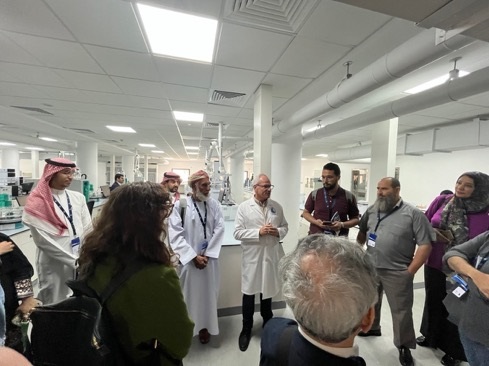
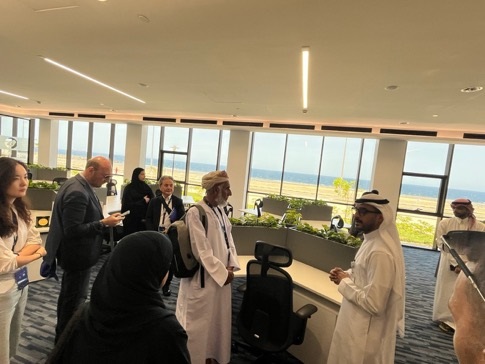
For representatives of Central Asia, the Rabigh innovation ecosystem was especially noteworthy because it reflects many of the principles that historically underpinned the work of the Central Asian Irrigation Research Institute (NPO SANIIRI). The Institute followed an integrated approach spanning the entire innovation cycle - from scientific concepts and laboratory research to pilot-scale testing, the development of engineering standards and technical guidelines, and the subsequent application of new solutions in water management practice. This legacy continues to provide a strong foundation for advancing applied research, engineering innovation, and professional capacity in Uzbekistan’s water sector.
The visit to the Rabigh Research & Innovation Water Oasis demonstrated the growing importance of institutional environments that integrate research, engineering, training, technology piloting, and innovation deployment into a single, coherent system. Such an approach offers valuable insights for strengthening the scientific and innovation capacity of the water sector in both Uzbekistan and Central Asia.
The participation of SIC ICWC in the 2nd SCM reaffirmed the relevance of Central Asia’s experience to the global water dialogue and created additional opportunities to advance regional initiatives in water diplomacy, innovation, capacity building, and sustainable water management.