
No. 68 (729) July 2026
Second Workshop on Dissemination of the Project Results on Correcting Hydromodule Zoning in the Syr Darya River Basin
On 8 July 2026, in Kyzylorda, Republic of Kazakhstan, the second workshop was held to present the interim results of the project “Correction of hydromodule zoning of the Syr Darya River Basin using remote sensing data and satellite mapping technologies for correction of water consumption and irrigation regimes for agricultural crops cultivated in the region”.
The workshop aimed to present the project's achievements to date, discuss the scientific and methodological approaches applied, and promote the exchange of knowledge and experience among experts and stakeholders. Discussions focused on improving hydromodule zoning (HMZ), refining crop water requirements, and enhancing the water management efficiency through RS technologies.
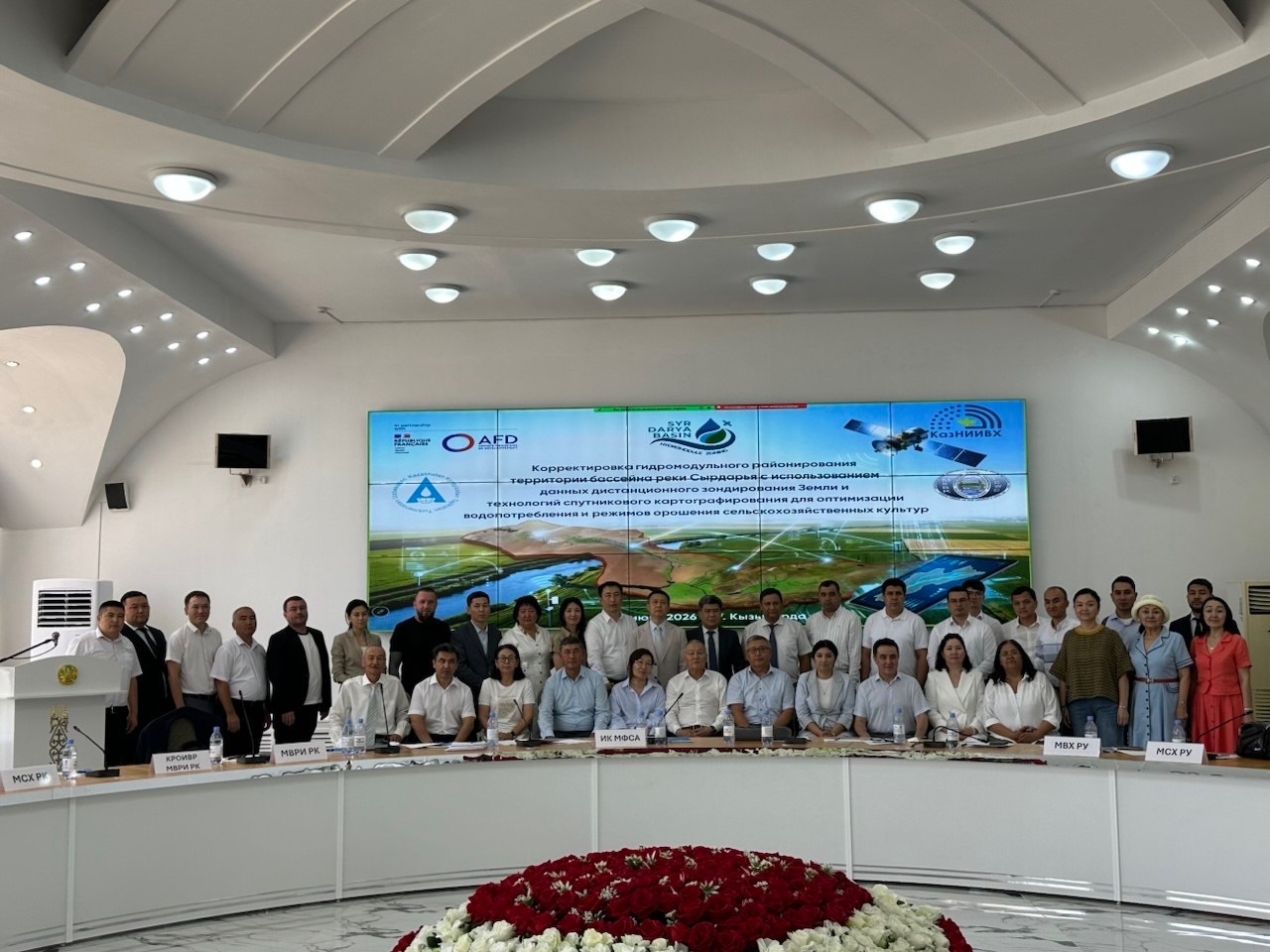
The event was organized by the Executive Committee of the International Fund for Saving the Aral Sea (IC IFAS) as part of a project funded by the French Development Agency (AFD). The initiative is implemented under Project 1.11 “Introduction of advanced methods to correct the irrigation regimes for agricultural crops”, which is part of the Action Program for Assistance to the Countries of the Aral Sea Basin (ASBP-4).
Representatives of water and agriculture ministries of Uzbekistan and Kazakhstan, their territorial and subordinate organizations, local executive authorities of Turkistan and Kyzylorda provinces, EC IFAS, the Kazakh Research Institute of Water Resources (KazNIIVH), the Scientific Information Center of the Interstate Commission for Water Coordination (SIC ICWC), the Kazakh National University of Water Management and Irrigation (KazNUWHI), the National Research University “Tashkent Institute of Irrigation and Agricultural Mechanization Engineers” (NRU TIIAME), the Aral-Syr Darya Basin Inspectorate, and mass media took part in the workshop. The event was held in a hybrid format enabling broader participation by experts and stakeholders both in person and online.
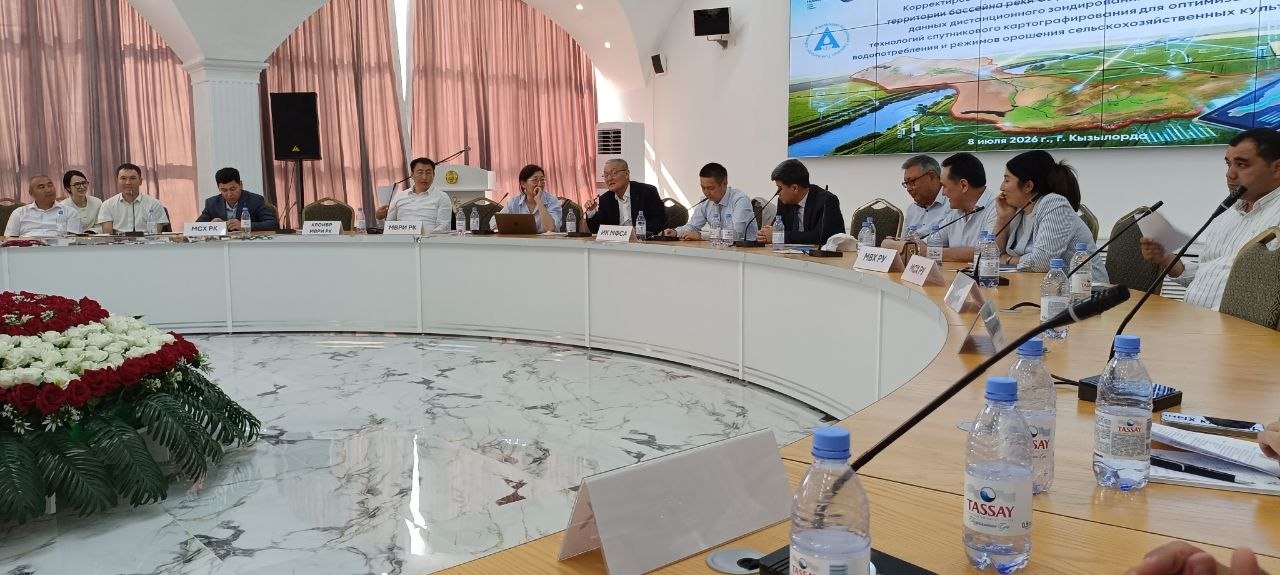
The primary objective of the workshop was to disseminate the project's interim results, inform stakeholders about the progress achieved, present the scientific and methodological approaches developed under the project, and gather expert feedback and recommendations. Participants also discussed opportunities for practical application of the project outcomes. Particular emphasis was placed on promoting the project's recommendations among relevant government agencies, research institutes, and other stakeholders to support their integration into national strategies, sectoral programs, and regulatory frameworks for water management and irrigated agriculture development.
During the workshop, participants were introduced to the project's objectives, methodology, and interim results, including studies carried out to refine the boundaries of hydromodule zoning (HMZ) and update irrigation norms for major crops. The presented methodology is based on the integrated use of RS, GIS, field survey results, and modern spatial analysis techniques.
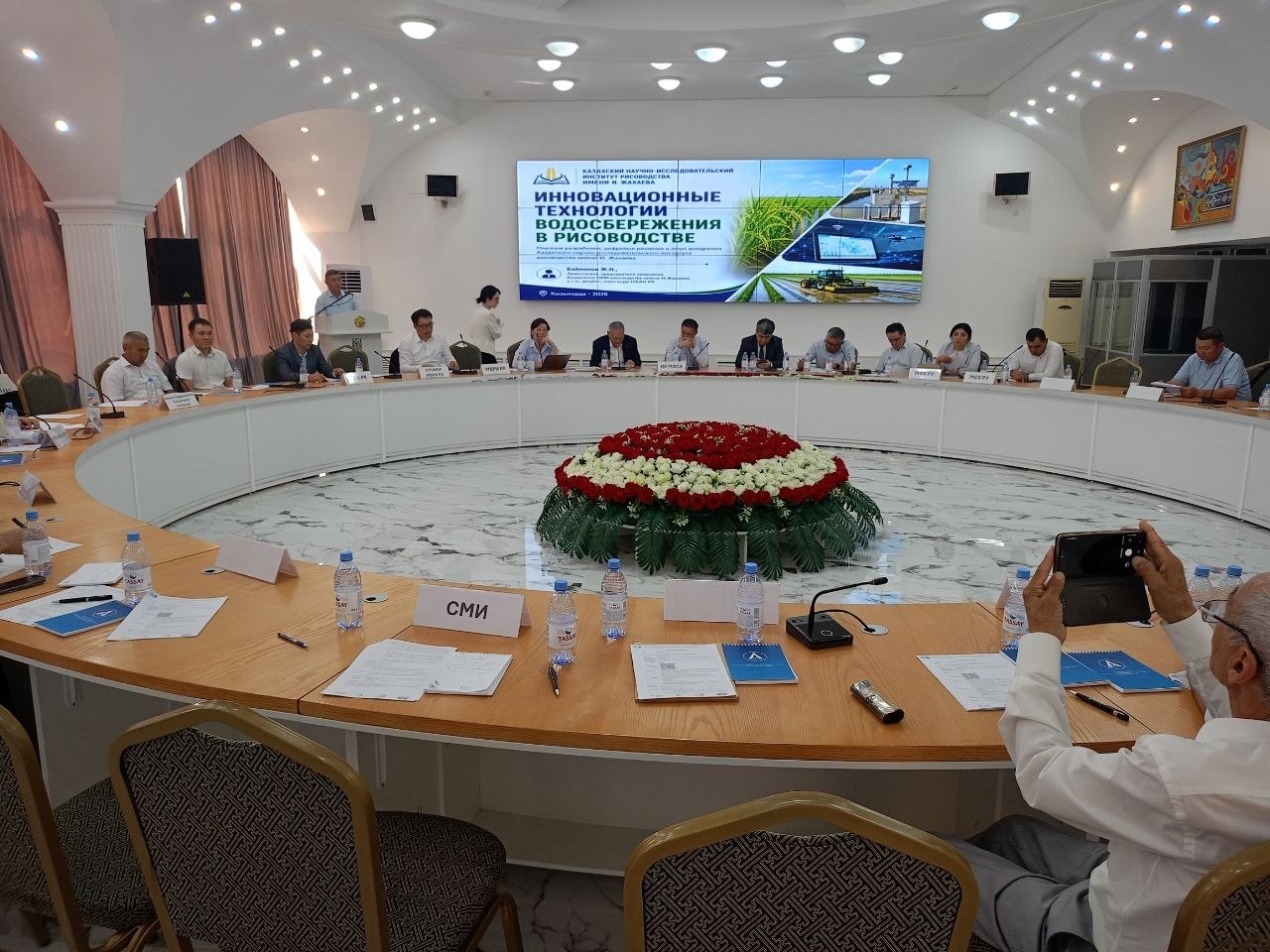
Shavkat Kenjabayev and Zhavlon Ishanov from SIC ICWC presented the interim results of the research conducted during the first half of 2026 on refining the HMZ boundaries in the Fergana Valley.
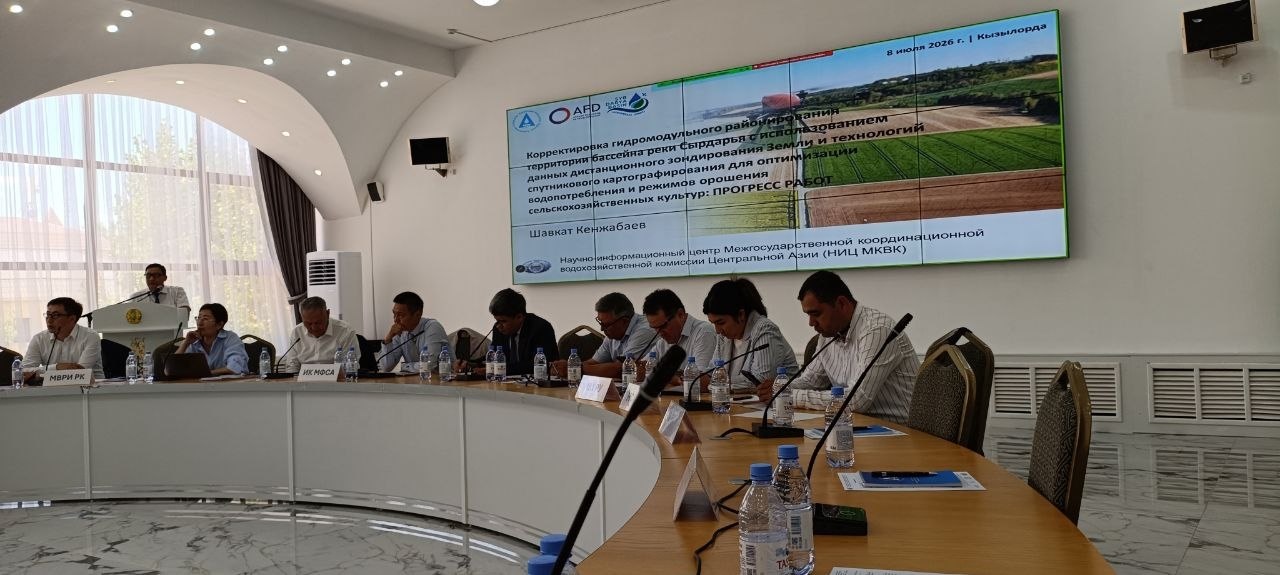
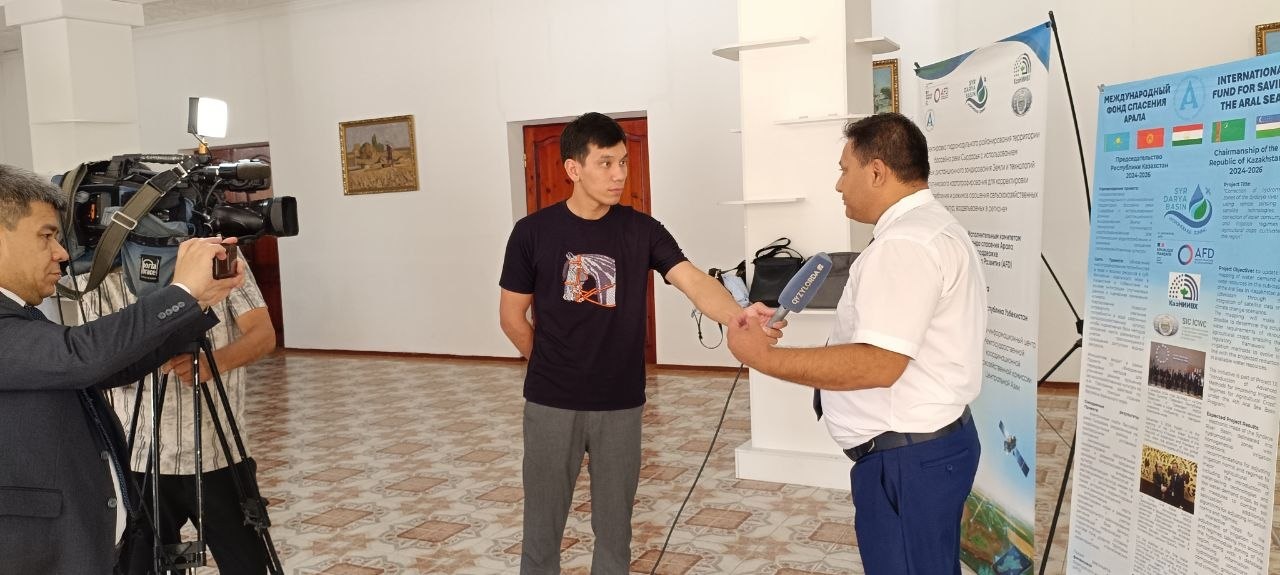
In his presentation "Refining Irrigation Norms for Major Crops in the Fergana Valley" Mr. Kenjabayev outlined the need to revise the existing hydromodule zoning system, reviewed the limitations of the current methodology used to define HMZ boundaries, and presented updated approaches to adjusting irrigation regimes and irrigation norms based on RS data, field survey, and geoinformation technologies. As part of the workshop, Mr. Kenjabayev also gave an interview to the regional television and radio company Kyzylorda, where he discussed the project's objectives and interim achievements. He emphasized the importance of updating the HMZ mapping to improve water-use efficiency and strengthen the resilience of irrigated agriculture to current and future climate challenges.
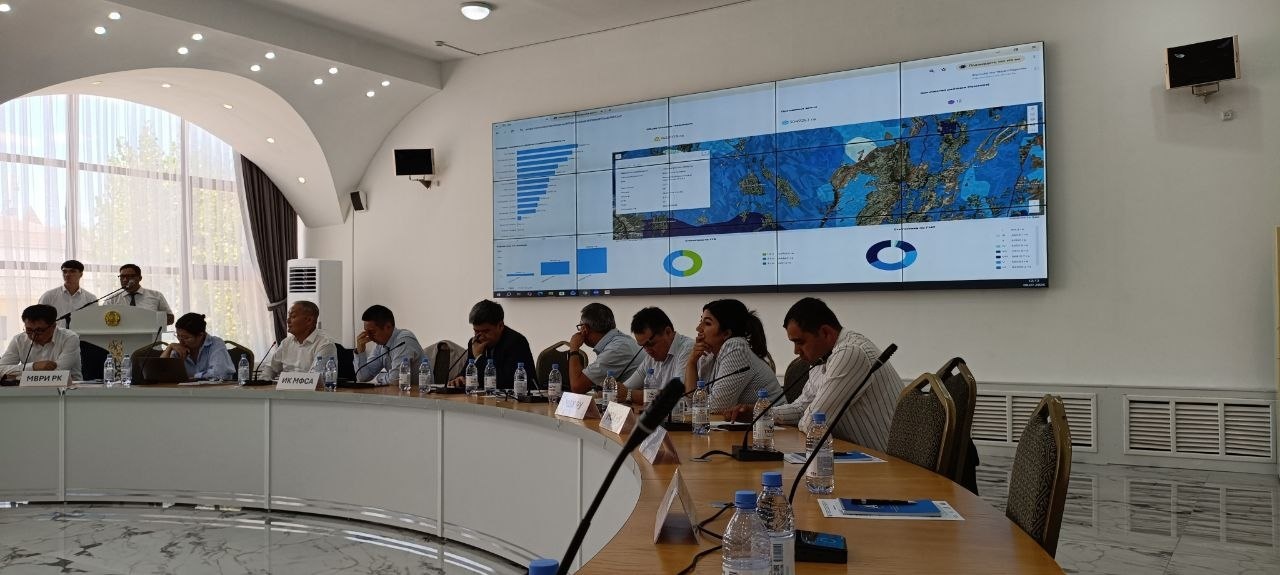
Doston Kholikov, the project co-lead from UZCOSMOS, presented the results of the on refining HMZ boundaries, along with the interim results of developing an interactive HMZ map for the Fergana Valley. His presentation demonstrated the potential of modern geoinformation technologies and RS to visualize research findings, analyze the spatial distribution of HMZ, and support informed decision-making in water management and irrigated agriculture.
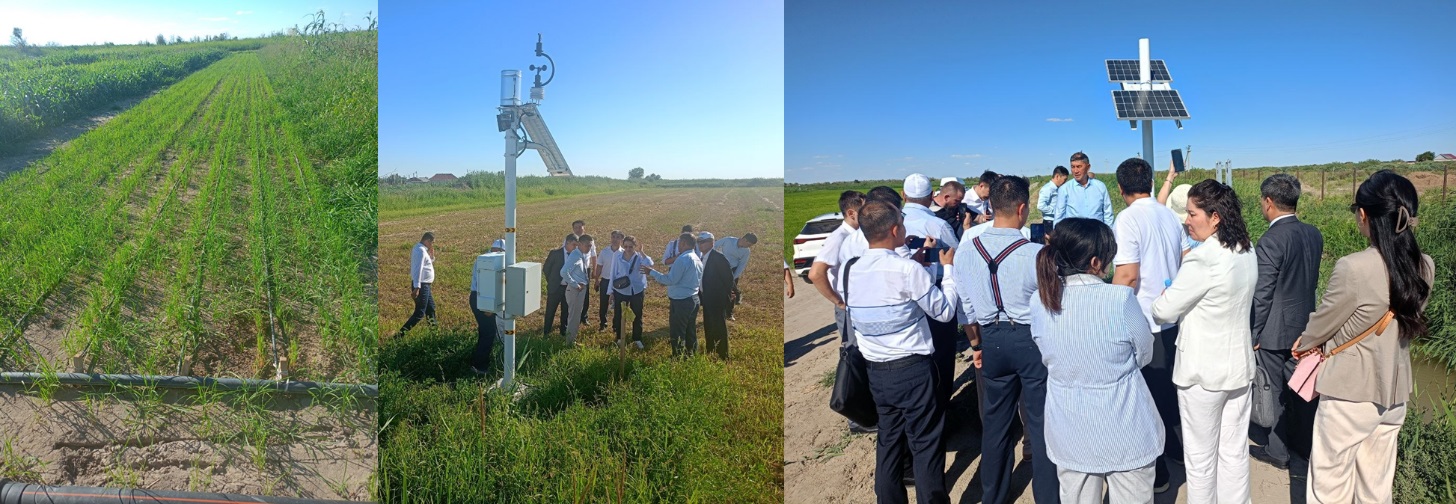
At the initiative of the host organization, a field visit was organized for workshop participants to the demonstration sites of the Kazakh Research Institute of Rice Cultivation named after Ibray Zhakhaev. During the visit, participants were introduced to modern water accounting and measurement systems, automated weather stations, and an innovative drip irrigation system used in rice cultivation. The field visit provided participants with practical insights into advanced technologies for monitoring and managing agricultural water use and offered an opportunity to discuss the potential for wider adoption of water-saving solutions and digital technologies in response to growing water scarcity.
The research findings, scientific and methodological approaches, and practical recommendations presented during the workshop provide a solid foundation for improving irrigated agriculture management, supporting evidence-based decision-making, and updating national strategies, sectoral programs, and regulatory frameworks both in Kazakhstan and Uzbekistan.
During the discussions, participants emphasized the practical value of the project's results and explored opportunities to apply the proposed approaches to refining HMZ in other regions of both countries. They also discussed prospects for mobilizing international financial support to facilitate broader implementation of the project's recommendations, update irrigation regimes and norms for crop irrigation, and promote modern water-saving technologies and digital tools for water management. Particular attention was paid to integrating the project's recommendations into the national policies and regulatory frameworks of both countries.
At the conclusion of the workshop, participants formulated a set of proposals and expert recommendations, which will be taken into consideration during the subsequent stages of project implementation and in the final project outputs. The organizers also presented the project schedule for the remaining activities and announced that the final workshop to disseminate the project's results will be held in November 2026 in Tashkent.