
No. 71 (732) July 2026
From Concept to Implementation: SIC ICWC took part in the Third meeting of the CAREC Water Pillar Working Group
The Third meeting of the CAREC Water Pillar Working Group was held on 15–16 July 2026 in Almaty under the chairmanship of the Government of Kazakhstan. The meeting organized by the Asian Development Bank (ADB) aimed to review progress on the CAREC Water Pillar, discuss the results of preliminary studies and identify priorities for the next stage of regional cooperation and investments.
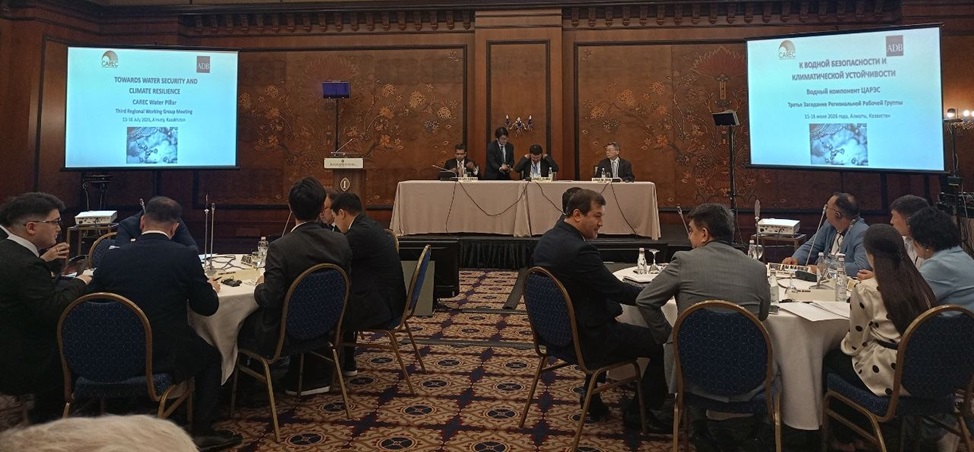
The meeting convened representatives from six member countries of the CAREC Water Pillar (Azerbaijan, Kazakhstan, the Kyrgyz Republic, Tajikistan, Turkmenistan, Uzbekistan), EC IFAS, SIC ICWC, ADB, World Bank, OECD, GIZ, IWMI, European Union and other international organizations. Head of Research-Analytical Division for Regional Water Management, Shavkat Kenjabaev participated in the meeting on behalf of SIC ICWC.
During the meeting, participants reviewed progress from pre-feasibility studies for regional investments, discussed the Central Asia Water–Energy System (CAWES) model, examined the implementation of the ADB TA 10567 “Transboundary Water Collaboration for Climate-Resilient Water Management,” and were introduced to the regional G2F program. It was noted that the CAWES model is developed by integrating earlier modelling tools, including the Pywr hydrological models for the Chirchik and Amu Darya river basins, developed jointly by the University of Manchester, SIC ICWC, the World Bank, and IWMI, as well as the DIgSILENT-based regional power system model for the five Central Asian countries. These modelling components are currently being integrated into a unified CAWES framework with financial support from ADB.
The ADB Glaciers to Farms (G2F) Regional Program covers nine countries and plans to mobilize $3.5 billion during 2026–2035 to build climate-resilient water management, enhance water and food security, and attract climate financing. According to the materials presented, the program is expected to strengthen climate resilience for approximately 45 million people, support the sustainable management of 26.9 million ha of ecosystems, establish regional river basin governance mechanisms, and scale up climate-resilient solutions in the agricultural sector. Particular emphasis was paid to the role of the CAREC Water Pillar Working Group, which is envisaged as the future technical advisory platform for the G2F, providing recommendations on regional investment priorities, facilitating knowledge exchange, and supporting the coordination of regional climate initiatives.
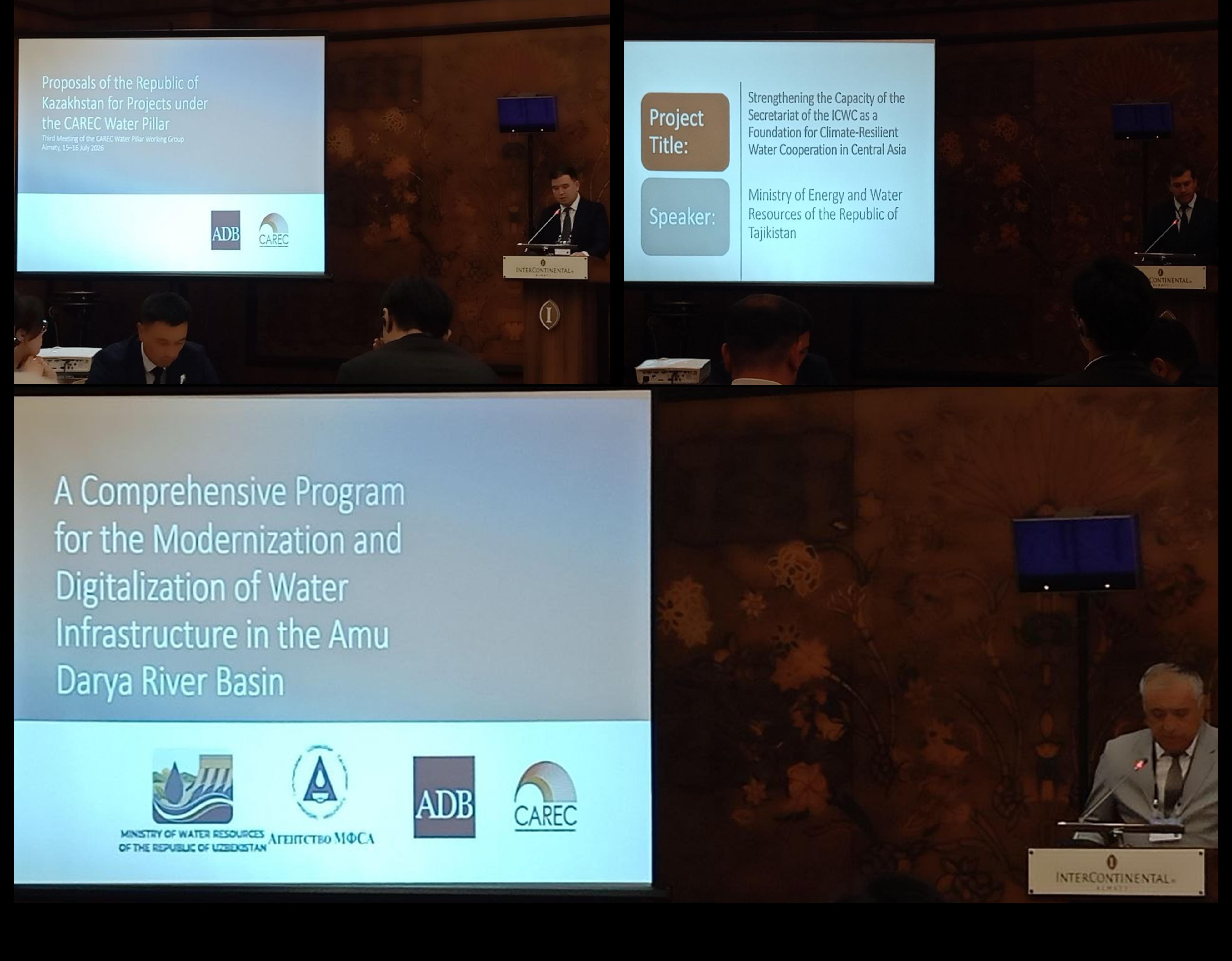
During the meeting, the participating countries presented proposals for potential regional and subregional investment projects:
- Azerbaijan proposed a project to develop an integrated Kura River Basin Management Plan, aimed at strengthening basin planning, improving water monitoring, and enhancing climate change adaptation.
- Kazakhstan presented an initiative to (i) strengthen the capacity of the Chu–Talas Commission, (ii) expand international training programs, and (iii) establish the Aral Geopark as a regional platform for scientific cooperation.
- Kyrgyzstan proposed a project to enhance climate resilience of hydraulic infrastructure, modernize three dams and reservoirs and strengthen dam safety systems.
- Tajikistan presented a project to strengthen the institutional capacity of the ICWC Secretariat, focusing on the development of analytical systems, the enhancement of regional information exchange, and closer institutional cooperation.
- Turkmenistan proposed a project to improve water quality monitoring through the modernization of laboratory facilities, introduction of digital technologies for hydrological data exchange, and capacity building for technical specialists.
- Uzbekistan presented a project for the modernization and digitalization of the hydrometric network in the Amu Darya River Basin, including the automation of hydrological monitoring stations, the deployment of remote monitoring technologies for dredging operations, the introduction of advanced decision-support systems, and improvements in water allocation management.
All of the proposed initiatives have a strong transboundary dimension and are designed to generate long-term regional benefits in the areas of water security, sustainable agriculture, and climate change adaptation.
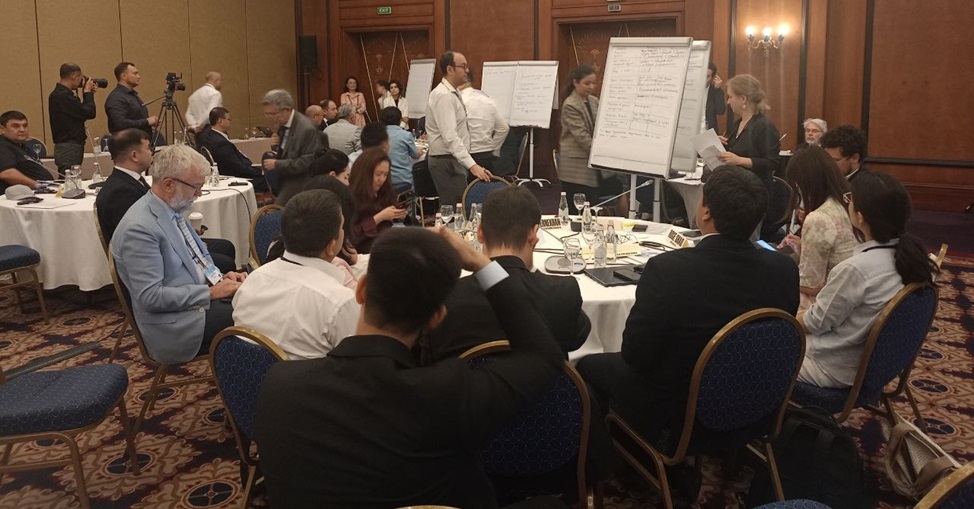
Shavkat Kenzhabayev, representing SIC ICWC, also participated in the work of Group 3 “Nexus solutions and cross-sectoral learning,” where discussions focused on strengthening the integration of the water, energy, and agricultural sectors, advancing the water digitalization, developing regional information systems, and preparing joint investment initiatives. Participants emphasized that the successful implementation of such projects depends on the harmonization of data, the development of shared information platforms, the wider use of RS technologies, advanced forecasting models, and decision-support systems.
At the conclusion of the meeting, ADB and the participating countries agreed to continue their joint work on the preparation of regional investment initiatives. Over the coming months, activities will include finalizing review on pre-feasibility studies for the modernization of interstate canals and the joint automated water accounting system, conducting consultations on water–energy modelling scenarios, submitting country comments on ADB Technical Assistance TA 10567, and preparing an updated inception report. The meeting also agreed to establish the External Advisory Committee for the G2F and to convene the next meeting of the CAREC Water Pillar Working Group in a virtual format in late 2026 or early 2027, followed by an in-person meeting later in 2027.
Participation in the activity of the CAREC Water Pillar enabled SIC ICWC to become familiar with the investment proposals submitted by participating countries, contribute to discussions on regional cooperation priorities, and engage in shaping future regional investment initiatives. The knowledge and materials obtained during the meeting will support further development of regional information systems, provide scientific and methodological support for regional initiatives, strengthen coordination of international projects, and contribute to the preparation of joint investment programs aimed at enhancing water, environmental, and climate resilience across Central Asia.