
No. 76 (737) July 2026
From Adaptive Participant to Co-Author of the Global Agenda: Analysis of Tajikistan’s Diplomatic Initiatives at the UN General Assembly (2020–2025) Released
To mark the 80th anniversary of the United Nations, SIC ICWC has launched a new study examining the evolution of Tajikistan’s foreign policy through its statements at the UN General Assembly. Covering the period from 2020 to 2025, SIC ICWC builds on its 2021 analysis of country statements delivered between 1992 and 2020. The new analysis focuses on the most dynamic five-year period, during which Tajikistan’s diplomacy reached a new level and assumed a more prominent role in global governance.
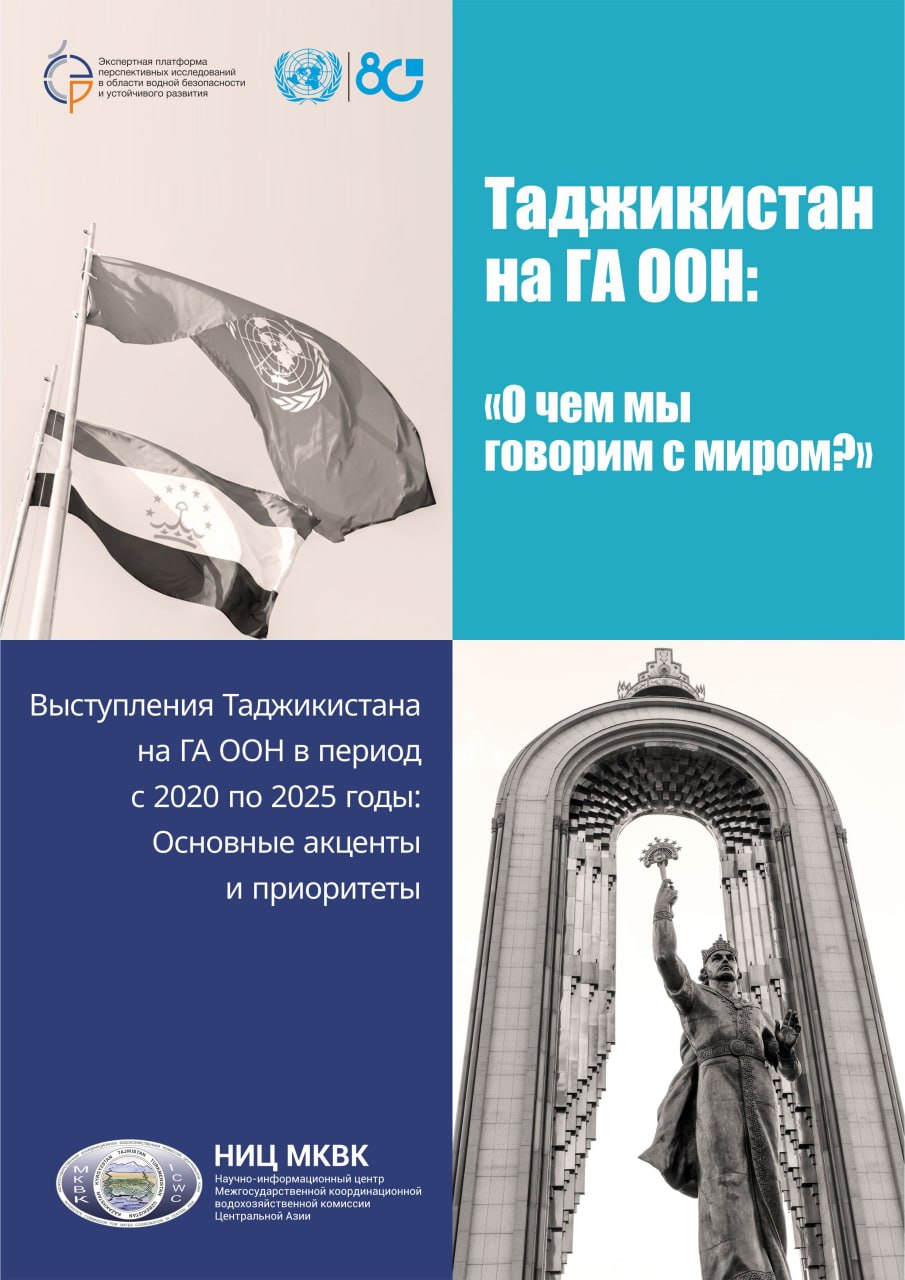
Key findings:
The analysis shows that over the past five years Tajikistan’s foreign policy at the UN General Assembly has evolved in three major directions:
- Institutionalization of water and climate agenda:
Tajikistan has consolidated its position as one of the global leaders in water diplomacy. While the early years focused primarily on the country’s vulnerability to climate change and glacier retreat, by 2023–2025 its messaging had become increasingly proactive, promoting international cooperation mechanisms, glacier preservation initiatives, and stronger links between these efforts and the Sustainable Development Goals. - Regional security through the lens of development:
The country’s statements increasingly present security and socio-economic development as closely interconnected. Particular attention is paid to Afghanistan, counterterrorism and transnational threats, as well as stronger transport, energy, and water connectivity across Central Asia as a foundation for regional resilience. - Consistent support for multilateralism:
Tajikistan has consistently advocated a stronger role for the United Nations, respect for international law, and collective responses to global challenges. Its diplomatic messaging has become more strategic and increasingly focused on long-term international partnerships.
"The evolution of Tajikistan’s statements during 2020–2025 reflects the emergence of a consistent national narrative: the country is reinforcing its image as a strong advocate of the global water and climate agenda, a supporter of regional stability, and a committed defender of multilateral cooperation," the study concludes.
Conclusions and future prospects
The study provides a comprehensive picture of the evolution of Tajikistan’s foreign policy priorities. It offers a helpful analytical resource for diplomats, international affairs experts, and policy analysts in assessing the country’s future foreign policy directions in an evolving global environment.
SIC ICWC is developing a new series of studies on the foreign policy priorities of the Central Asian countries.
The resulting analytical framework will enable:
- comparative analysis of the foreign policy priorities of the Central Asian states;
- identification of common positions on environmental issues, water management, and regional security; and
- a more comprehensive understanding of Central Asia's voice in global diplomacy.