
No. 78 (739) July 2026
SIC ICWC Contributes to Discussions on Irrigation Scheduling in the SMARTWATER Program
On July 30, Shavkat Kenjabayev, Head of the Research-Analytical Division for Regional Water Management at SIC ICWC, participated in the roundtable "Climate-informed irrigation scheduling using traditional and modern approaches in the SMARTWATER Program." The event was organized by IFAS GEF Agency in cooperation with the National Water Resources Management Project in Uzbekistan (NWRM), funded by the Swiss Agency for Development and Cooperation (SDC).
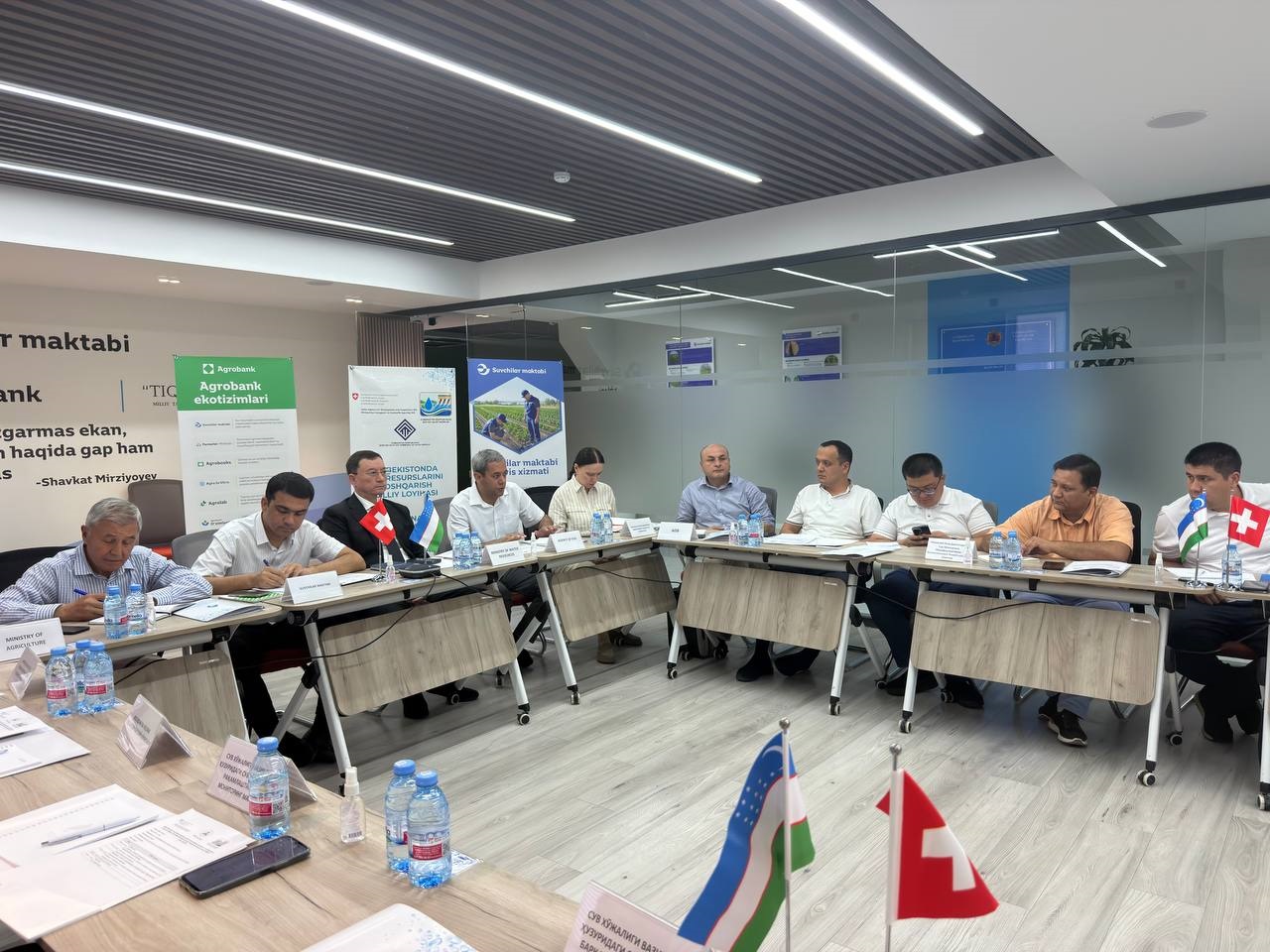
The roundtable presented the SMARTWATER software, discussed new approaches to irrigation scheduling based on climate data, and gathered expert recommendations from specialized organizations for further improvement of the software.
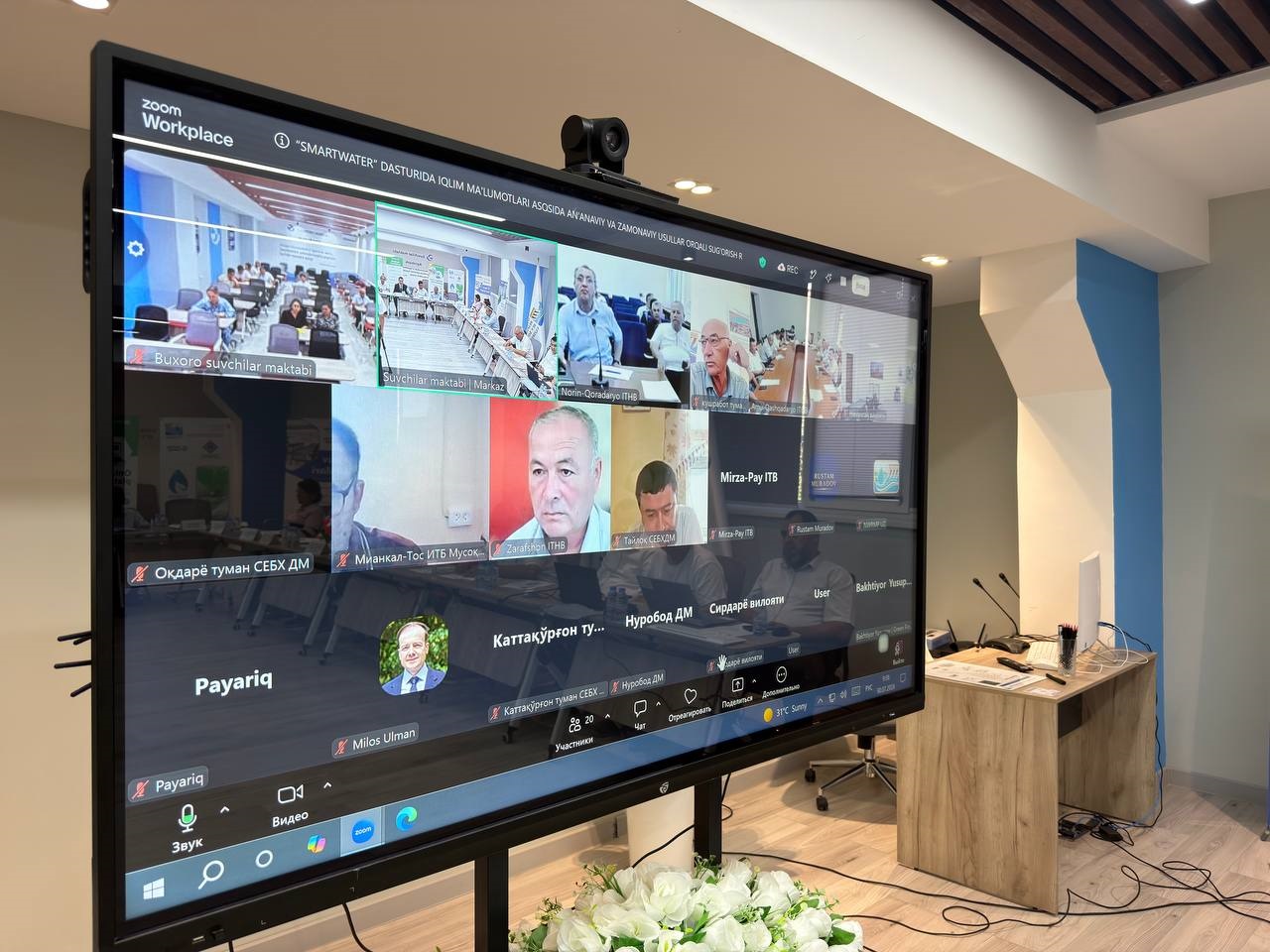
The event was held in a hybrid format at Suvchilar maktabi ("Water Worker School"), which is emerging as a modern platform for professional dialogue, scientific exchange, practical knowledge sharing, and discussions on innovative solutions in water management.
Participants included representatives of the Ministry of Water Resources of the Republic of Uzbekistan and its territorial branches (BISAs, ISAs, and the State Water Delivery Services), as well as representatives of sectoral ministries and agencies, the IFAS Agency, SDC, ADB, research institutes, universities, international organizations, and technical assistance projects.
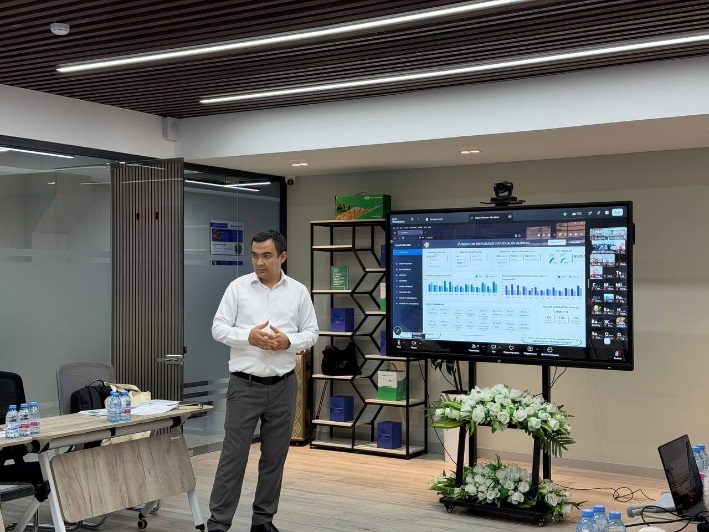
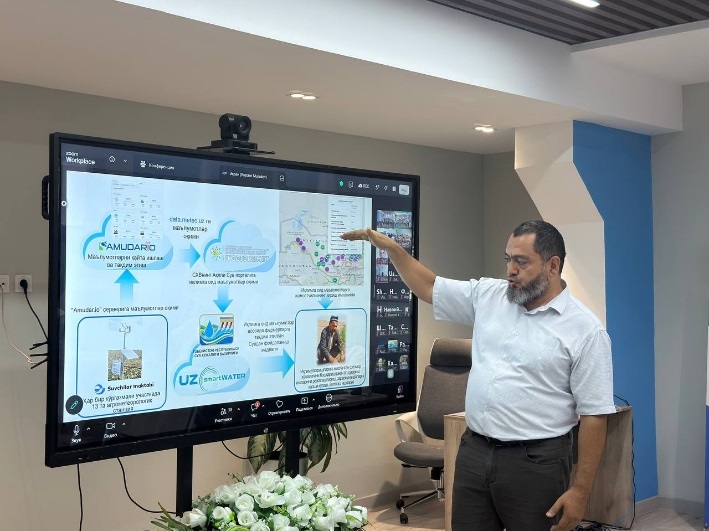
The SMARTWATER platform was presented as a decision-support tool for determining irrigation dates and depths based on climate data, reference evapotranspiration (ET₀), soil characteristics, crop requirements, and modern analytical methods. Demonstrations covered irrigation scheduling algorithms developed in Excel, the use of weather data from Suvchilar maktabi, integration with the Ministry's information systems, and the potential of digital technologies to support water management decisions.
During the discussion, SIC’s representative noted that developing advanced digital tools for irrigation scheduling is one of the key priorities of the digital transformation of Uzbekistan's water sector and the wider Central Asian region. At the same time, he emphasized that the accuracy and reliability of such systems depend largely on the quality and relevance of the scientific, methodological, and mapping data used in the calculations. In particular, further refinement of the algorithms should incorporate recent research on crop phenological phases, calibration of crop coefficients (Kc) in accordance with FAO-56 recommendations under Uzbekistan's soil and climatic conditions, and updated baseline data on irrigated land.
Special attention was paid to the need for irrigation scheduling to be based on updated hydromodule zoning boundaries that reflect current soil and land productivity conditions. It is important to take into account the transition to international soil classification system (from the Kachinsky system to the FAO/WRB classification), the groundwater dynamics, and other factors affecting crop water requirements and irrigation schedules.
It was noted that most regions of Uzbekistan still rely on hydromodule zoning maps produced several decades ago, which no longer fully reflect present-day conditions.
To accelerate the adoption of SMARTWATER, ensure continuity of research, and avoid duplication of previous work, it was recommended to make full use of existing results of earlier scientific projects and national research. In particular, the findings of the National Research University “Tashkent Institute of Irrigation and Agricultural Mechanization Engineers” on updating hydromodule zoning in Khorezm province, together with the new hydromodule zoning boundaries for the Uzbek part of the Fergana Valley currently being developed under a project supported by the French Development Agency (AFD) are proposed for use. Incorporating these results would provide a consistent methodological basis for irrigation scheduling, improve the reliability of calculations, and facilitate the practical deployment of digital decision-support tools for water management.
The discussion also focused on practical implementation. Representatives of the Ministry of Water Resources proposed piloting SMARTWATER in Syrdarya District of Syrdarya province, which has been designated as an innovation pilot area for adopting advanced digital technologies in the water sector. Testing the software under operational conditions will make it possible to validate the irrigation scheduling algorithms, identify possible deficiencies, and adapt the software to real-world conditions.
At the conclusion of the roundtable, participants recognized SMARTWATER as a promising decision-support tool for irrigation management and emphasized the importance of its continued refinement in line with scientific recommendations and the operational needs of the water sector.
SIC’s participation provided an opportunity to present scientific and practical recommendations for strengthening the methodological basis of irrigation scheduling, ensuring continuity between modern digital technologies and long-term research on hydromodule zoning, and integrating existing scientific knowledge into the digital transformation of Uzbekistan's water sector.