
No. 81 (742) August 2026
Final workshop of the “Water-Energy Nexus Systems Modeling” project»
On 13 August 2026, the final workshop of the “Water-Energy Nexus Systems Modeling” project was held at the SIC ICWC Training Center. The event was conducted in a hybrid format, bringing together representatives of Central Asian countries and regional organizations both in person and online.
The final workshop was attended by members of Technical Groups No. 1 and No. 2, the SIC ICWC team, and invited high-level experts, including Y.A. Djurayev, Senior Official of the Presidential Administration of the Republic of Uzbekistan; R. Kh. Tashev, representative of the Ministry of Water Resources of the Republic of Uzbekistan; F.M. Irmatov, Deputy Head of the BWO Syr Darya; A.T. Mirzaev, Director of CDC “Energy”; and Kh.A. Shamsiev, Deputy Director of CDC “Energy.”
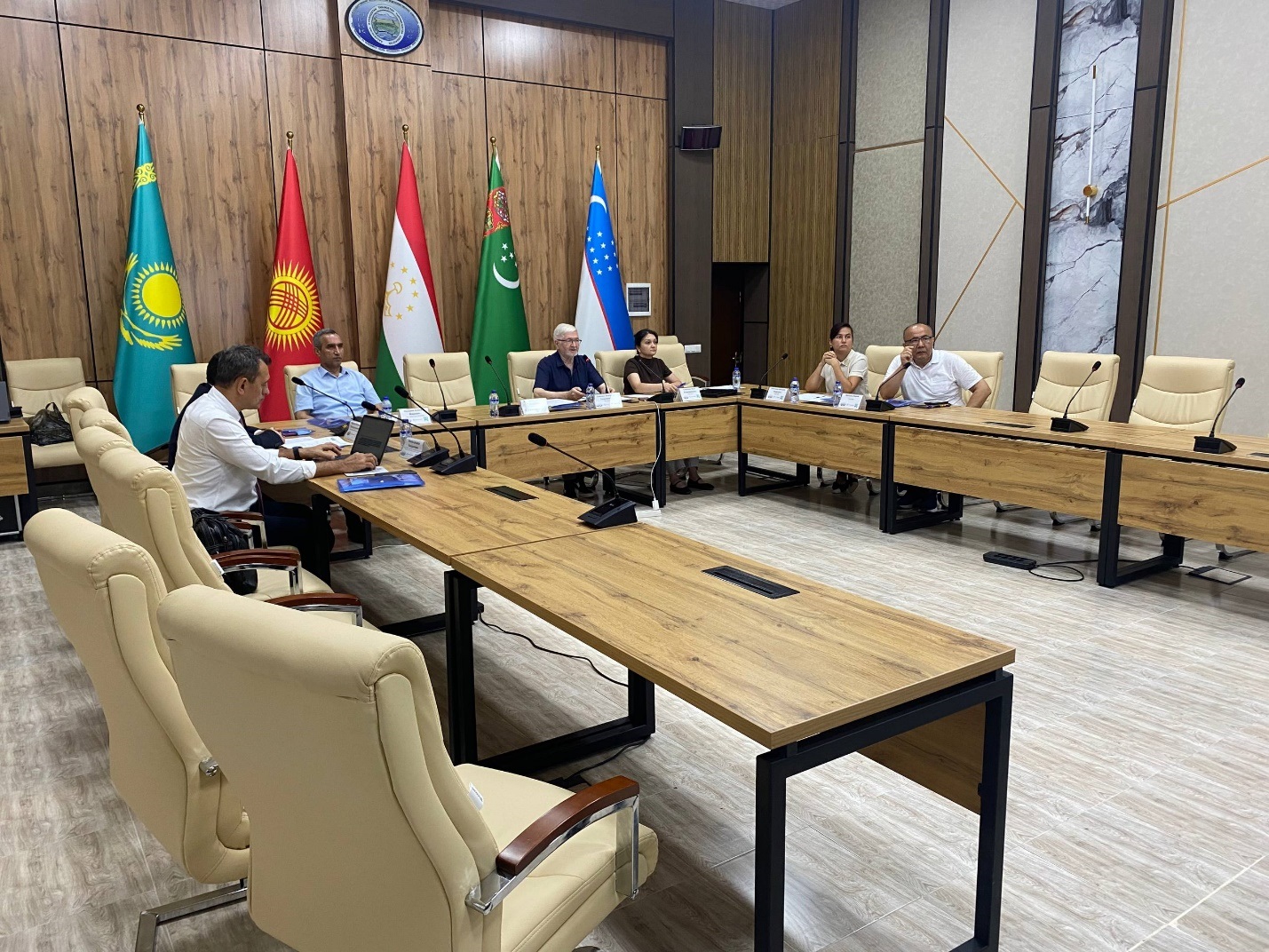
The final workshop provided an opportunity to summarize the work completed under the project, receive expert feedback from representatives of participating countries and regional organizations, and identify opportunities for the potential future application of the WEAP and LEAP models.
D.R. Ziganshina, Director of SIC ICWC, delivered the welcoming address.
Muhammad Amjad, representative of the World Bank Group, and Brian Joyce, representative of the Stockholm Environment Institute (SEI) presented the latest results of the scenario-based modeling studies and highly commended the work carried out by Technical Groups No. 1 and No. 2, as well as by the SIC ICWC team.
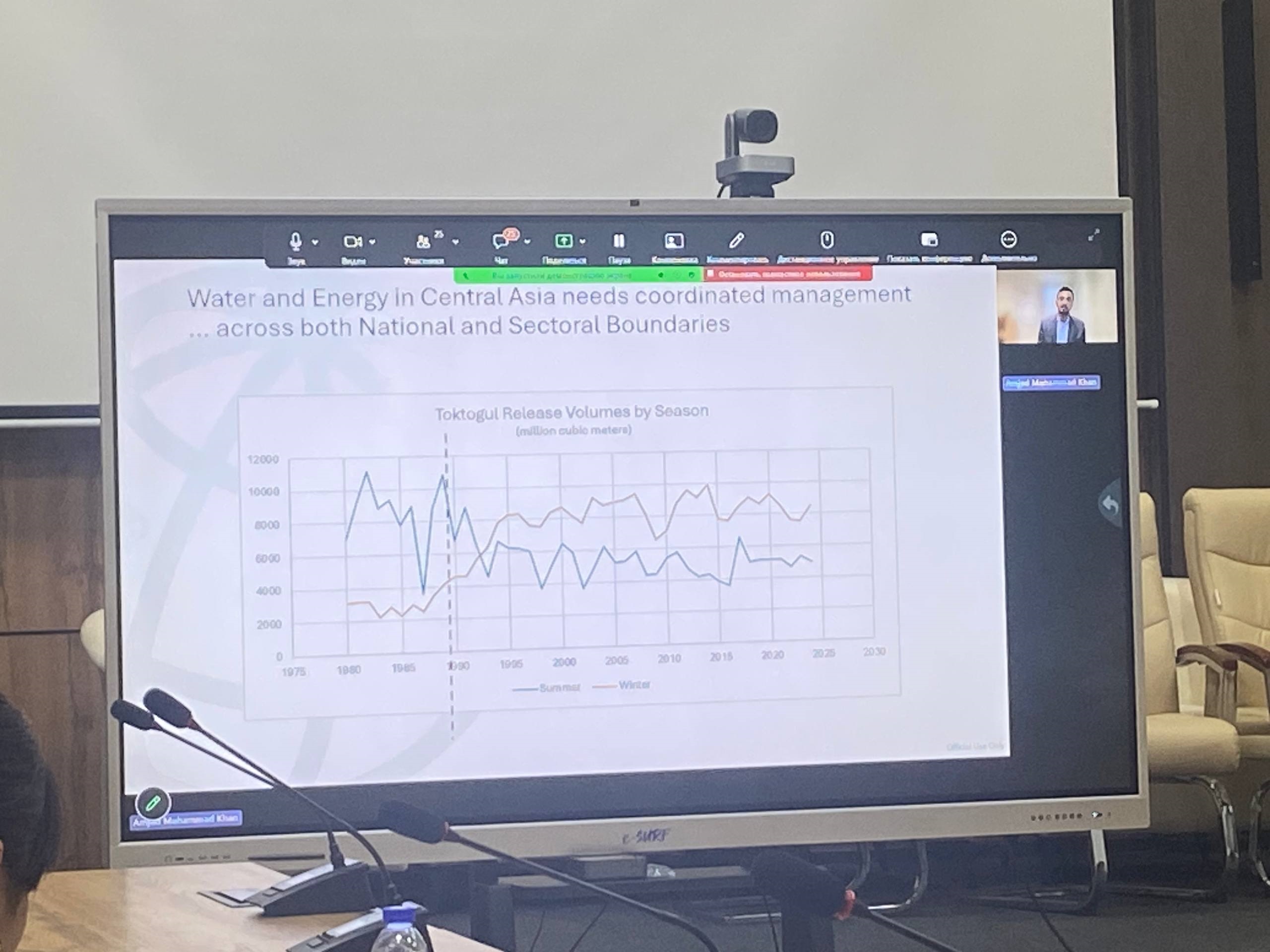
The workshop was divided into two sessions.
Session 1. Project Results and Scenario Modeling Using the WEAP and LEAP Models
During the first session, SIC ICWC team presented the key results of the “Water-Energy Nexus Systems Modeling” project, summarizing the work undertaken to refine the regional Aral Sea WEAP model and to develop and analyze various scenarios.
Representatives of the BWO Syr Darya, BWO Amu Darya, and CDC “Energy” then presented their respective results and assessed the practical significance of the project.
National experts from the Kyrgyz Republic, Tajikistan, and Uzbekistan shared their experiences of participating in the project. Their presentations focused on the new knowledge and skills acquired during the project, their assessment of the results of the modeling exercises for scenario development and analysis, and the readiness of the WEAP and LEAP models for further practical application. The experts also identified aspects requiring further refinement and put forward recommendations for the continued development, maintenance, and application of the models in Central Asian countries.
Following the first session, experts provided an assessment of the project results, highlighting structural enhancements to the Aral Sea WEAP model, model validation issues, scenario-based calculations, and recommendations for further refinement and practical application of the model.
Session 2. Prospects for Improving and Applying the WEAP and LEAP Models in Central Asia
The second session focused on the practical significance of the modeling results for water and energy planning in Central Asian countries, priority areas for further improvement of the WEAP and LEAP models by national teams, and prospects for applying the models to address water, energy, and cross-sectoral planning challenges at the regional level.
During the session, Olga Kalashnikova, expert from the Kyrgyz Republic, presented a methodology for forecasting water availability for the growing season using WEAP. She demonstrated the methodology of development and adoption in KyrgyzHydromet practices of a WEAP-based model designed to forecast water availability in the Naryn River for the growing season, changes in the volume of the Toktogul reservoir, and hydropower generation.
The workshop concluded with a summary of the key outcomes and closing remarks by D.R. Ziganshina, Director of SIC ICWC.
Based on the results of the workshop, the following documents will be prepared:
- A final report on the concluding regional workshop, summarizing the main outcomes of the discussions and participants’ recommendations and suggestions;
- A summary matrix of participants’ comments and recommendations based on the results of the project.