
No. 85 (746) August 2026
Monitoring Mission to EU- UNEP Project Sites in Kyrgyzstan, Tajikistan and Uzbekistan
From 7 to 22 August 2026, a monitoring mission was conducted to project sites in Kyrgyzstan, Tajikistan and Uzbekistan under the EU–UNEP Partnership project “Facilitating Region-Specific Approaches to Addressing Climate and Environmental-Related Risks for Socio-Economic Stability in Central Asia.” The mission was carried out by Sh. Muminov, Project Leader and Deputy Director of SIC ICWC, and B. Gozhenko, Project Manager for Monitoring and Assessment, together with the national Project Coordinators and the project’s environmental and gender specialists.
From 7 to 12 August, the mission visited Osh and Kara-Suu districts in Osh province and Suzak district in Jalal-Abad province. The team reviewed the progress achieved by the NGO “Central Asian Alliance for Water and Ecology,” the NGO “New Rhythm,” and the consortium of the NGO “Orchun” and the NGO “Independent Environmental Expertise.”
During the mission, the team assessed the key achievements in implementing nature-based solutions to help local communities adapt to climate change. The assessment covered the period from the previous monitoring mission in June 2026 to August 2026.
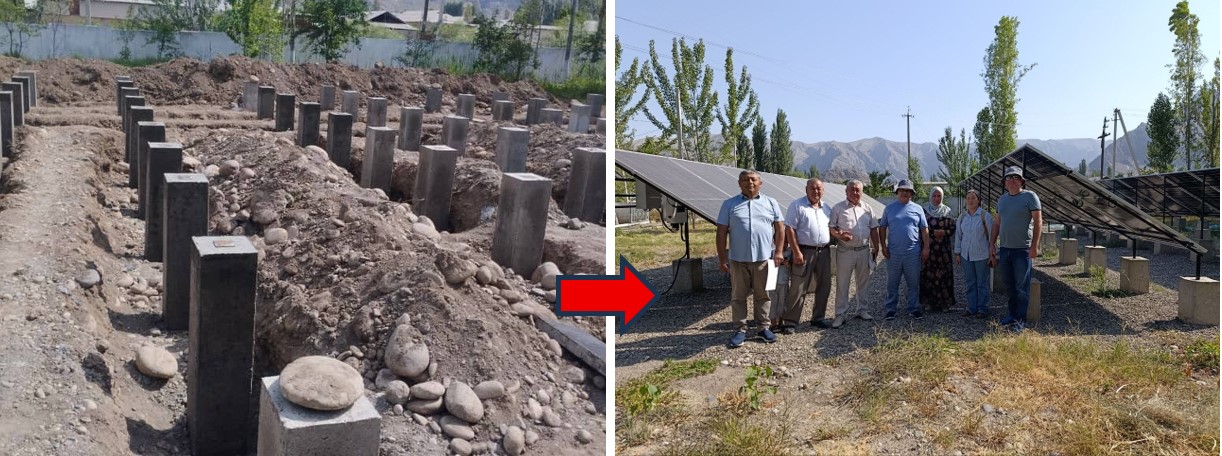
For example, at one of the sites operated by the NGO “Central Asian Alliance for Water and Ecology,” a 30-kW solar panel system was installed to provide off-grid power for pumping equipment and reduce operating costs. The surrounding area was also landscaped.
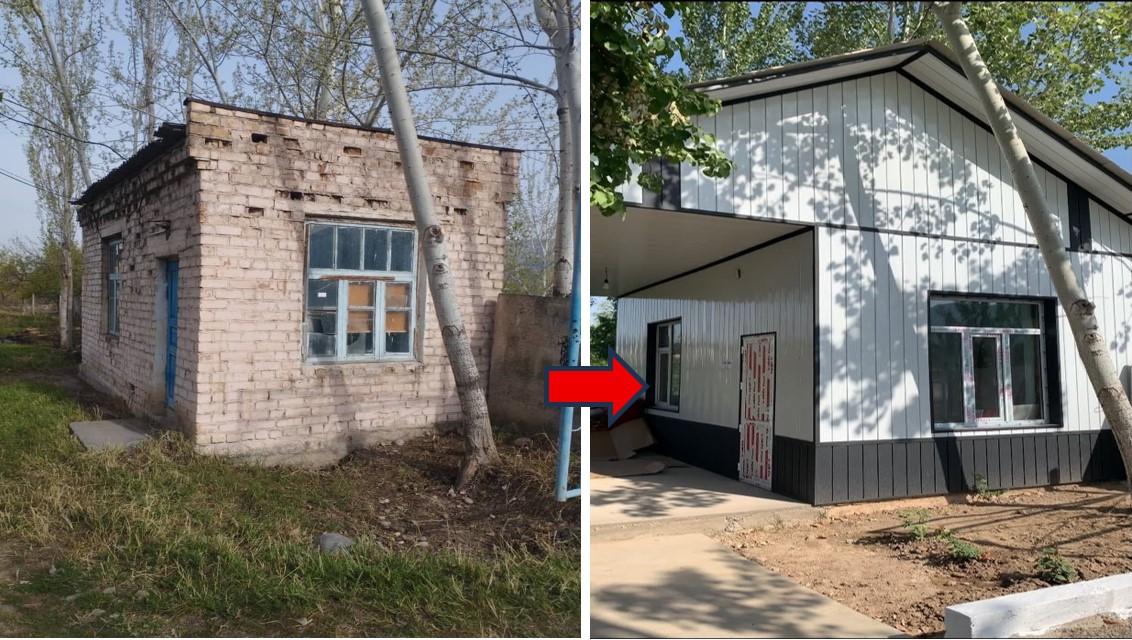
At the facilities of the NGO “New Rhythm” in the village of Kyzyl-Tal, Kara-Suu district, Osh province, the team visited an eco-park established as part of the subproject.
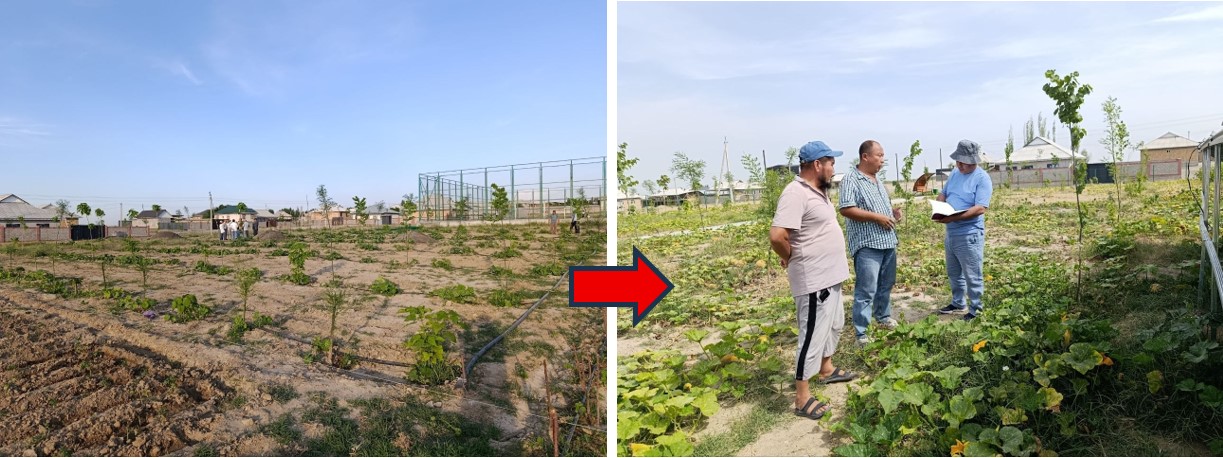
Over the past two months, a solar panel was installed to power the drip irrigation system, a fence was built, and benches and trash bins were installed. The survival rate of the planted seedlings exceeded 90%.
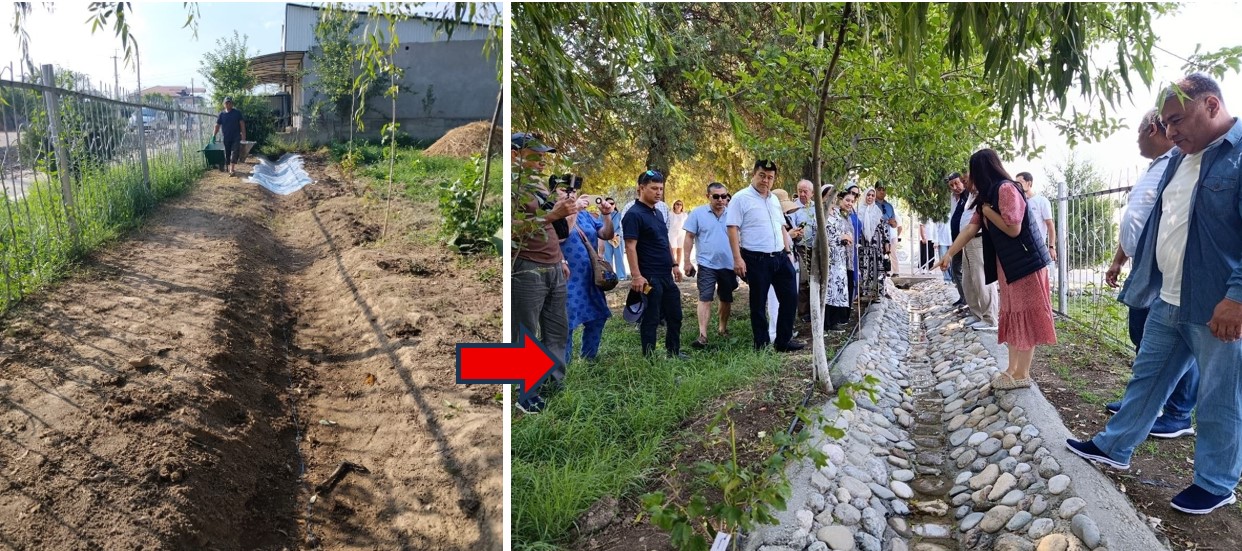
Another subproject of the NGO “New Rhythm,” implemented at a school in the village of Asanchek, involved reinforcing an earthen irrigation canal with bioengineering solutions over the past two months. This helped reduce water losses and protect the area from erosion and flooding in spring.
The monitoring mission then traveled to Suzak district of Jalal-Abad province, where a consortium comprising the NGO “Orchun” and the NGO “Independent Environmental Expertise” is implementing its subprojects.
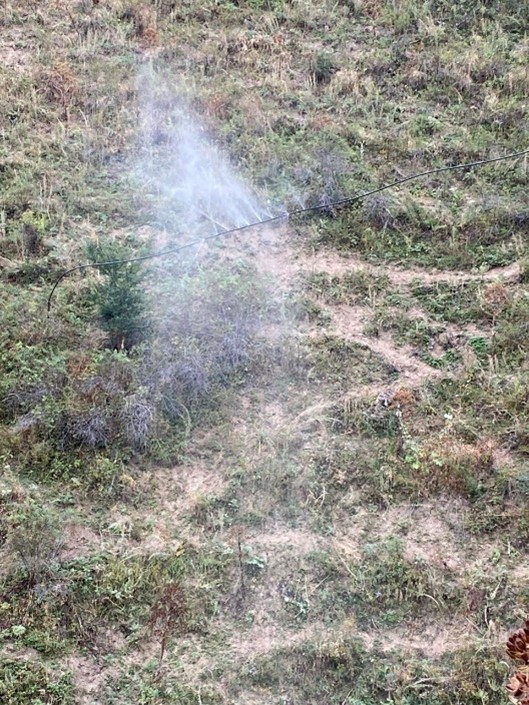
One of the subprojects is being implemented in the Bagys Aiyl Aimak, where a 4-hectare section of a mountainside that has been severely degraded due to overgrazing is being restored. Since the monitoring mission conducted in June, equipment has been installed at the site to create an artificial glacier.
Members of the monitoring mission conducted the first test run of the system to verify that it was functioning properly.
Currently, equipment has been installed at one site. Six more artificial glaciers are scheduled to be installed this fall.
From 13 to 15 August, the mission visited Fergana district in Fergana province and Pakhtabad district in Andijan province, Republic of Uzbekistan. The team inspected the progress of work at sites operated by the consortium of the NGO “Ho’kandi Latif Kelajagi” and the Fergana Regional Branch of the Association of NGOs of Uzbekistan, as well as by the consortium of the NGO “Salomatlik Plus Ecology” and NGO “Hamroh.”
In Fergana District, Fergana province, a subproject is underway to plant grapevine rootstocks for subsequent distribution to nearby mahallas. Although the planting took place as early as April, the survival and germination rates were nearly 100%.
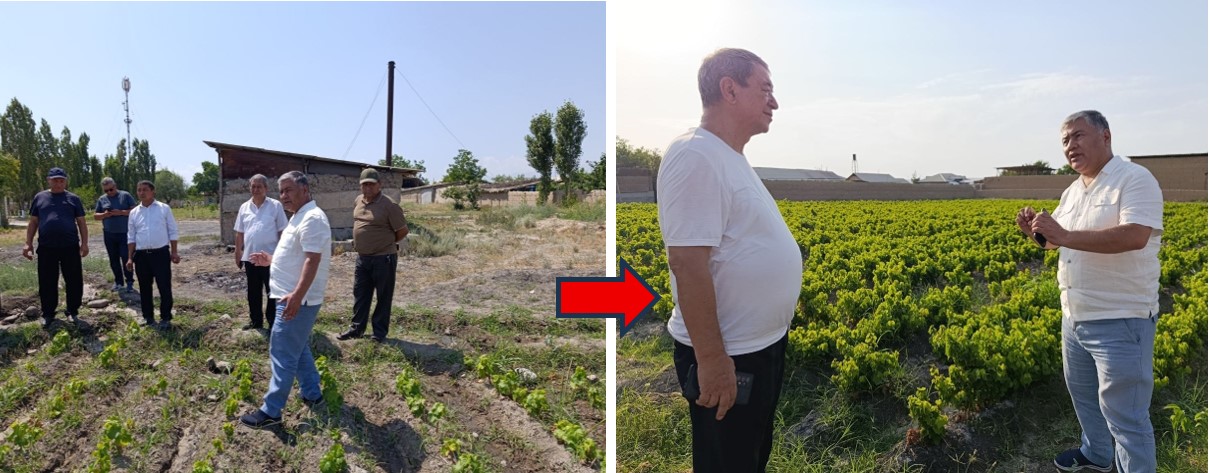
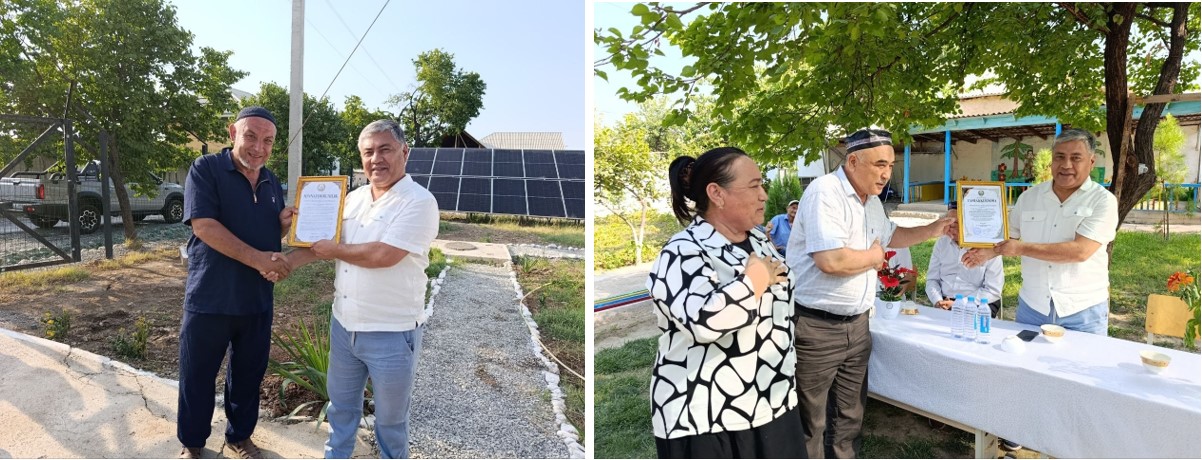
The project’s achievements have generated significant interest and appreciation among local communities and government authorities. Local residents, including activists and aksakals, expressed their appreciation, while the chairs of the mahalla residents’ assemblies from both mahallas presented certificates of appreciation to SIC ICWC, represented by Deputy Director Sh. Muminov.
From 19 to 22 August, the mission visited Jabbar-Rasulov, Konibodom and Asht districts in Sughd province, Republic of Tajikistan. The team reviewed the progress made by the NGO “Agency for Rural Community Development,” the NGO “Youth Group for Environmental Protection,” and the consortium of the NGO “Safi” and the NGO “Subhi Tandurusti.”
At the sites of the NGO “Agency for Rural Community Development,” the team inspected subprojects involving the construction of a nursery for fruit and ornamental plants, as well as the progress of construction of greenhouses, a bee-breeding site, and a biocompost production facility.
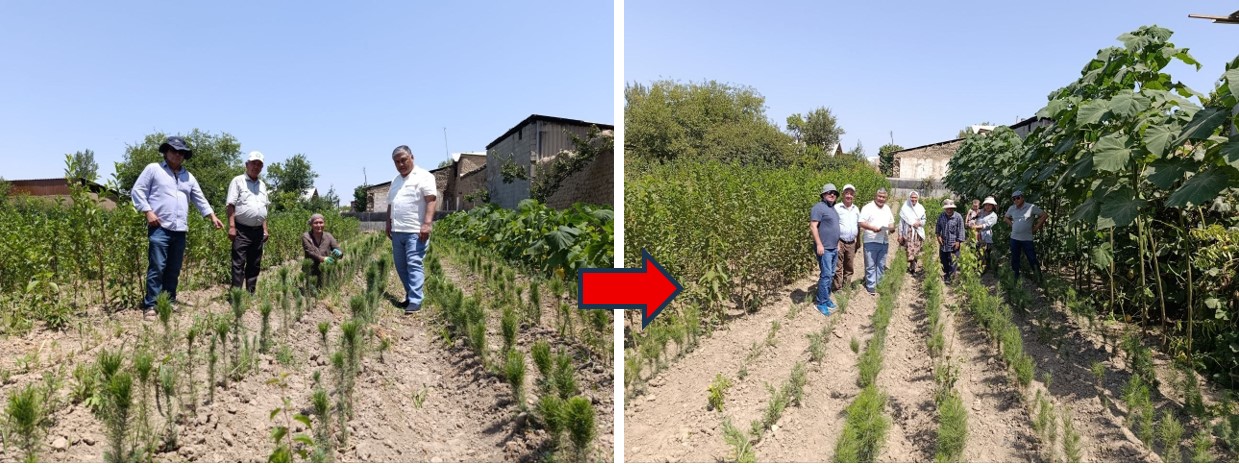
Since the last monitoring mission, the trees and shrubs planted at the nursery have grown significantly. The apiary site has produced its first honey, while the first harvest of vegetables, legumes, and flowers has been gathered.
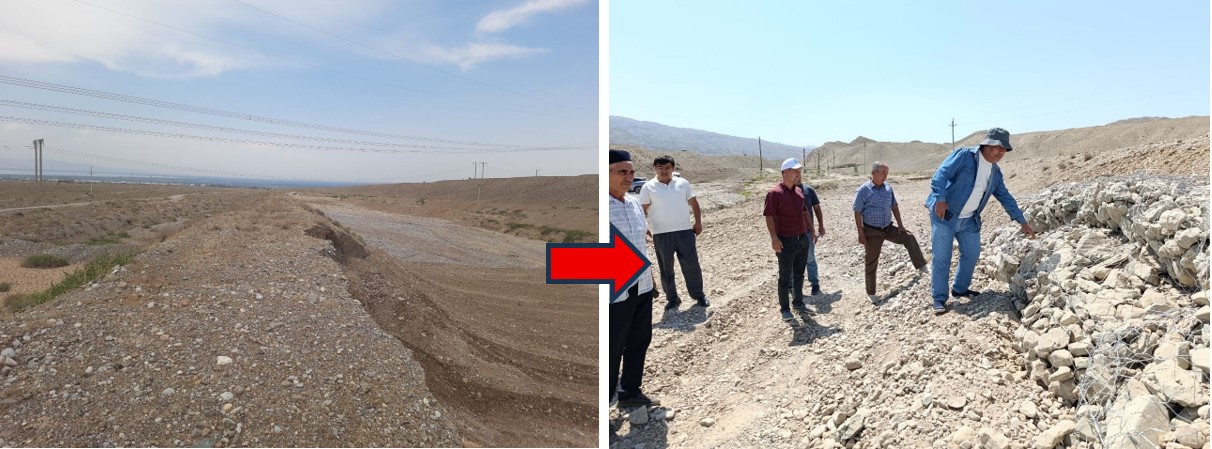
The mission then traveled to the Kukhandier community in Konibodom district, Sughd province, where, as part of the next phase of work on the most vulnerable 120-meter section of the earthen mud dam, special two-layer gabion structures were installed. The section had been breached by mudslides four times this year alone. The gabions help increase the stability of the dam, reduce the impact of mudslides, and protect farmland and communities located downstream.
Following the monitoring mission, the grant recipients implementing the subprojects were provided with guidance on implementation, and plans for the short- and medium-term were discussed.