
No. 89 (750) September 2026
Uzbek Delegation and SIC ICWC Experts Study Israel’s Best Practices in Water Resources Management
From 6 to 10 September 2026, an official delegation from the Republic of Uzbekistan paid a working visit to the State of Israel. The visit was organized by the Israeli Ministry of Foreign Affairs and the MASHAV Agency for International Cooperation.
The delegation included representatives of relevant ministries and agencies responsible for water resources management, environmental organizations, and experts from the SIC ICWC — F. Abdullaeva, L. Sychugova, and D. Usmankhodjaev.
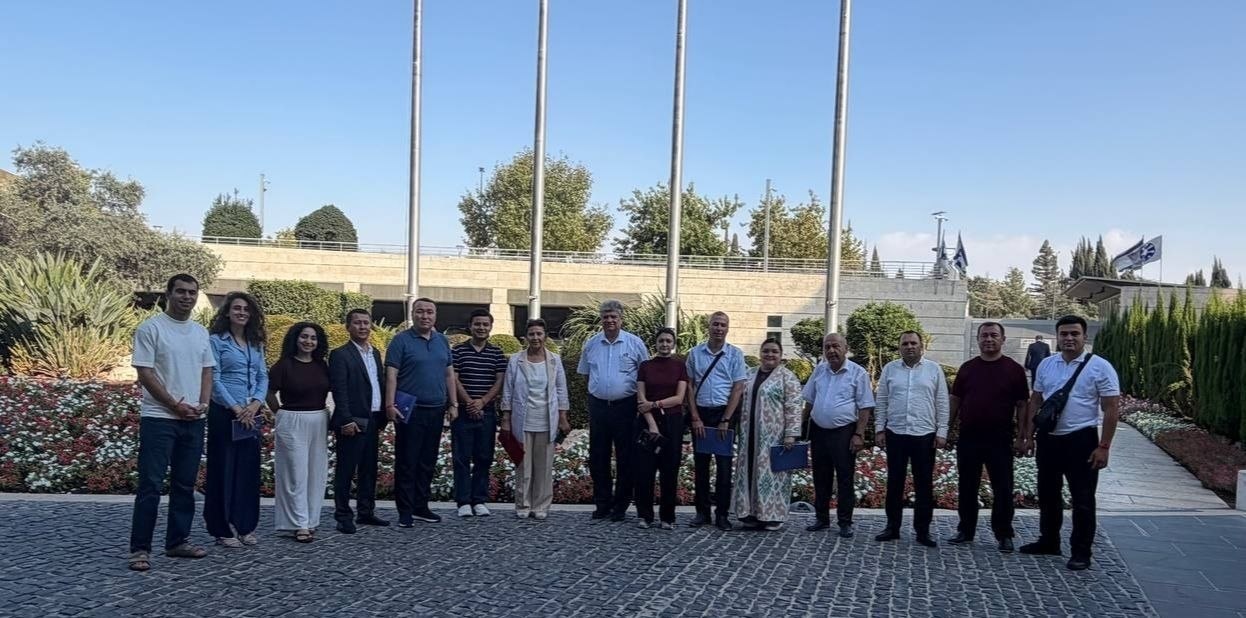
The main objective of the visit was to study Israel’s best practices in the efficient and sustainable management of water resources under conditions of water scarcity. Particular attention was given to the modernization of urban water supply infrastructure, reducing water losses in distribution networks, advanced wastewater treatment and reuse, and the adoption of modern water-saving technologies.
As part of the intensive program, the delegation held meetings with the leadership of the Department for Cooperation with Central Asian Countries at the Israeli Ministry of Foreign Affairs and the Deputy Director of MASHAV. The participants also familiarized themselves with the activities of the Israel Water Authority, the Gihon Control Center, and Kinneret Academic College.
In addition, the delegation visited facilities operated by leading Israeli companies and developers of innovative water solutions, including Mekorot, Netafim, BlueGen, Draztek, Nova, and Flow.
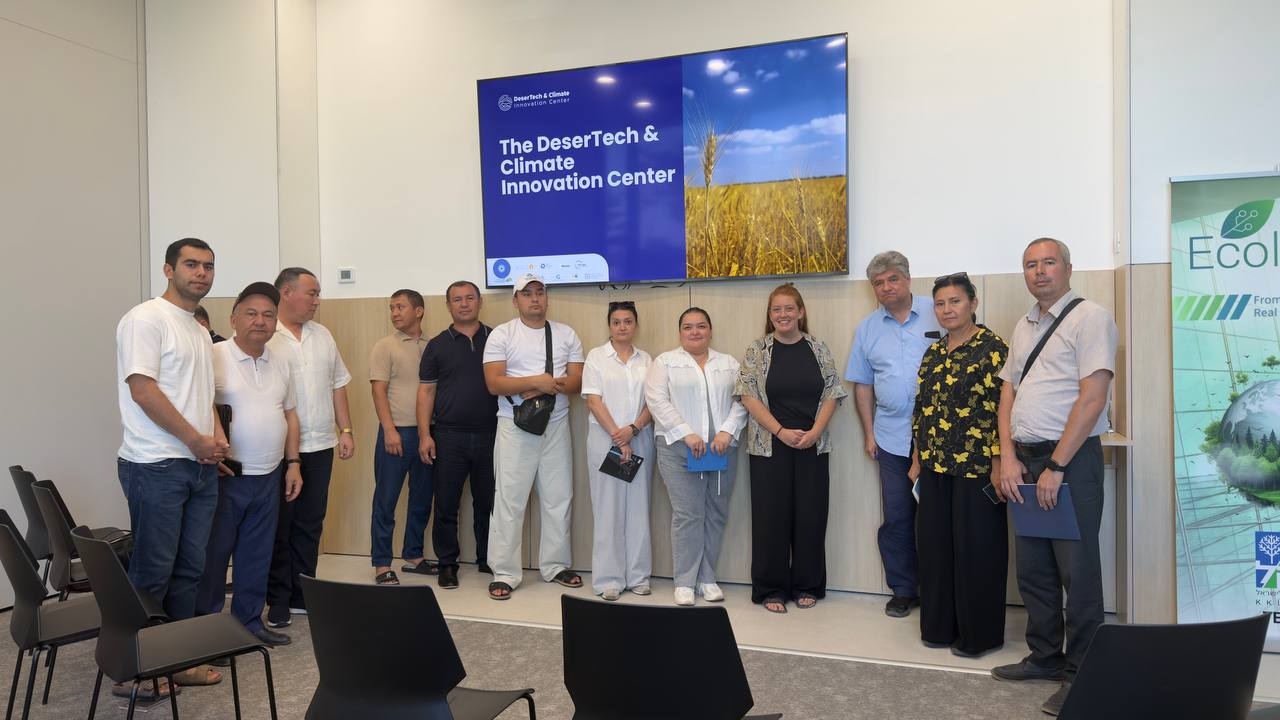
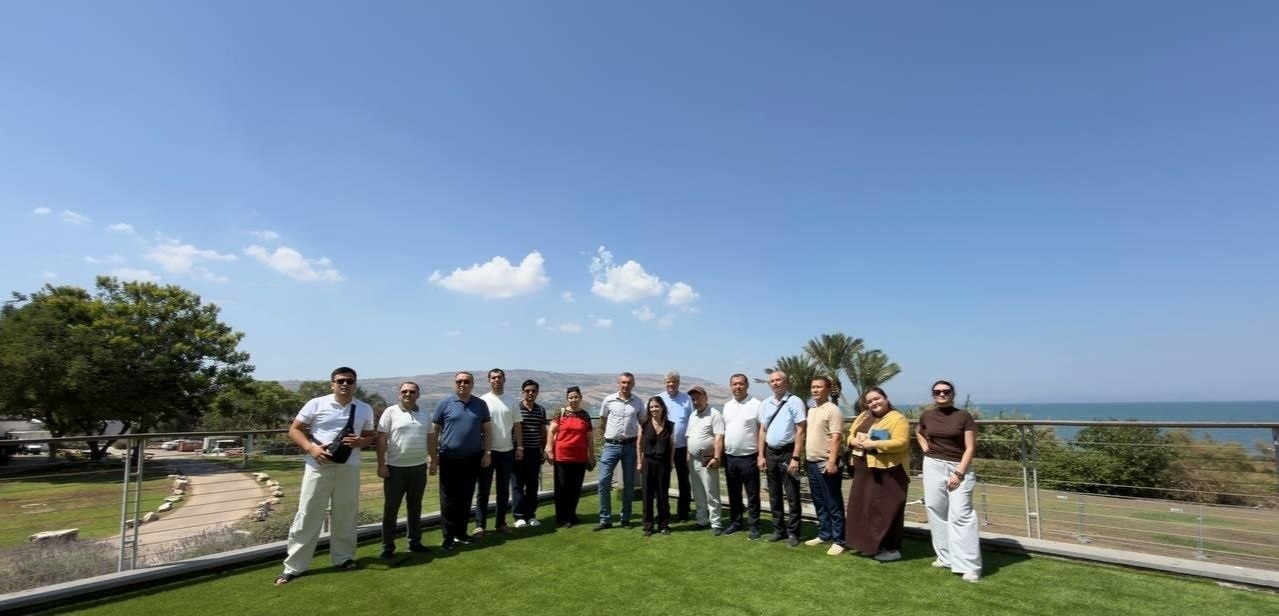
The cultural program for the visit included an exploration of Israel’s centuries-old history and rich cultural heritage, including a visit to Jerusalem. The delegation also toured an ancient underground water tunnel located within the City of David Archaeological Park.
Following the visit, the experts identified several key aspects of Israel’s experience that are of practical interest for further application and adaptation in the Republic of Uzbekistan:
- Reducing water losses: implementing digital systems for early leak detection, automating remote water metering, and systematically replacing worn-out pipelines.
- Using alternative water sources: applying advanced wastewater treatment technologies to enable the safe reuse of treated wastewater in agriculture and industry.
- Digitalization of water management: developing unified information platforms for real-time monitoring and management of urban and agricultural water flows.
- 4Building human and community capacity: providing regular professional training for water management specialists and water users, while promoting a culture of water conservation among the public.
The study and systematic adoption of such innovative international solutions, while taking into account regional climatic conditions, economic factors, and existing infrastructure capacities, can serve as an important driver of sustainable water supply and management across Central Asia.