
No. 91 (752) September 2026
Discussions Held in Turkmenistan on Further Development of the UN Special Programme for the Aral Sea Basin
On 11–12 September 2026, the Second Consultative Meeting of Central Asian Countries “Development and Implementation of the UN Special Programme for the Aral Sea Basin as a Direction of Water Diplomacy,” was held in Turkmenbashi, Turkmenistan. The meeting was organized as part of a UNDP/GEF project implemented in partnership with the Ministry of Environmental Protection of Turkmenistan, with the involvement of the Blue Peace Central Asia initiative.
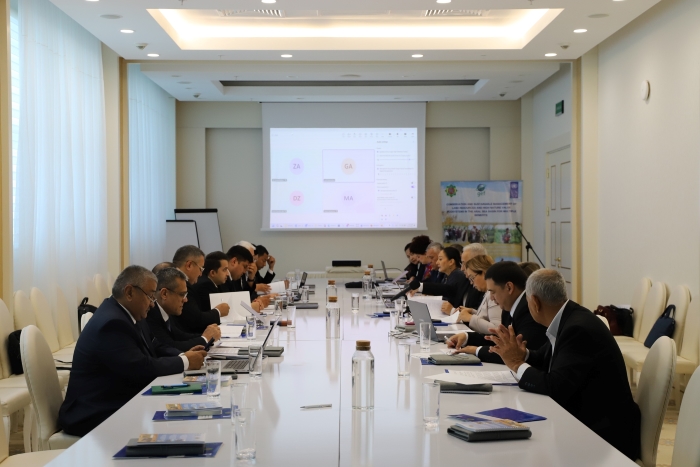
The meeting brought together representatives of Kazakhstan, Tajikistan, Turkmenistan, and Uzbekistan, along with representatives of UN agencies, regional institutions, and development partners. Discussions focused on the potential scope and institutional framework of the UN Special Programme for the Aral Sea Basin (UN SPAS), its role within the existing regional cooperation architecture, and opportunities for coordination with existing programmes and initiatives.
D. Ziganshina, Director of the SIC ICWC, delivered a presentation entitled “Possible Formats for the UN Special Programme for the Aral Sea Basin and Its Role in the Regional Framework of Cooperation.” The presentation reviewed progress made in advancing the UN Special Programme initiative, from the adoption of ESCAP Resolution 79/8 in May 2023 and research and consultations with Central Asian countries in 2024, through the regional workshop in Ashgabat and the ESCAP outcome document, to consideration of the issue at the 81st session of ESCAP in April 2025. It was emphasized that further development of the UN Special Programme should take into account the existing regional framework of cooperation and, above all, the role of the International Fund for Saving the Aral Sea (IFAS) and its bodies.
A representative of the SIC ICWC presented two possible approaches to the thematic scope of the UN Special Programme. The first would envisage a comprehensive programme covering a broad range of issues relevant to the Aral Sea Basin and the Sustainable Development Goals. The second would provide for a more focused format concentrating on one or two priority areas, specifically climate resilience and water-related natural disasters, as well as water and resource conservation.
Particular attention was given to the possible development of a “Partnership on Lakes and Water Bodies of the Aral Sea Basin.” Such an approach could bring together issues related to the sustainable management of natural and artificial water bodies, mountain and outburst-prone lakes, reservoirs, and associated ecosystems, while ensuring alignment with the Aral Sea Basin Programme (ASBP), IFAS bodies, and the global agenda for sustainable lake management.
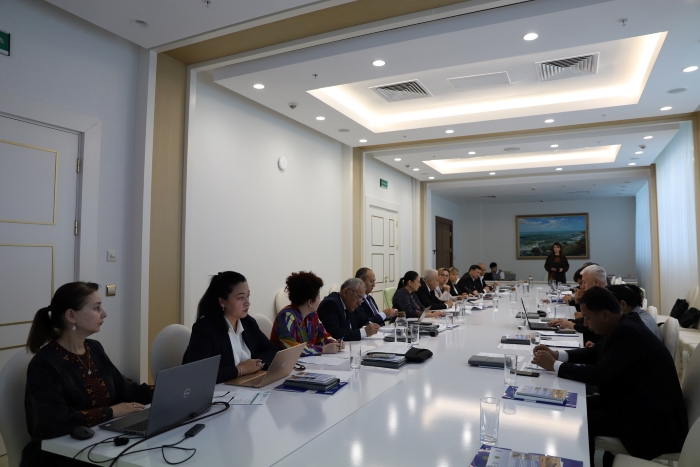
During the meeting, representatives of the participating countries presented their national approaches to the further development of the UN Special Programme. Their statements reflected a shared interest in continuing discussions on the initiative, provided that its practical added value is clearly defined, duplication with existing regional mechanisms and programmes is avoided, the initiative builds on existing institutions, and its activities are focused on concrete results. Particular attention was paid to the potential role of the UN Special Programme in coordinating the activities of UN system organizations and development partners, mobilizing financial and technical resources, and promoting regional projects agreed upon by the countries of the region.
UNESCO, Blue Peace Central Asia, RECCA, GIZ, UNRCCA, IWMI, and other partners also presented their initiatives and potential areas for cooperation. Discussions focused, in particular, on issues related to the cryosphere and water security, regional monitoring and data, early warning systems, water diplomacy, climate resilience, ecosystem restoration, and the development of educational and expert cooperation.
Following the meeting, participants continued discussions on possible approaches to the UN Special Programme for the Aral Sea Basin and further steps towards its development, taking into account the positions of the Central Asian countries and existing regional cooperation mechanisms.