
No. 92 (753) September 2026
SIC ICWC Took Part in the 5th Ecumene Global Forum
On 17 September 2026, the 5th Ecumene Global Forum—an international platform for dialogue among representatives of government agencies, international organizations, academia, and the business community on sustainable development issues—was held at the Reception Hall of the Ministry of Foreign Affairs of the Russian Federation in Moscow.
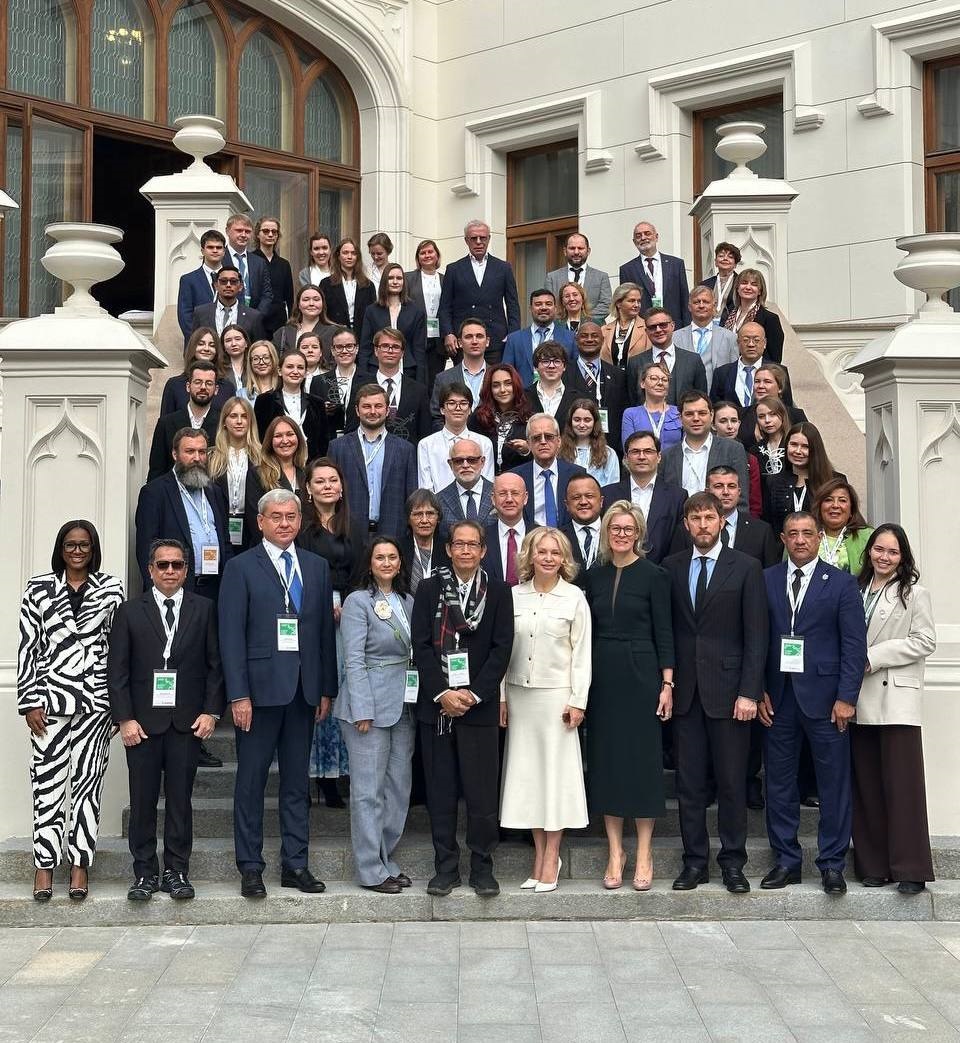
The Forum’s program covered five key areas: the economy of a sustainable future, the energy transition, land degradation, the application of artificial intelligence, and water resources management. Particular attention was paid to the interlinkages among the three UN environmental conventions on climate change, biodiversity, and combating desertification.
At the plenary session “The Economy of a Sustainable Future,” participants emphasized the need to move from agreement on international goals to the practical implementation of solutions. André Correia do Lago, President of the 30th United Nations Climate Change Conference (COP30), noted that society expects concrete results that improve people’s quality of life and emphasized the important role that national and local governments, the business and scientific communities, and civil society must play in achieving them.
Ruslan Edelgeriev, Assistant to the President and Special Representative of the President of the Russian Federation on Climate and Water Resources, highlighted the need to integrate the climate, land, and environmental agendas based on an assessment of natural capital and ecosystem services. In his view, the impact of economic projects on forests, land, water bodies, and biodiversity should be taken into account from the planning stage onward. Vyacheslav Fetisov, UN Goodwill Ambassador and Chairman of the All-Russian Society for Nature Conservation, emphasized the importance of the participation of civil society organizations and the scientific community, noting that people’s health and well-being depend directly on the quality of water, air, and food.
The thematic sessions addressed the availability and reliability of energy supplies, the restoration of degraded lands, the financing of environmental protection projects, and the ethical and legal frameworks governing the use of artificial intelligence. Participants noted that new technologies should not only support economic development but also take into account the consumption of energy, water, and other natural resources.
One of the highlights of the 2026 Forum was the inclusion of water issues as a separate strategic dialogue, “Water Resources Management and Ecosystem Conservation.” The previous forum program did not include a dedicated session on water. This year, experts from Uzbekistan, Azerbaijan, Indonesia, and other countries discussed improving water-use efficiency, modernizing infrastructure, managing water quality, attracting investment, and implementing advanced monitoring systems.
The SIC ICWC was represented at the forum by Alexander Dolidudko, who delivered a presentation on “Water Resources and Ecosystems of the Aral Sea Basin.” Particular attention was given to the SIC ICWC’s studies, which produce concrete and measurable results related to water and natural resources.
Participation in the forum provided an opportunity to present Central Asia’s perspective to the international expert community, highlight the practical contributions of the SIC ICWC to ecosystem research, and expand professional dialogue on the sustainable management of transboundary water resources.