
No. 93 (754) September 2026
Assessment of Water Security of the Administrative Territories in the Aral Sea Basin
On 21 September 2026, a seminar was held at the SIC ICWC Training Center, bringing together experts from Kazakhstan, Kyrgyzstan, Tajikistan, and Uzbekistan, as well as representatives of regional and international partner organizations. The event was organized as part of the IKI project “Regional Mechanisms for a Low-Carbon and Climate-Resilient Transformation of the Energy-Water-Land Nexus in Central Asia” and focused on methodologies for assessment and tools for monitoring the water security of the administrative territories in the Aral Sea Basin (ASB).
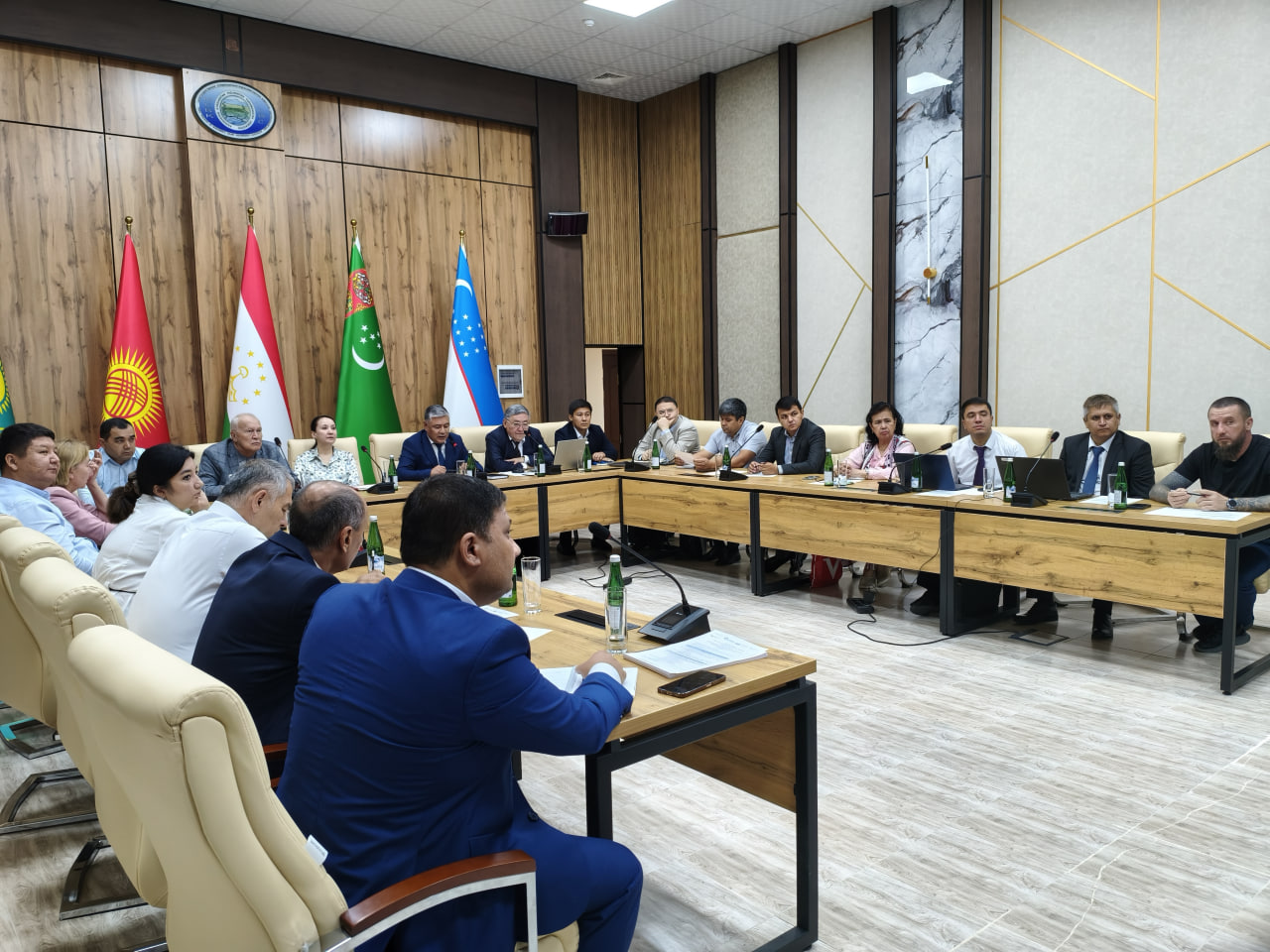
The seminar opened with a welcome address by Sh. Muminov, Deputy Director of the SIC ICWC, who outlined the objectives of the meeting and wished participants a productive and fruitful discussion. The first session focused on the IKI project and the methodology for assessing water security of the administrative territories in the ASB. D. Ziganshina presented an overview of the project, followed by a discussion of the water management situation and water security in Central Asian countries. National experts S. Ibatullin, A. Jailoobaev, and Y. Pulatov (via videoconference) delivered presentations on the respective national contexts.
“Assessing the water security of the administrative territories is not a one-time study, but a tool that countries in the basin can use on a regular basis to identify where risks are growing fastest and to develop joint response measures in advance,” noted D. Ziganshina, Director of the SIC ICWC.
Sh. Kenzhabayev then presented the methodology for assessing and monitoring water security of the administrative territories in the Aral Sea Basin, developed as part of the project.
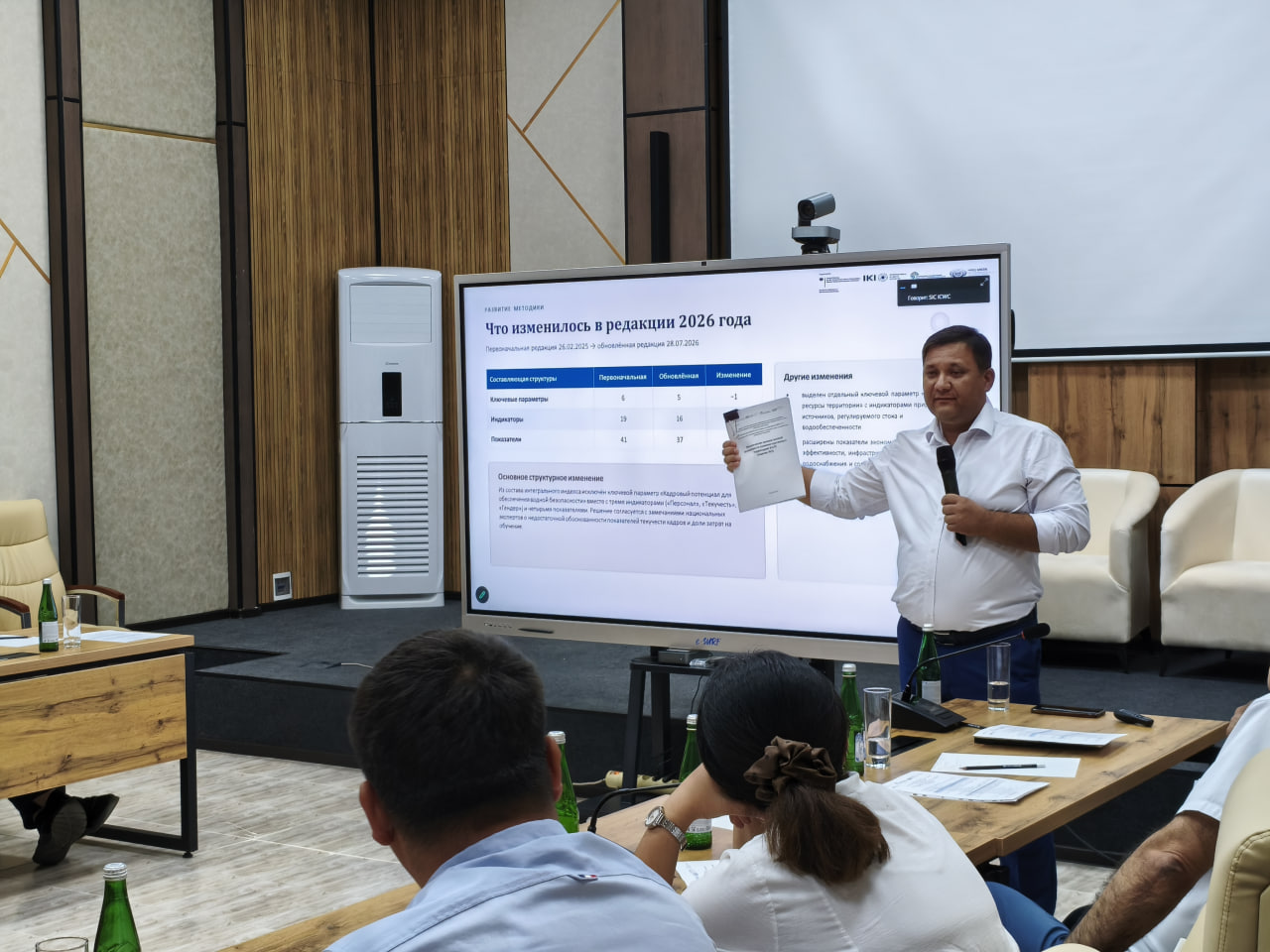
The afternoon session focused on tools for assessing and monitoring water security across the Aral Sea Basin. N. Shantaeva (OECD), participating online, presented the results of the “hotspot” analysis, while A. Ulugov presented a website-based platform for assessing and monitoring water security of the administrative territories in the ASB. The presentation of the platform was followed by an active discussion involving experts from the Central Asian countries. The discussion addressed expectations for the platform, key regional priorities, possible models for its operation, mechanisms for engaging experts, regional coordination issues, and the links between science, policy, and practice.
The seminar concluded with a wrap-up discussion, during which participants summarized the key takeaways from the meeting and discussed next steps and possible formats for continued cooperation.
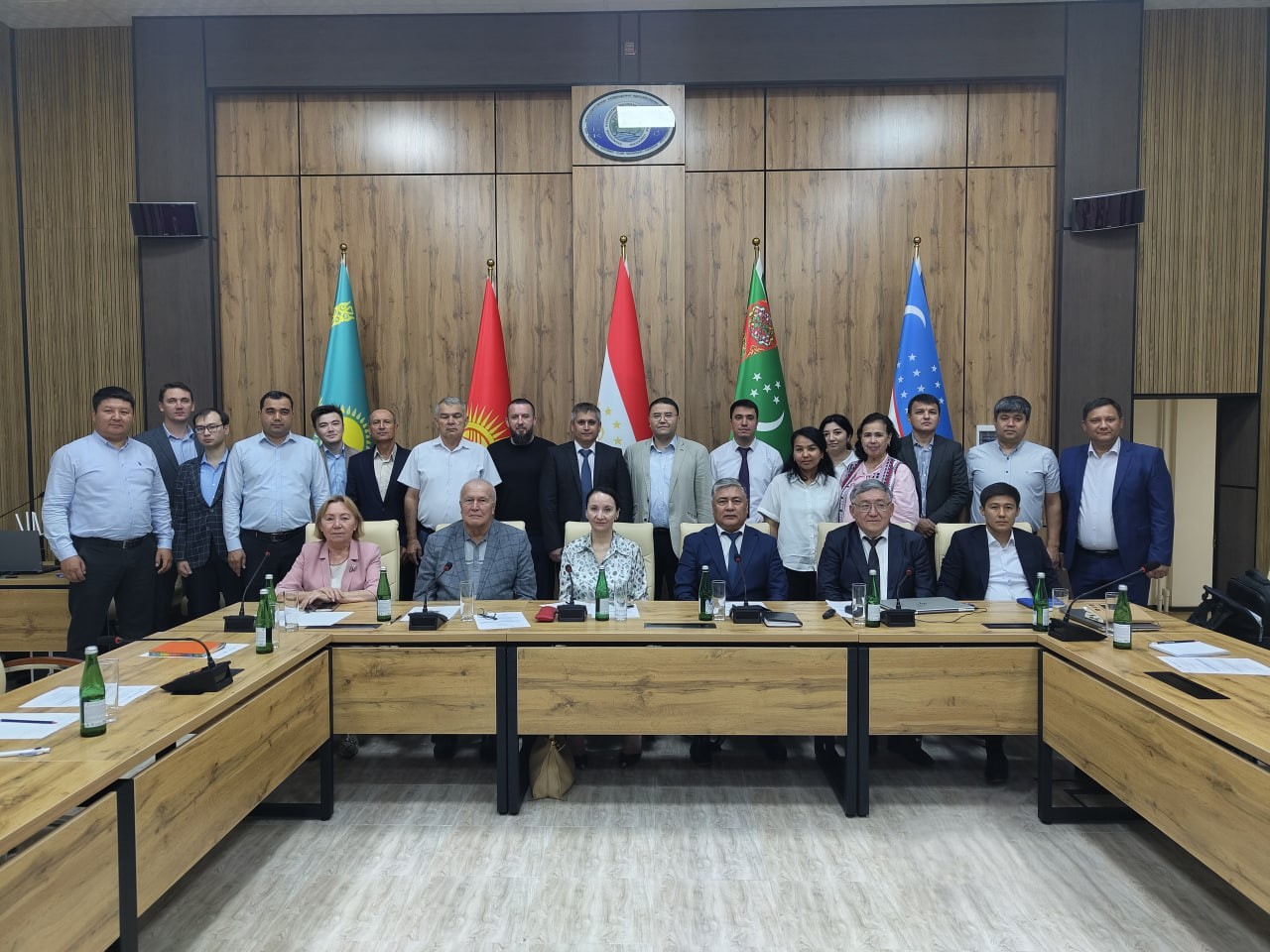
The seminar marked an important step toward developing regional methodologies and practical tools for assessing water security in the Aral Sea Basin and strengthening cooperation among Central Asian countries in addressing the challenges posed by climate change.