
No. 95 (756) September 2026
SIC ICWC Participated in the Training Course “From River Basins to Energy Systems: Coupled Hydrological and Energy Modeling”
On 23 September 2026, the short training course “From River Basins to Energy Systems: Coupled Hydrological and Energy Modeling” was held at the Green University campus. The event focused on modern approaches to the integrated modeling of water and energy systems in Central Asia.
The training course was organized by the Scientific Hydrometeorological Research Institute in cooperation with the University of Oulu (Finland) as part of the TU-Nexus project, “Integrating Water Balance and Energy System Models for Improved Benefit Sharing in Transboundary River Basins.” The University of Oulu coordinates the project in collaboration with partners, including VTT Technical Research Centre of Finland. The project aims to develop integrated water–energy nexus modeling approaches and promote sustainable resource management in Central Asia.
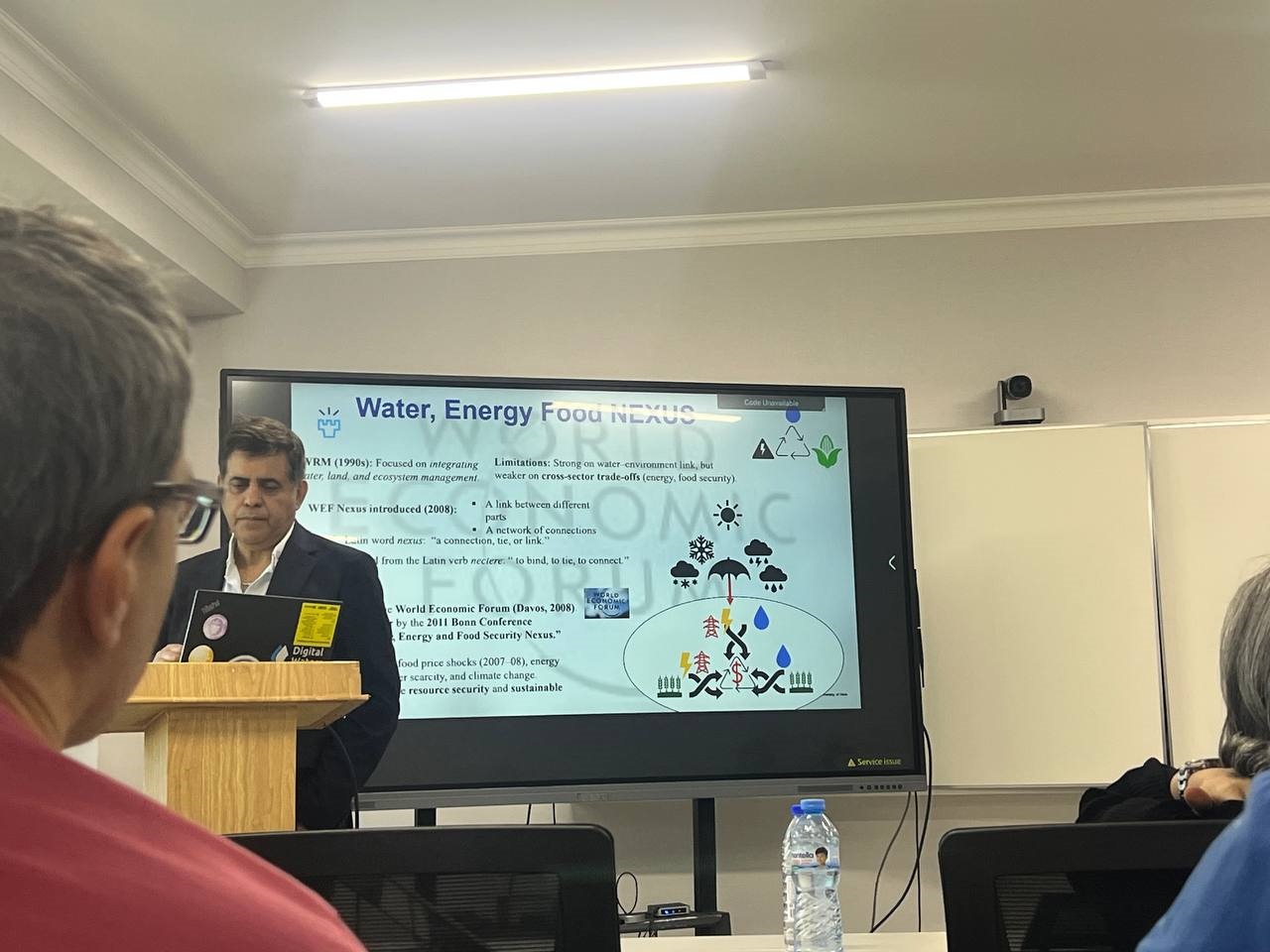
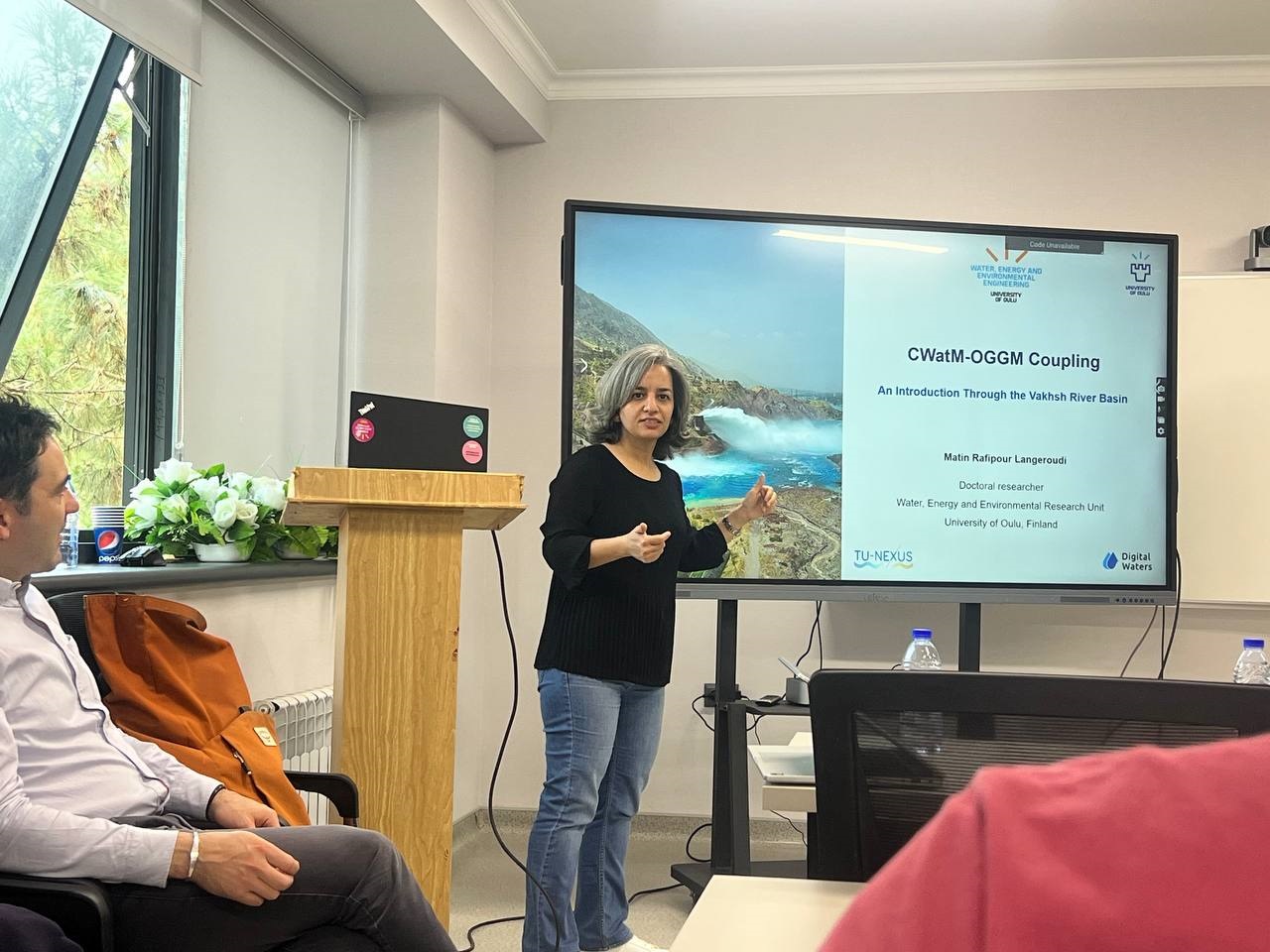
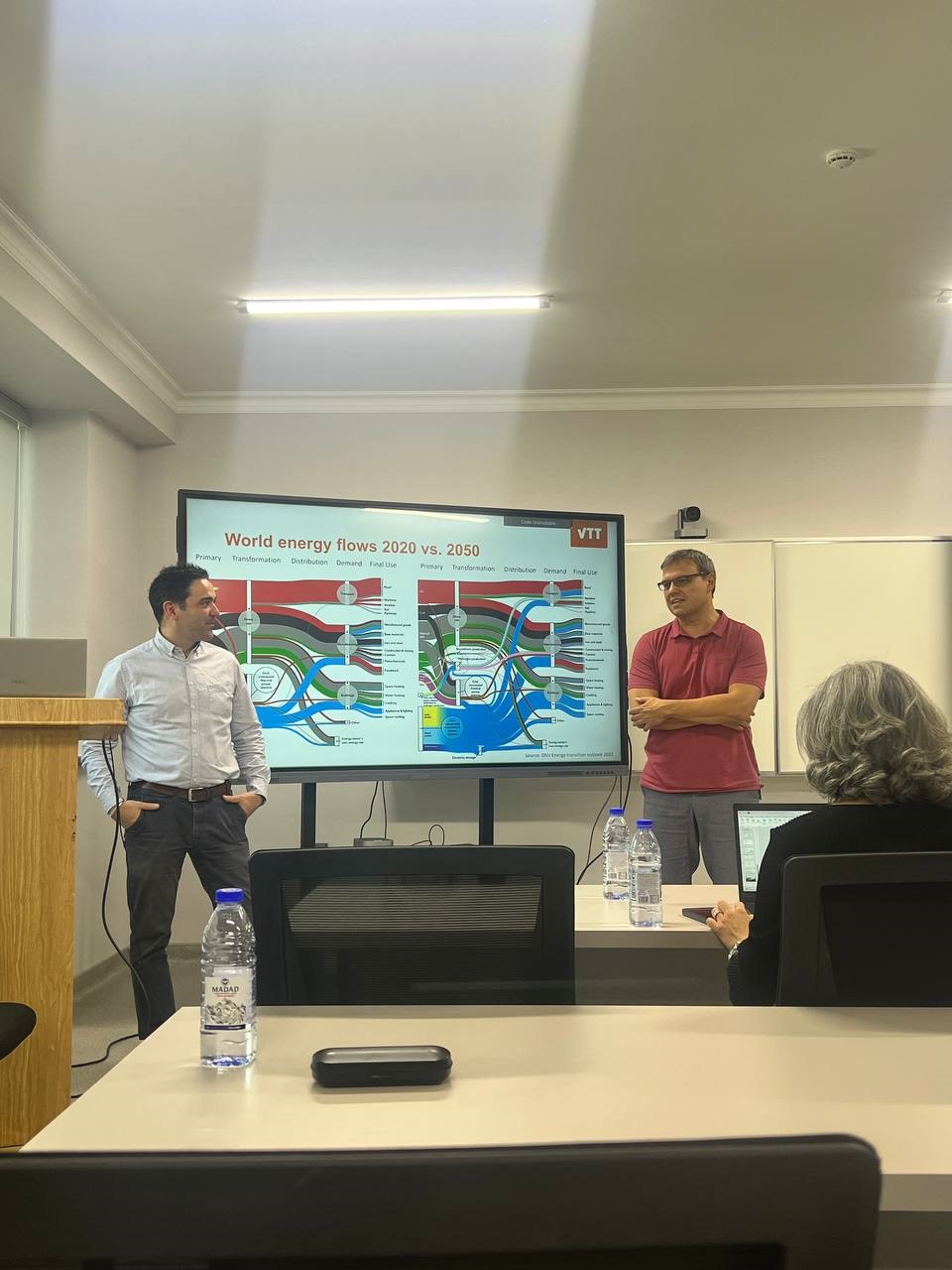
M. Rahimova and G. Hamdamova participated in the event on behalf of SIC ICWC.
The main objective of the training course was to explore the interconnections between river basins, water resources, and energy systems using modern modeling tools, as well as to develop approaches for the integrated management of water and energy resources.
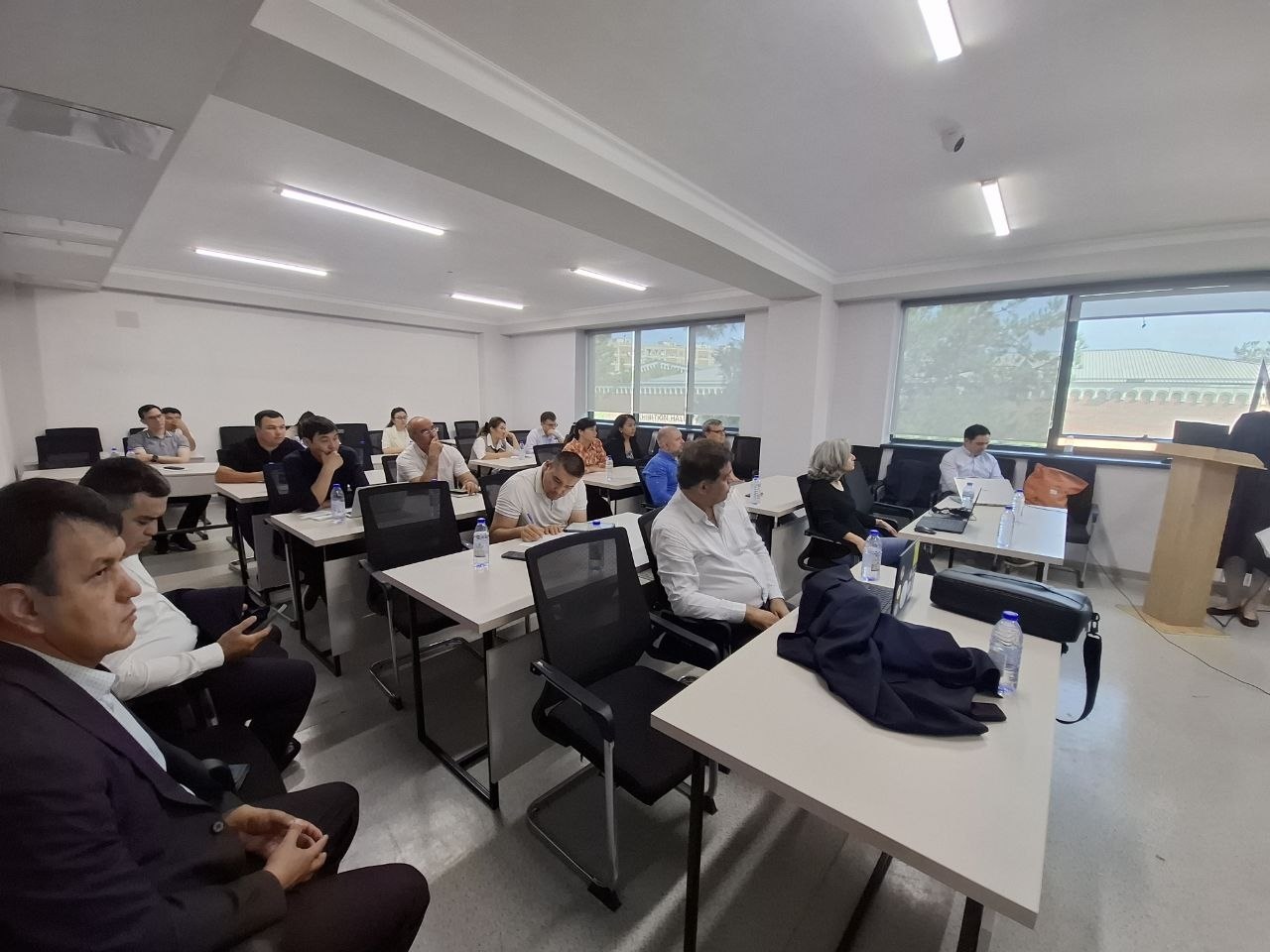
During the event, participants were introduced to modern integrated modeling tools, including CWatM (Community Water Model) and OGGM (Open Global Glacier Model), which are used for hydrological modeling and water resource assessment, as well as IRENA FlexTool, designed to analyze energy systems and their interactions with water resources.
Particular attention was given to the integration of hydrological and energy models. Within the framework of the TU-Nexus project, CWatM is being integrated with the IRENA FlexTool energy model using the Spine Toolbox. This integration enables the joint analysis of water and energy systems and the assessment of different scenarios for their development.
Some of the tools presented during the training course have been developed and further advanced by VTT Technical Research Centre of Finland. In particular, VTT is the developer and one of the key contributors to the development of IRENA FlexTool and is also involved in developing approaches for coupling energy and hydrological models.
Understanding the interconnections between water and energy systems is particularly important in transboundary river basins, where water management is closely linked to the energy sector and requires coordinated approaches to planning and resource allocation.
Reference: CWatM (Community Water Model) is an integrated model of hydrological processes and water movement in river channels, developed at the International Institute for Applied Systems Analysis (IIASA). It provides quantitative assessments of water availability, water consumption, and the impacts of water infrastructure, such as reservoirs, groundwater drainage systems, and irrigation facilities, in the context of regional water management. The CWatM modeling system is written in Python 3.7 using only a few Python packages, including NumPy, SciPy, GDAL, and NetCDF4, and can be used on various platforms, including Unix, Linux, Windows, and Mac.
Online documentation, including basic information on model setup, data, and CWatM model licenses, can be found on this websitе and here.
The Open Global Glacier Model (OGGM) is an open, modular model of glaciers designed to simulate glacial changes. OGGM provides a way to assess past and future changes in glacier mass, volume, and geometry, and to model glacier dynamics at global and regional levels. The model can be used to assess the impact of climate change on glacial systems and, in relevant hydrological studies, to analyze changes in ice runoff. OGGM is open-source software developed by the international scientific community and available for use and further development.
IRENA FlexTool is an energy and power system optimization model designed to analyze the development of energy systems, including systems with high shares of wind and solar generation. The model makes it possible to assess the need for flexibility in the energy system, analyze the expansion of generating capacity, and consider the operating modes of the energy system and load distribution.
Online documentation and training materials on IRENA FlexTool are available at irena-flextool.
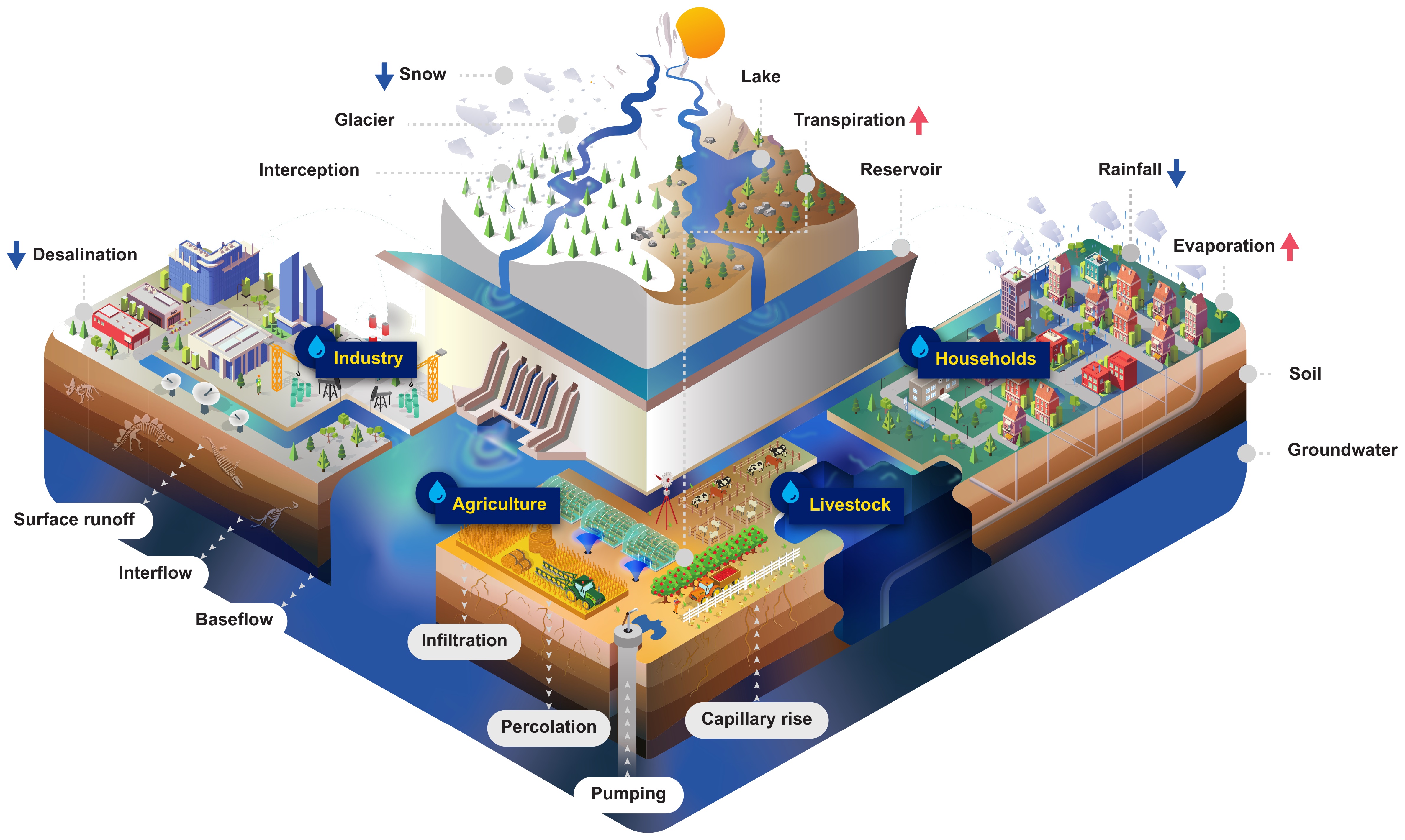
Schematic view of processes enabled in CWatM
The participation of SIC ICWC employees M. Rahimova and G. Hamdamova in the training course provided an opportunity to expand their practical knowledge of modern methods for modeling and analyzing water resources, as well as to become familiar with approaches to the integrated consideration of water–energy interconnections. The knowledge gained is of practical relevance for further work on sustainable and integrated water resources management in Central Asia.
ПAt the end of the training course, participants were awarded certificates confirming their participation in the training and their familiarization with the models and modeling tools presented during the course.
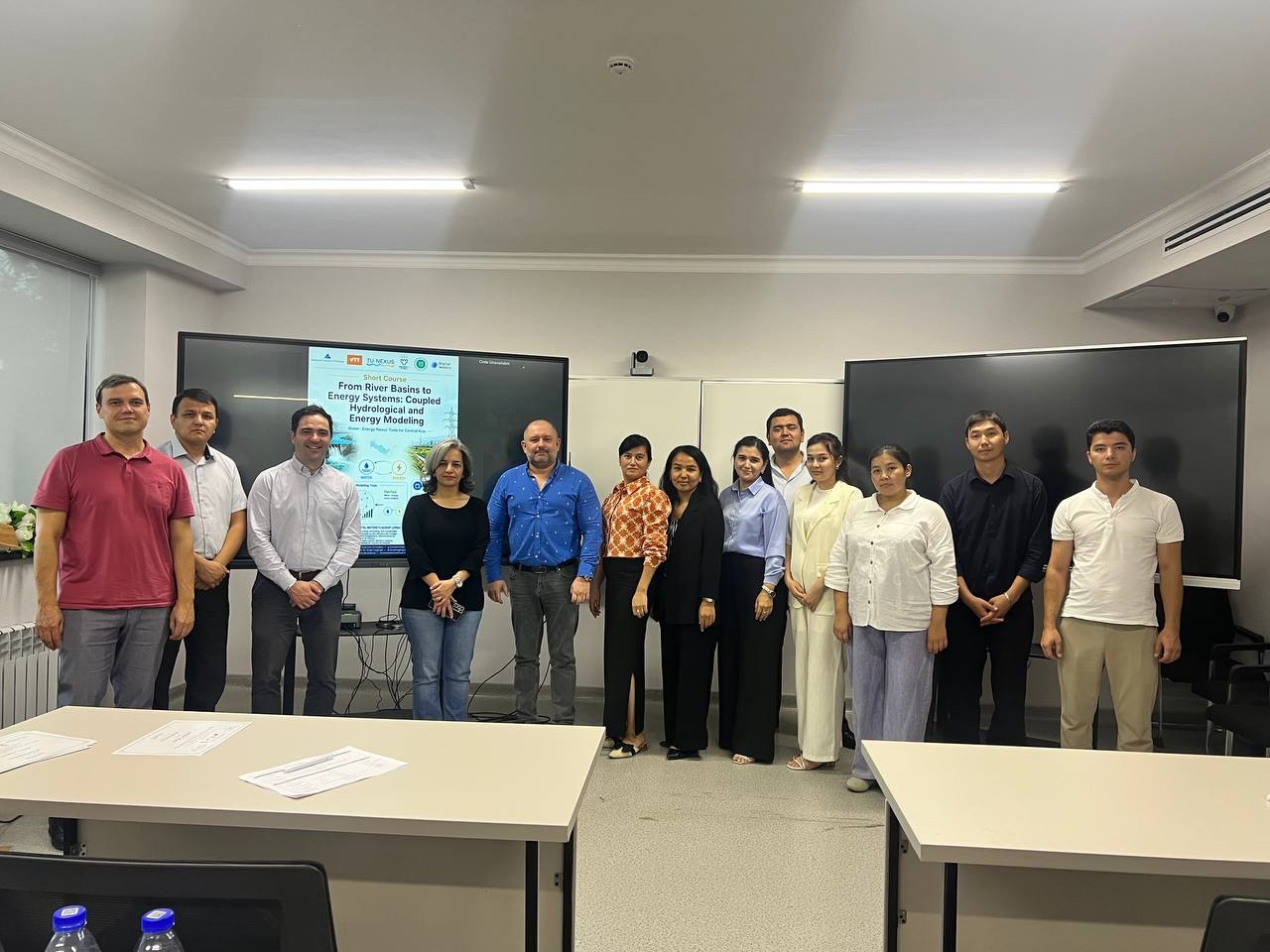
The event provided a platform for professional knowledge exchange and familiarized specialists with modern digital tools applied to decision-making and the management of water and energy resources. Such training activities contribute to the development of expertise and cooperation in sustainable transboundary water management.
More information about the TU-NEXUS project, the models used, and the approaches to their integration is available through the project’s official resources and at the University of Oulu .