
No. 98 (759) October 2026
Monitoring Mission to EU- UNEP Project Sites in Uzbekistan, Kyrgyzstan and Tajikistan
From 23 to 27 September 2026, a monitoring mission was conducted to project sites in Uzbekistan, Kyrgyzstan and Tajikistan under the EU–UNEP Partnership project, “Facilitating Region-Specific Approaches to Addressing Climate- and Environmental-Related Risks for Socio-Economic Stability in Central Asia.” The mission was carried out by R. Moser, UNEP Programme Manager; Sh. Muminov, Project Leader and Deputy Director of the SIC ICWC; and B. Gozhenko, Project Manager for Monitoring and Assessment. The mission aimed to assess progress in the implementation of sub-projects, review the results achieved, and identify issues requiring further attention.
On 23 September, the mission visited the Fergana district of the Fergana province, Uzbekistan. The team assessed the progress at project sites operated by the NGO consortium “Ho’kandi Latif kelajagi” and the Fergana regional office of the Association of NGOs of Uzbekistan”.
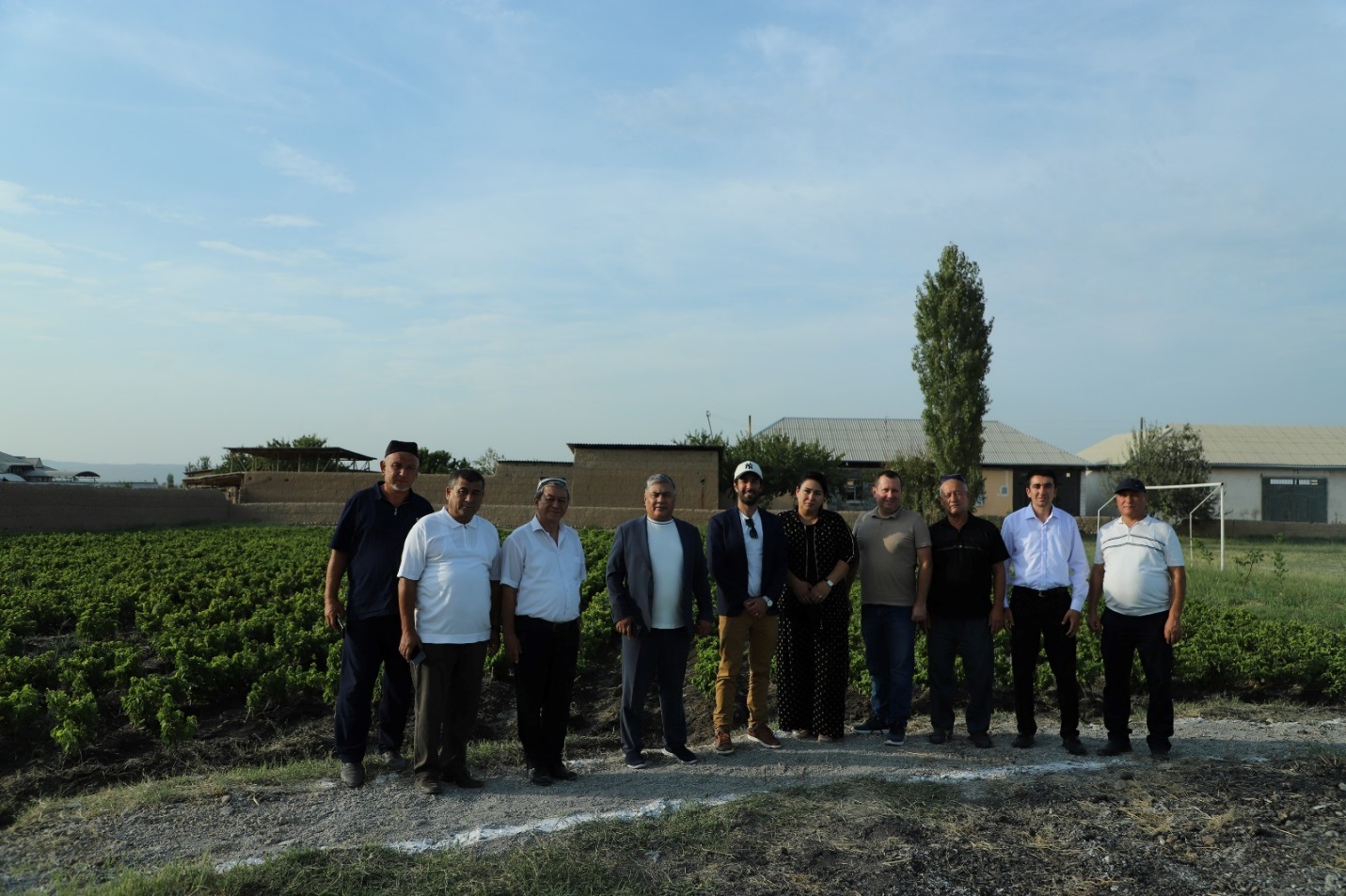
The mission positively assessed the work carried out to green the pilot sites, transition wells to alternative energy sources, and create additional income-generating opportunities for vulnerable households. The partners were provided with recommendations for further improving the outcomes of the sub-projects. During the meetings, the mission also responded to questions from project partners and local residents.
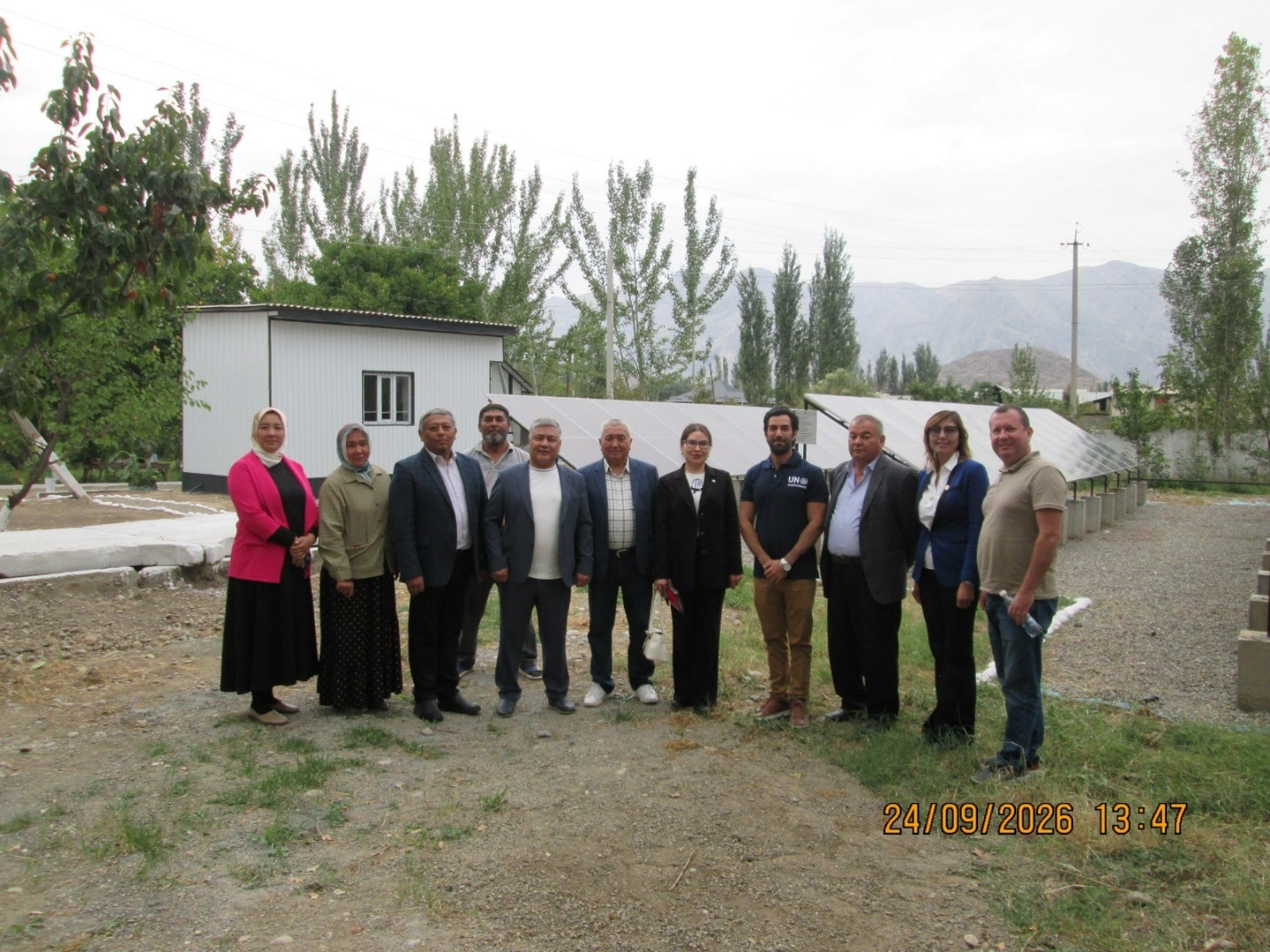
On 24 September, the mission visited Aravan district in Osh province, Kyrgyz Republic, where the Public Association “Central Asian Alliance for Water and Ecology” is implementing two sub-projects.
Under one of the sub-projects, a well was rehabilitated and solar panels were installed to power the pumping equipment. As a result, the duration of water supply to the local population increased from 2–3 hours to 6–7 hours per day. Protective green belts have been established around the well to reduce the impact of dust storms and strong winds. The existing aryk has been reinforced with natural stone to reduce the risk of flooding in the surrounding area. The sub-project serves as a pilot example of using solar energy to provide water to rural communities in the Kyrgyz Republic.
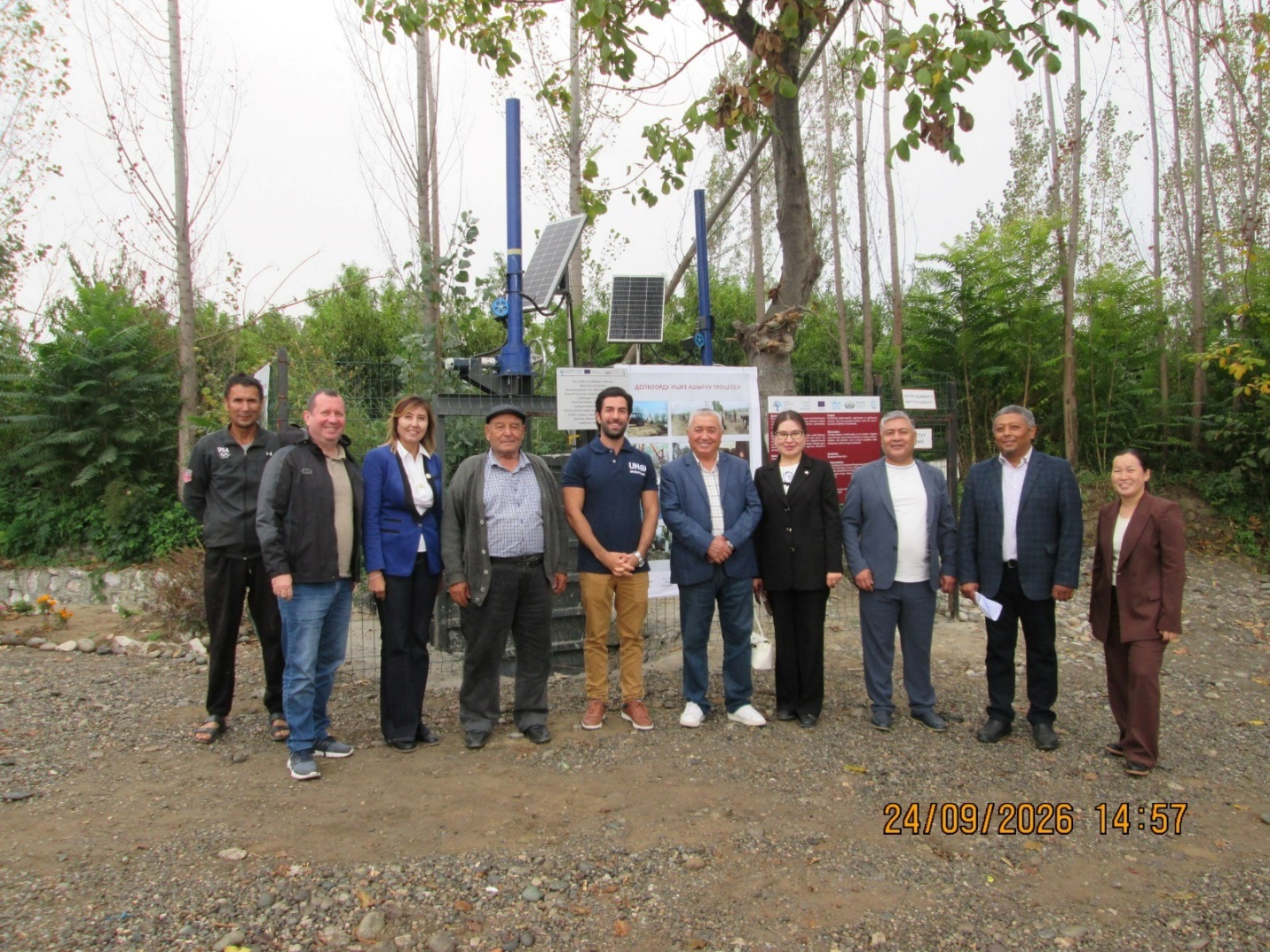
The second sub-project in Aravan district involves strengthening the banks of a transboundary canal and introducing smart water distribution and management systems. These measures are aimed at improving the efficiency of irrigation water use and reducing the risk of conflicts over water distribution, both within and between communities.
The mission positively assessed the sub-project’s potential to contribute to greater stability at the community level by promoting more transparent water accounting and allocation.
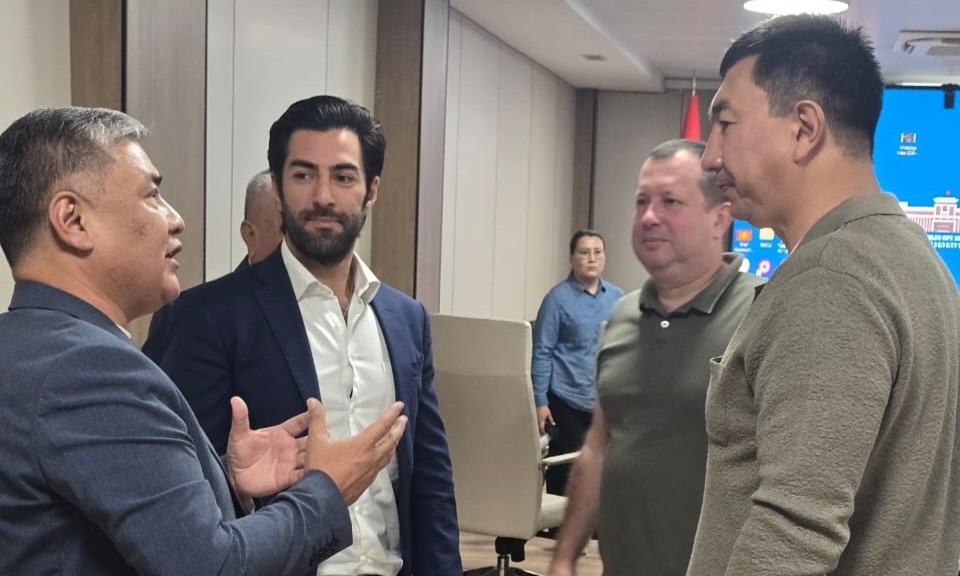
On 25 September, in Jalal-Abad province, the mission participants met with T. Tekebayev, Plenipotentiary Representative of the President of the Kyrgyz Republic in Jalal-Abad province.
The meeting focused on the region’s main environmental and economic challenges, including limited surface water availability, high electricity costs for groundwater pumping, excessive grazing pressure, and pasture degradation.
The parties exchanged proposals for cooperation in developing alternative energy sources, promoting integrated water resources management, and strengthening the dissemination of knowledge on environmental protection, climate change, and sustainable natural resource management.
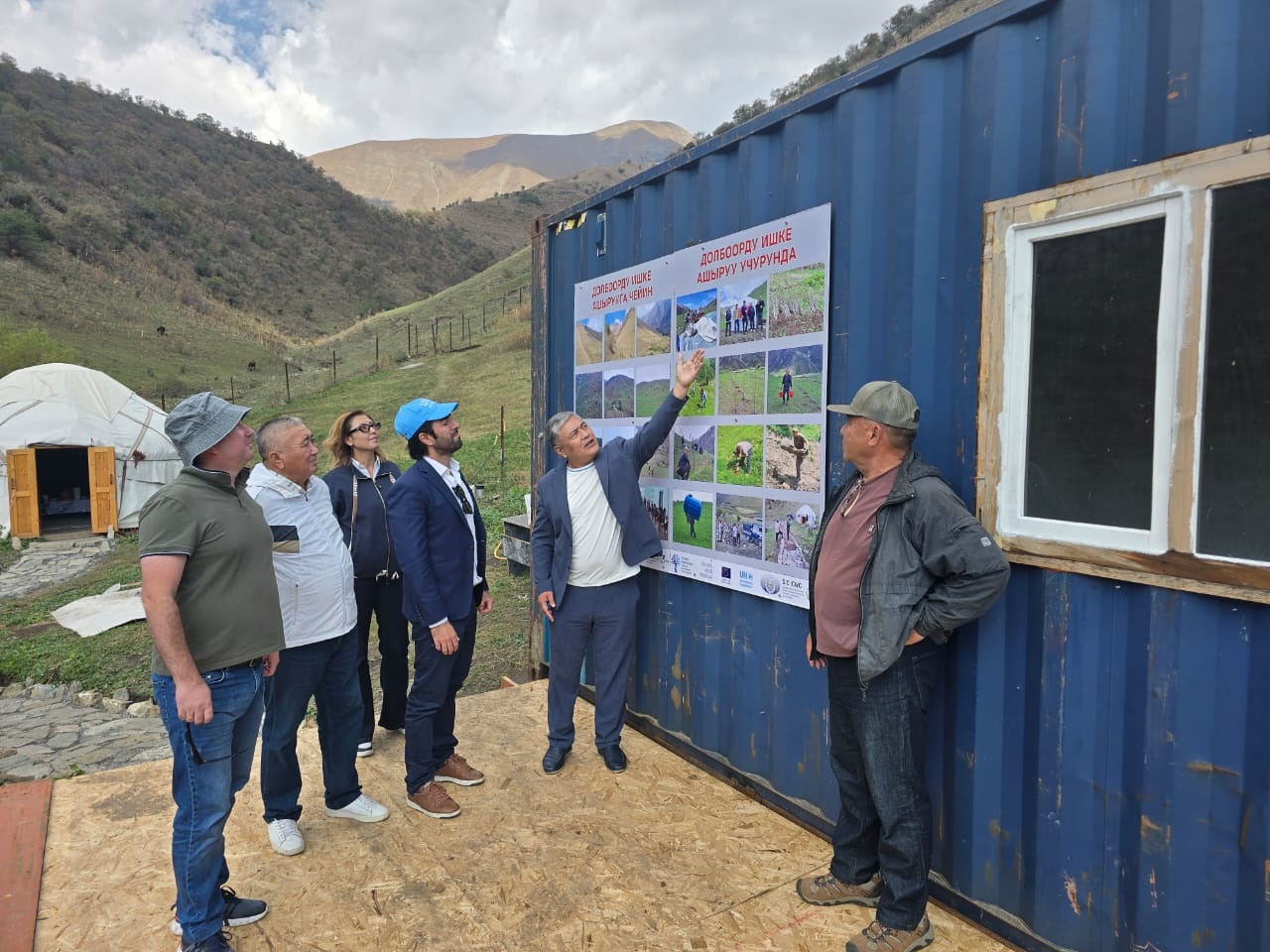
After the meeting, the mission visited the sites of sub-projects implemented by a consortium comprising the PA“Orchun” and PA“Independent Environmental Assessment” in Suzak district, Jalal-Abad province.
At the site visited, activities are underway to restore degraded pasturelands and establish a park of endemic plant species on the restored land.
On 27 September, the mission continued its work in Tajikistan. The first site visited was the Khuhandir community in Kanibadam district, Sughd province, where the PA“Youth Group for Environmental Protection” is implementing a sub-project aimed at protecting the area from mudflows.
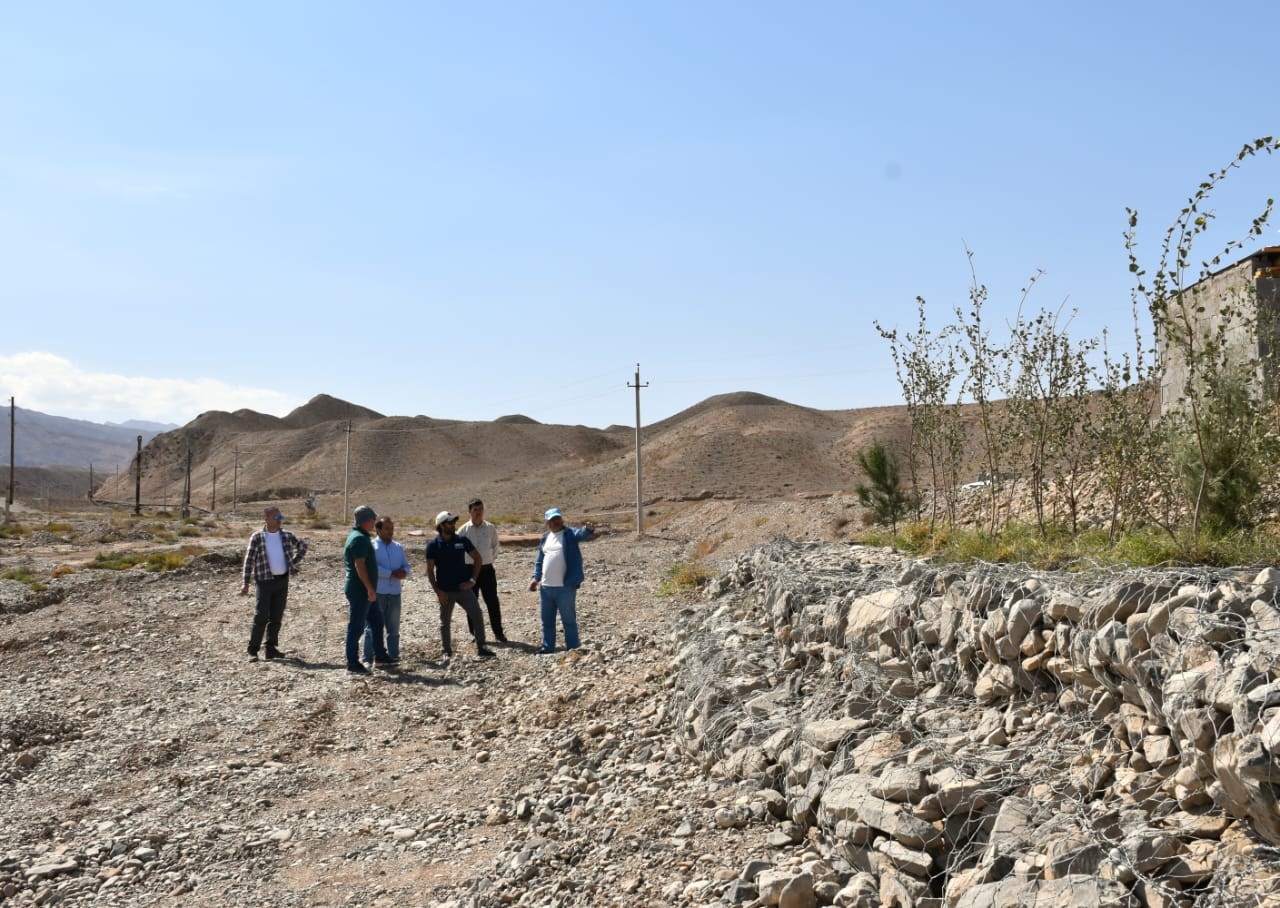
The community is regularly affected by mudflows, and the protective dam has been partially damaged. Under the sub-project, the most vulnerable sections of the dam are being reinforced with gabions, complemented by nature-based measures, including the planting of vegetation with well-developed root systems.
From Kanibadam district, the mission traveled to Jabbor-Rasulov district, where it assessed the progress of work being carried out by the PA“Agency for the Development of Rural Communities.” The sub-project combines environmental solutions with sustainable agricultural practices and aims to engage women and young people in economic activities, create employment opportunities, and expand opportunities for income generation.
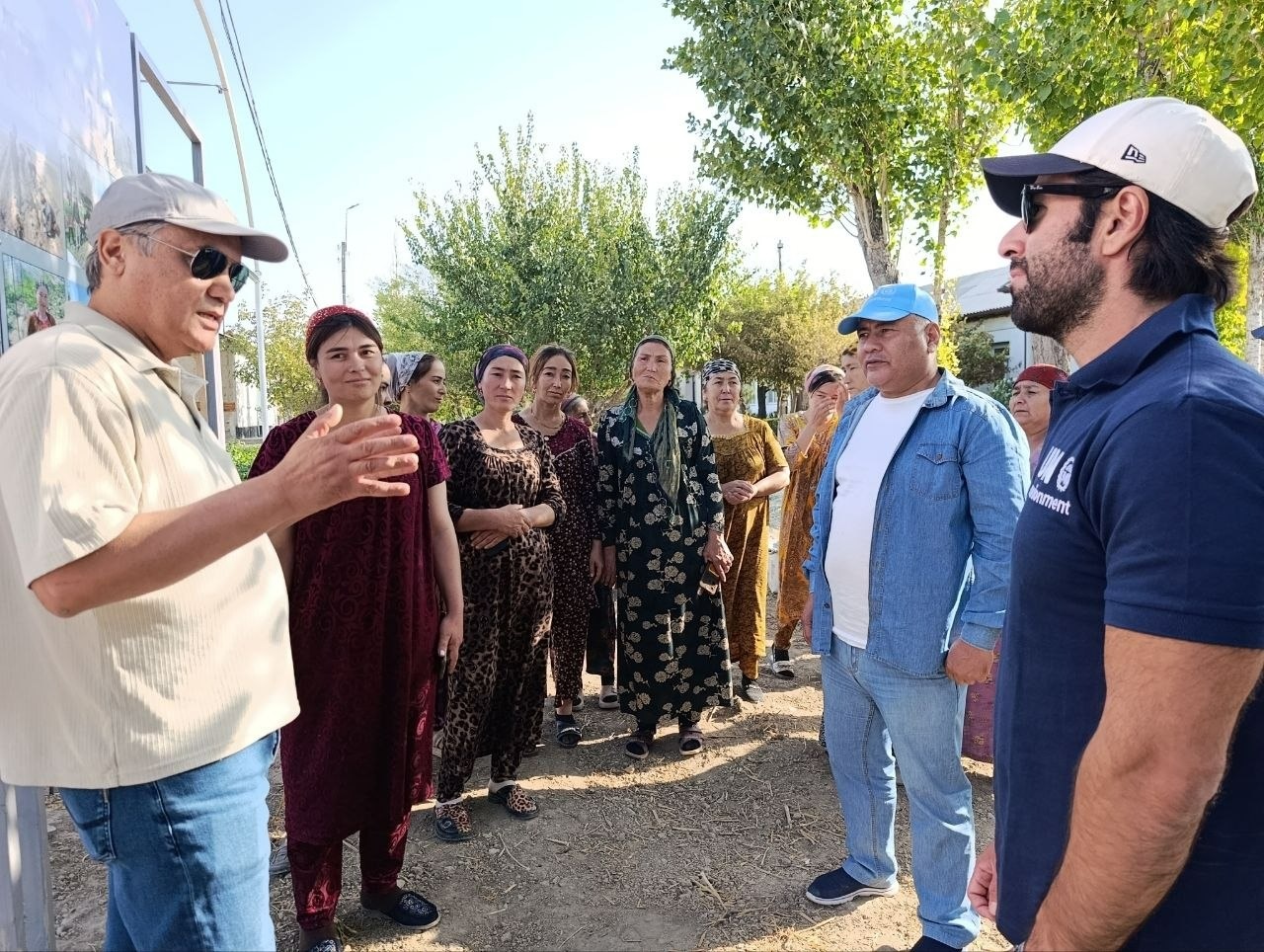
The mission noted progress in implementing nature-based and other environmentally oriented solutions aimed at strengthening the resilience of local communities to climate change since the sub-projects began in March 2026.
At all the sites visited, mission participants and grant recipients discussed challenges encountered during sub-project implementation and possible ways to address them. During meetings with project implementers and representatives of local communities, proposals were considered to improve project activities and enhance the sustainability of their results.