
No. 112 (773) October 2026
SIC ICWC Presents Fergana Valley Communities’ Climate Adaptation Experience at Geneva Peace Forum
On 15 October 2026, SIC ICWC Director D.R. Ziganshina spoke online at the session “Climate, Resources, and Conflict: Designing Peace Programming in a Warming World” held as part of the Geneva Peace Forum 2026.
The session was organized by the International Organization for Migration (IOM), together with FAO, the United Nations Environment Programme (UNEP), the United Nations Convention to Combat Desertification (UNCCD), and the Clingendael Institute. The discussion brought together experiences from different regions in climate adaptation, natural resource management, and community resilience. Particular attention was paid to community participation in decision-making, partnership development, and financing initiatives that promote cooperation and conflict prevention.
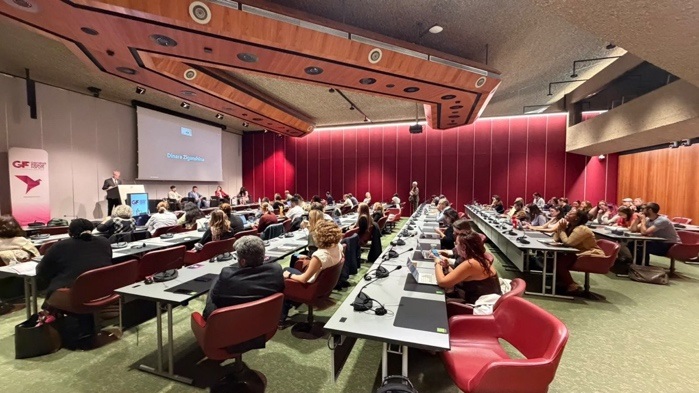
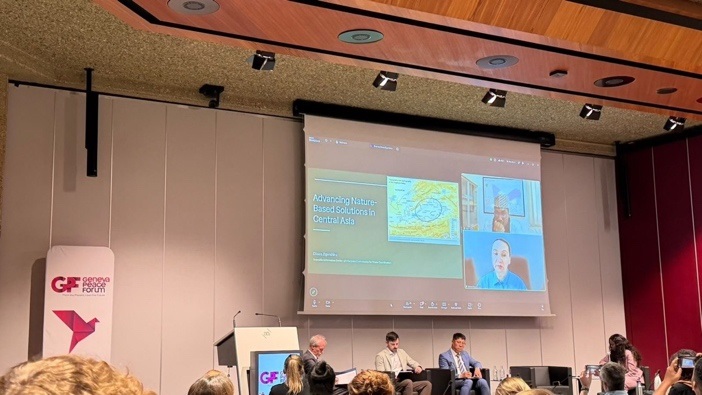
D. Ziganshina presented SIC ICWC’s work with local communities in the Fergana Valley across Kyrgyzstan, Tajikistan, and Uzbekistan. She noted that climate change is intensifying existing risks by making water availability less predictable, worsening land degradation, and increasing the vulnerability of agricultural livelihoods. These pressures affect household well-being and may heighten social tensions, particularly where access to resources is unequal and communities have limited involvement in decision-making.
The presentation highlighted an initiative funded by the European Union and led by UNEP, with SIC ICWC serving as a regional partner. The initiative combines scientific expertise, local knowledge, and support from civil society organizations to help communities develop adaptation measures tailored to their needs.
As of September 2026, eight local organizations from the three countries were participating in the initiative, supporting 17 adaptation measures based on nature-based solutions. The activities had directly benefited 954 people, including 472 women. Five regional network meetings had been held, bringing together more than 250 participants to share lessons.
Special focus was given to the regional network connecting local organizations, communities, authorities, and experts. It provides opportunities to share practical solutions, learn from one another, and cooperate on shared natural resources. The approaches discussed included vegetation restoration, rainwater harvesting, water-saving irrigation, and affordable climate technologies.
D. Ziganshina emphasized that scaling up such initiatives requires active community participation, including women and youth, integration of successful approaches into local development plans, and sustainable financing. Combining environmental restoration, stronger livelihoods, and equitable benefit sharing can help build trust and cooperation.
SIC ICWC’s participation brought the Fergana Valley’s experience into the international dialogue on how community-based climate adaptation can support sustainable development while strengthening ties between communities in neighboring countries.