
No. 113 (774) October 2026
Central Asia's Experience in Water Cooperation Presented at a United Nations University Workshop
On 19 October 2026, D. Ziganshina, Director of SIC ICWC, participated in an online workshop “The World’s Regions Can Learn from One Another: Towards a Common Framework for Sharing Good Process,” organized by the United Nations University Institute on Comparative Regional Integration Studies (UNU-CRIS, Bruges, Belgium).
The workshop focused on exchanging experiences among regions and exploring approaches to studying practical mechanisms for interstate cooperation. A dedicated panel, moderated by Professor Alistair Rieu-Clarke, examined water cooperation, using Central Asia and Southern Africa as case studies.
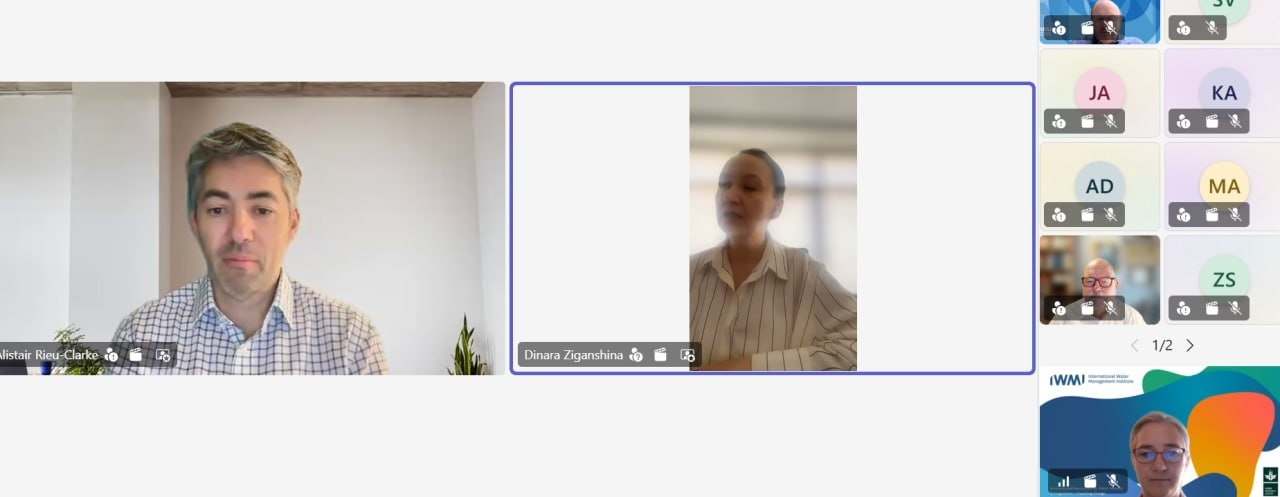
In her presentation, D. Ziganshina outlined the experience of the Interstate Commission for Water Coordination (ICWC) established under the 1992 Almaty Agreement. She focused on the mechanisms that have ensured the continuity of regional cooperation for more than three decades: coordination of seasonal water withdrawal limits and reservoir operation regimes, the exchange of real-time data, and the review of results and adjustment of decisions in response to the actual water management situation.
She also highlighted the role of BWO Amu Darya and BWO Syr Darya in the implementation of interstate decisions, as well as the contribution of SIC ICWC in the form of scientific and information support for cooperation. Analytical materials, the CAWater-Info information resources, and training help establish a common knowledge base for discussing and coordinating the countries’ actions.
Particular attention was paid to the factors that ensure the sustainability of cooperation, including maintaining professional ties and technical expertise, fostering regular dialogue, addressing specific joint tasks, and basing management decisions on scientific analysis. At the same time, further development of this cooperation requires improving data reliability and transparency, strengthening coordination between water and energy interests, taking ecosystem needs into account, and developing predictable mechanisms for sharing benefits and costs.
It was proposed that interregional exchanges of experience focus on comparing the full cycle of water management decision-making and implementation, from forecasting and negotiations to implementation, verification of results, and adjustment of decisions. This approach makes it possible to identify specific practices that could be useful to other regions, taking into account their circumstances.
The SIC ICWC’s participation in the workshop provided an opportunity to share Central Asia’s experience in the international discussion on how sustained collaboration, accessible information, and professional trust contribute to strengthening cooperation among states.