
No. 124 (785) November 2026
First Meeting of the Regional Working Group on Water Quality in the Amu Darya River Basin (Tajikistan, Turkmenistan, and Uzbekistan)
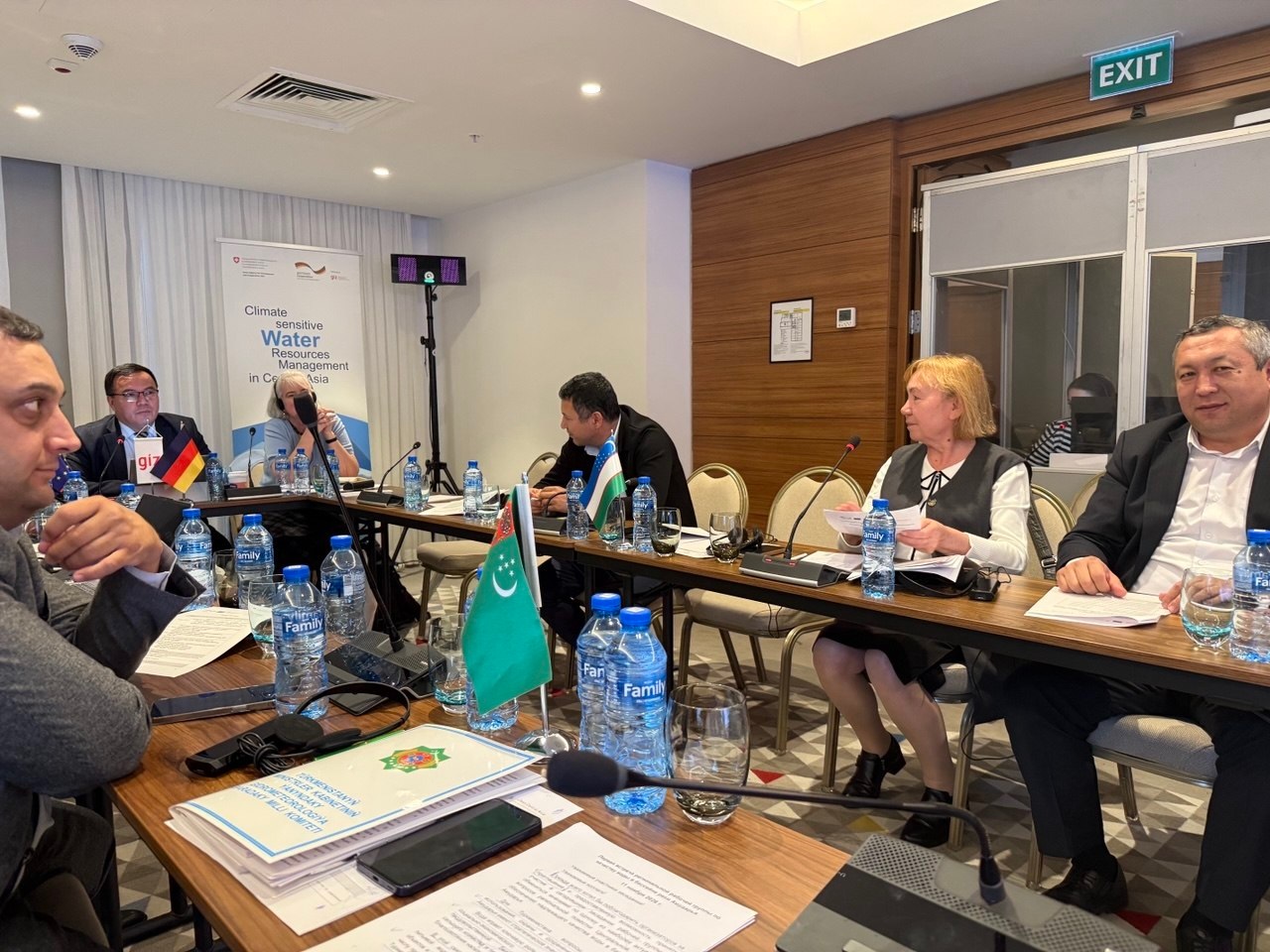
On 11 November 2026, the first meeting of the Regional Working Group on Water Quality in the Amu Darya River Basin was held as part of the regional projects “Climate-Sensitive Water Resources Management in Central Asia” and “EU4SustainableCentralAsia: Joint Action and Coordination on Water, Energy and Climate Change.”
One of the project’s objectives is to build capacities of regional and national organizations dealing with water quality in the Amu Darya River basin in the field of integrated water resources management in the context of climate change.
The establishment of the Regional Working Group on Water Quality in the Amu Darya River Basin was initiated following proposals put forward by participating countries during the introductory regional workshop on water quality in the Amu Darya River basin, held in Urgench, Uzbekistan on 4 December 2024. It was noted at the workshop that water quality management in Central Asian countries remains insufficiently effective and receives inadequate attention as the primary focus is on water quantity and allocation, particularly for irrigation and hydropower generation. In this context, participants proposed considering the establishment of a regional working group on water quality in the Amu Darya River basin.
The first meeting on 11 November brought together designated representatives of the participating Central Asian countries, including experts of environmental and water agencies, public health authorities, and hydrometeorological services, as well as relevant international partners. Zulfiya Yarullina represented SIC ICWC.
Mrs. Yarullina delivered a keynote presentation addressing the development of regional cooperation, existing practices, and proposals for harmonizing water quality monitoring efforts.
In the context of climate change, water scarcity, and increasing anthropogenic load, the water quality in the Amu Darya River is becoming strategically important for drinking water supplies, agricultural sustainability, and ecosystems of the Aral Sea region. As noted during the meeting, water salinity increases significantly from the river’s headwaters to its delta due to both natural factors and human activities, including irrigation water withdrawals and the discharge of drainage water.
Currently, regular monitoring of the river status is carried out by the relevant national agencies: TajikHydromet in Tajikistan, the Environmental Monitoring Service of the Ministry of Environmental Protection in Turkmenistan, and UzHydromet in Uzbekistan. However, differences in the parameters monitored, measurement frequency, and laboratory methods hinder direct data comparison and the development of a comprehensive assessment across the entire basin.
Drawing on best practices in transboundary river management, particularly in the Danube and Rhine basins, as well as the cooperation mechanisms established under the UNECE Water Convention, SIC ICWC proposed a practical model for cooperation among Central Asian countries.
Key areas for the Regional Working Group’s future work:
- Harmonization of approaches: standardizing the network of transboundary water quality monitoring stations, establishing a common core set of water quality indicators, and harmonizing sampling methods and units of measurement;
- Practical verification: conducting synchronized monitoring, joint field surveys, and interlaboratory comparisons to ensure the comparability of monitoring results;
- Information exchange: establishing a permanent mechanism for regular data exchange and preparing an annual joint assessment of transboundary water quality.
The activities of the Regional Working Group are expected to strengthen cooperation among national agencies, facilitating a transition from fragmented assessments to coordinated water quality management and environmental protection across the Amu Darya River basin.
Participants paid particular attention to practical experience in interstate cooperation, drawing on the example of the Uzbekistan–Kazakhstan Joint Working Group of the Commission on Environmental Protection and Water Quality in the Syr Darya River Basin. The legal framework for bilateral cooperation was established through key agreements, including the 1992 Almaty Agreement and intergovernmental arrangements on environmental protection and sustainable nature management.
An important milestone in institutional development was the first meeting of the joint commission, held in September 2018, during which its governing documents and a joint action plan were approved.
Through the joint efforts of Uzbekistan and Kazakhstan, an organizational, methodological, and practical framework has been established for regular, coordinated monitoring of transboundary water quality. The reached agreements have facilitated a transition from separate national monitoring activities to a more coordinated approach based on an agreed set of water quality indicators, common sampling locations, and the regular exchange of laboratory analysis results and technical expertise
Of particular importance is the development of mechanisms for cooperation among laboratories, building capacities, and creation of conditions to ensure the comparability of water quality monitoring results between the two countries.
This cooperation has created additional opportunities to enhance the effectiveness of national transboundary water quality monitoring systems by harmonizing methodological approaches, ensuring the regular exchange of monitoring data, and promoting professional collaboration among relevant organizations in both countries.
A key benefit of this cooperation is the availability of more comprehensive and comparable information on transboundary water quality, enabling the identification of spatial and temporal variations and a more unbiased assessment of the impacts of natural and anthropogenic factors.
Furthermore, cooperation contributes to strengthening mutual trust, enhancing transparency in information exchange, and establishing a shared information framework to support joint decision-making on water protection and the reduction of adverse impacts of economic activities on aquatic ecosystems.
This work is fully aligned with the principles of the 1992 Helsinki Water Convention, to which both countries are parties. The experience gained through interagency coordination has provided a solid methodological and practical foundation for ensuring the comparability of environmental monitoring data.
Representatives of the participating countries then presented information on the current state of water quality in the Amu Darya River basin, existing monitoring systems, and priorities for cooperation.
In addition, the meeting featured presentations on environmental monitoring and capacity building, covering the following topics:
Tailings safety and prevention of accidental water pollution: case-study of Tajikistan;
Results of the Regional Working Group on Water Quality (RECCA);
Current challenges in water quality monitoring in the Amu Darya River Basin (BWO Amu Darya);
Activities and prospects for cooperation with BORDA (Bremen Overseas Research and Development Association).
At the conclusion, participants were invited to prepare recommendations on priority areas for future activities to reflect national priorities, institutional readiness, and available resources.