
No. 125 (786) November 2026
SIC ICWC Presents Digital Tools for Water Security and Cooperation in Central Asia at the GIZ Partnership Dialogue
Tashkent, November 11, 2026. The Scientific-Information Center of the Interstate Commission for Water Coordination (SIC ICWC) contributed to the Partnership Dialogue of the GIZ Regional Programme “Climate-Sensitive Water Resources Management in Central Asia” under the “Green Central Asia” initiative. The event brought together representatives of key regional institutions, government agencies, and international organizations to discuss national priorities of water development and strengthen transboundary cooperation.
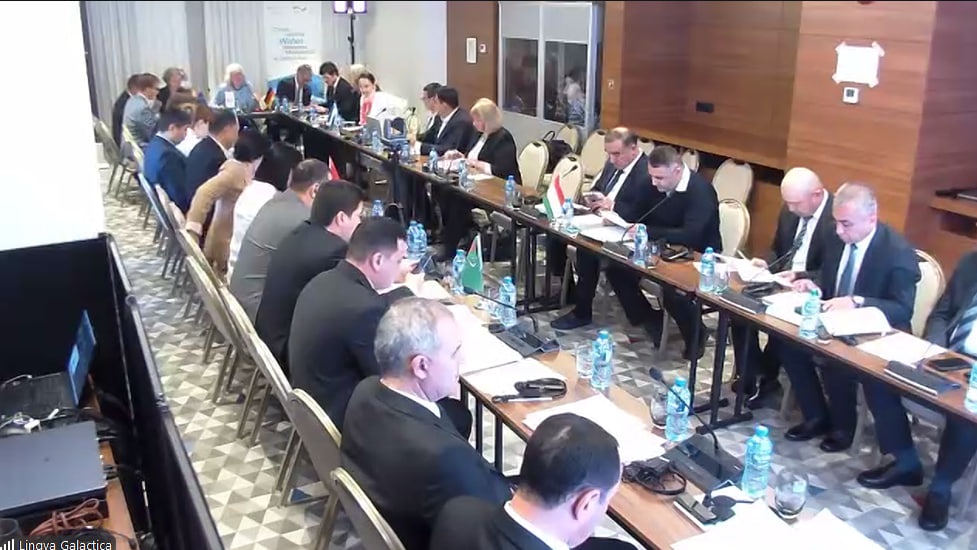
During a panel session dedicated to regional practices and solutions, Dr. Ziganshina delivered a presentation “Digital Tools for Water Security and Cooperation in Central Asia.” The presentation was made as part of a joint SIC ICWC-OECD project implemented with the support of the International Climate Initiative (IKI) of the German Federal Ministry for the Environment, Nature Conservation, Nuclear Safety and Consumer Protection (BMU / BMWK).
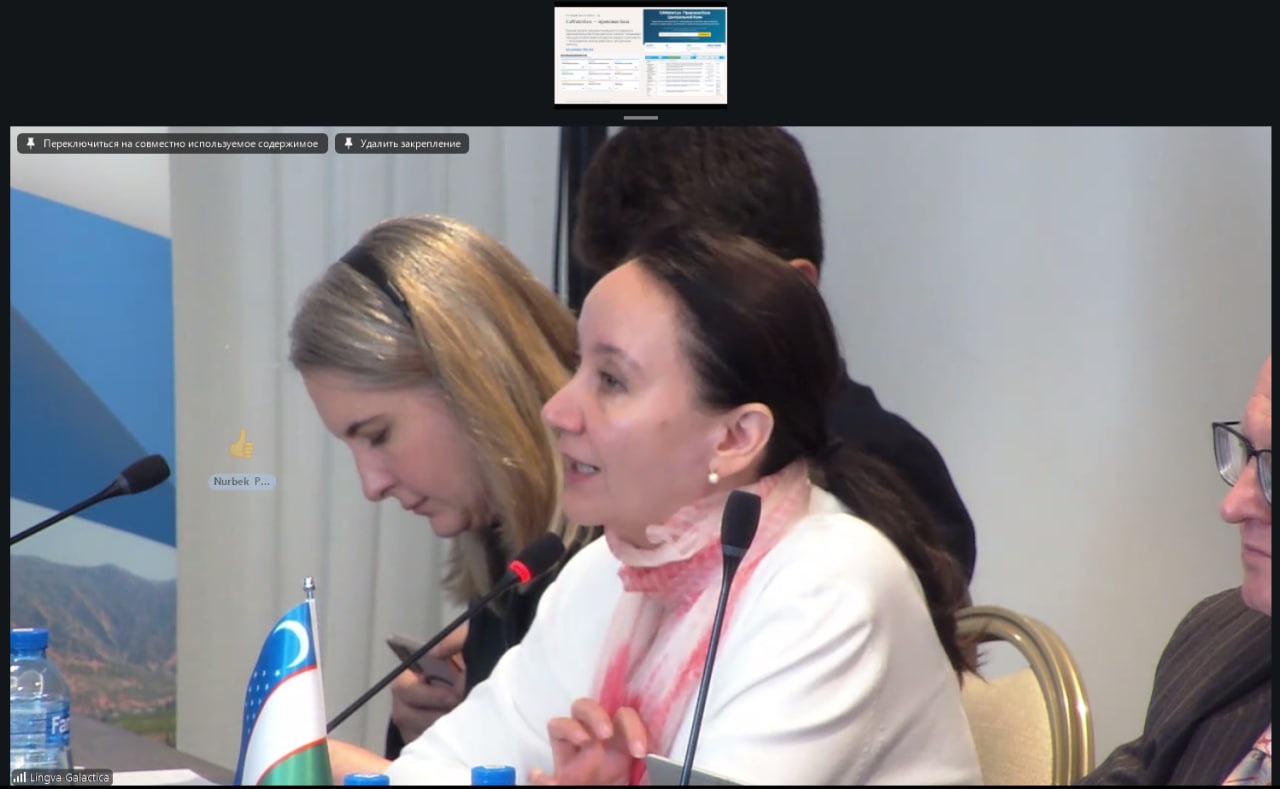
Participants were introduced to four interconnected digital tools that together form an integrated information and analytical framework designed to support decision-making and strengthen regional cooperation:
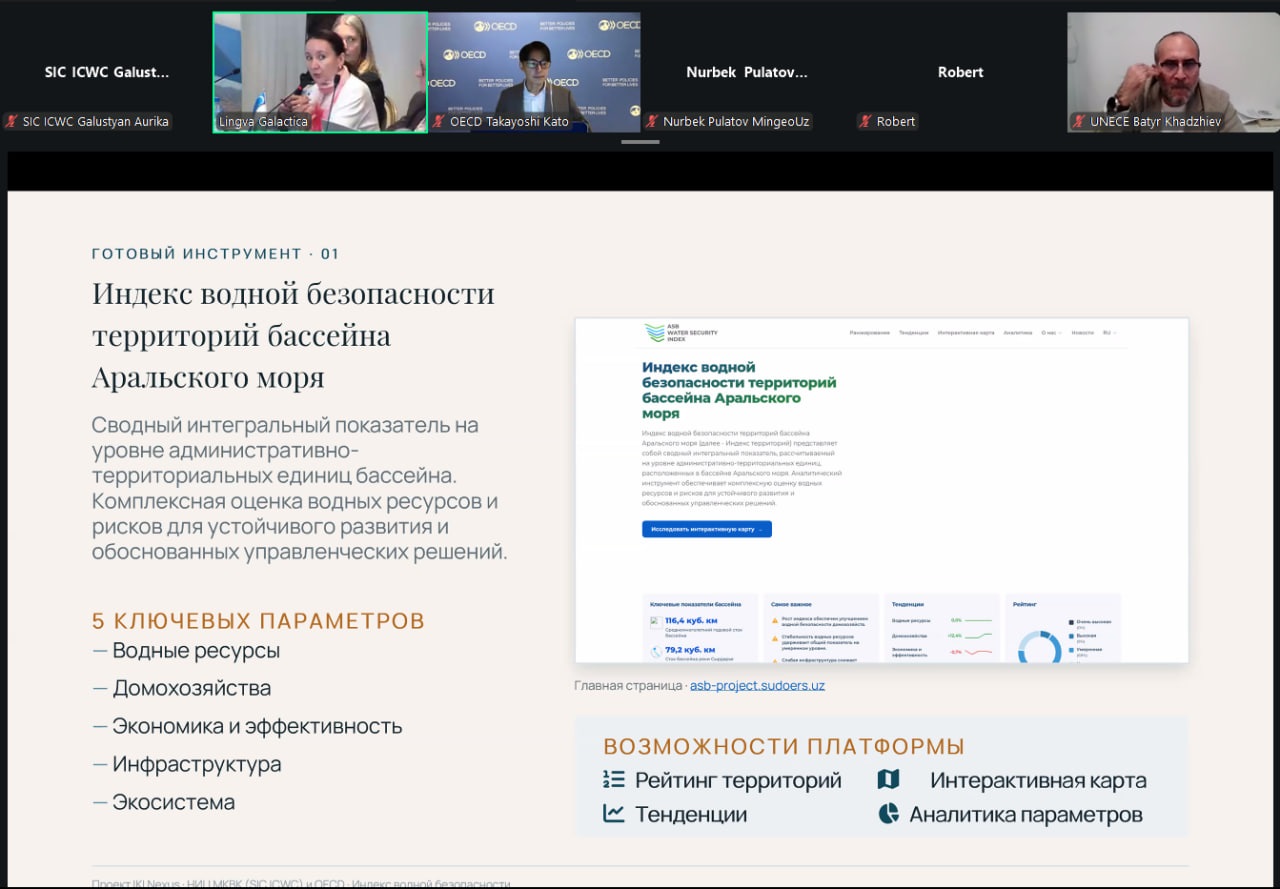
-The Aral Sea Basin Water Security Index (ASB Water Security Index) is a tool for integrated assessment of water security and associated risks at the level of administrative-territorial units. The platform features an interactive map and analytical data covering five key areas: water, households, economy and efficiency, infrastructure, and ecosystems.
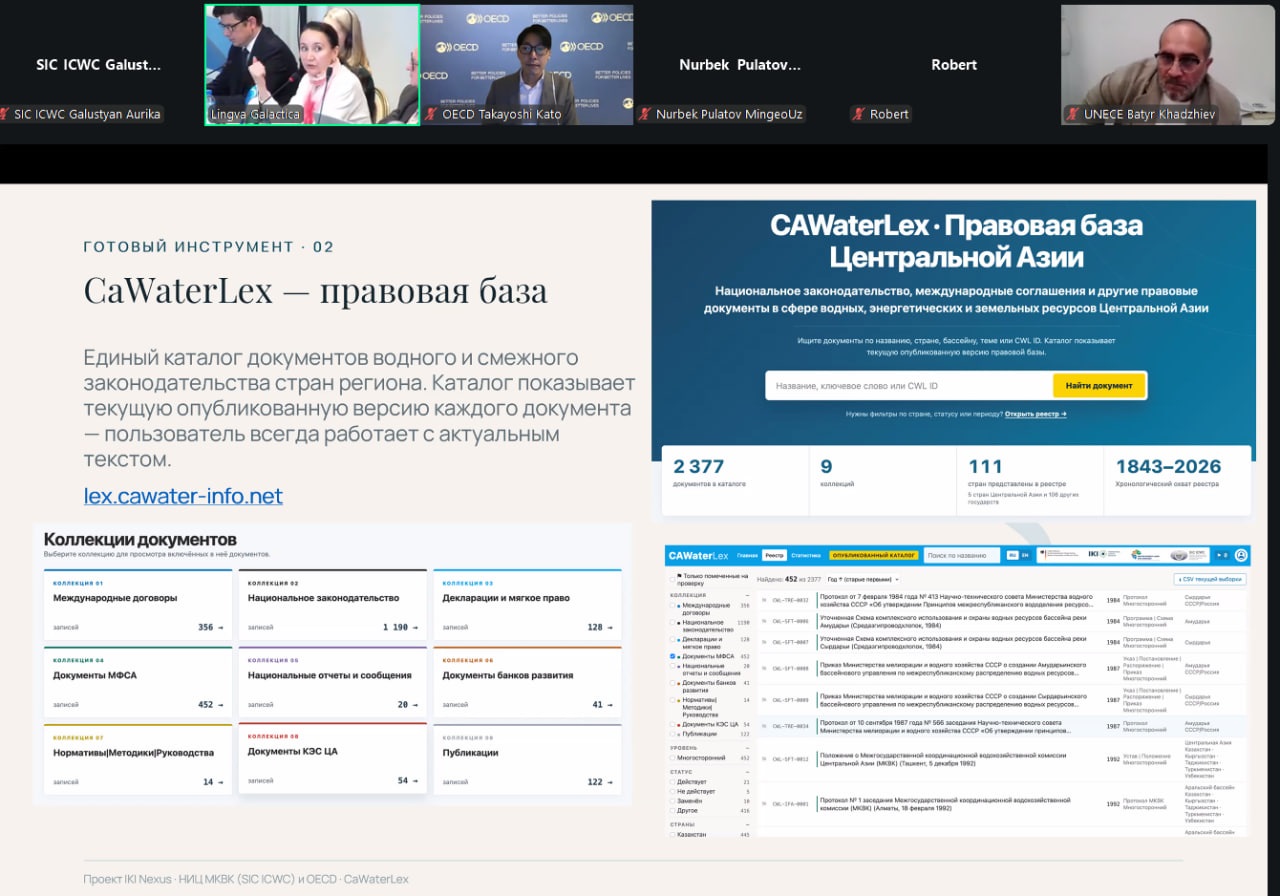
-CaWaterLex is an operational regional legal information system that integrates a database and a registry of legislation and regulatory documents related to water, energy, and associated sectors in Central Asian countries. The platform contains more than 2,300 documents, including international treaties, national laws and regulations, and documents of the International Fund for Saving the Aral Sea (IFAS) and development banks. It provides access to official versions of these documents through a flexible search system.
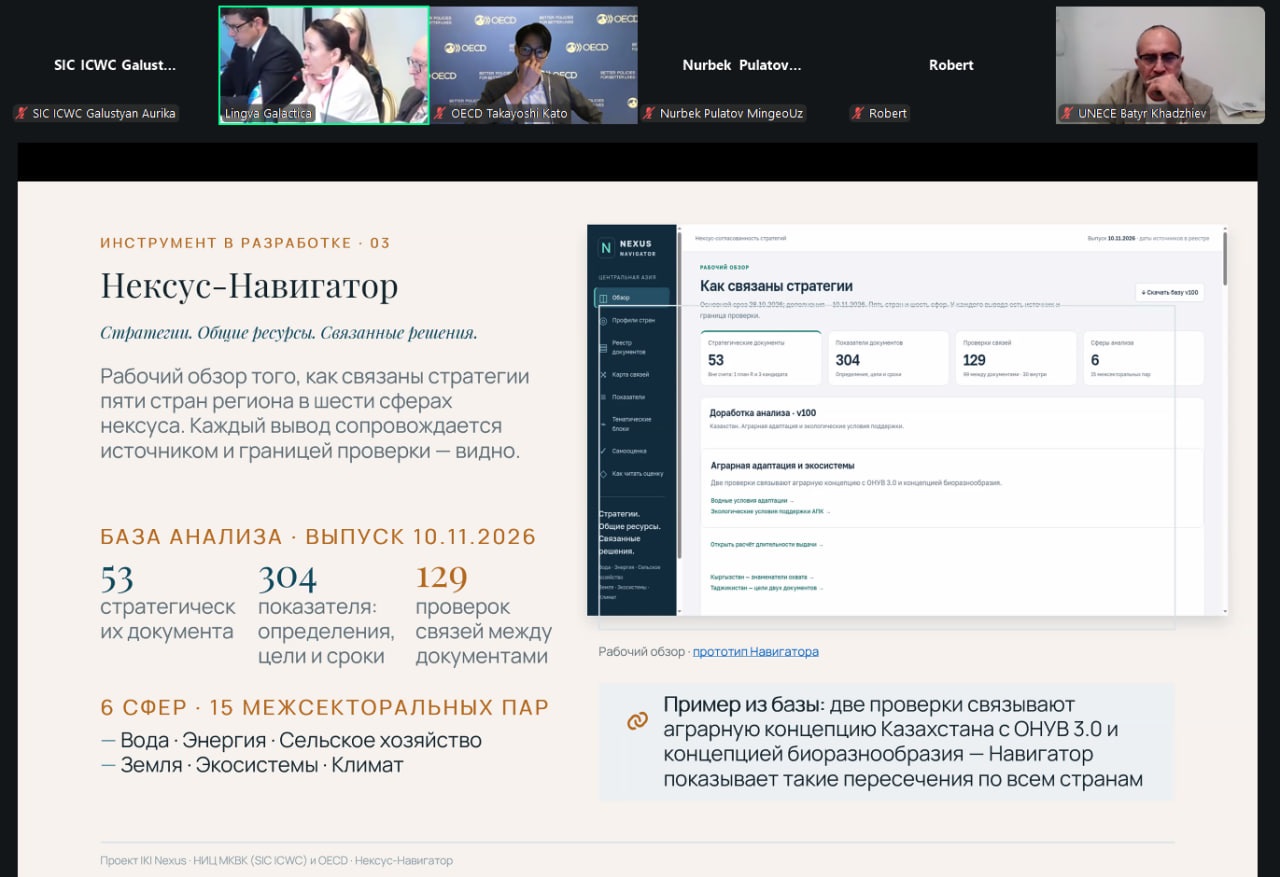
-Nexus Navigator is an analytical tool under development designed to assess the coherence of strategic documents of the five Central Asian countries across six interconnected sectors: water, energy, agriculture, land use, ecosystems, and climate. As part of the ongoing assessment, 53 documents have been analyzed, revealing hundreds of cross-sectoral linkages. Particular attention is paid to the traceability of sources and the validity of analytical findings.
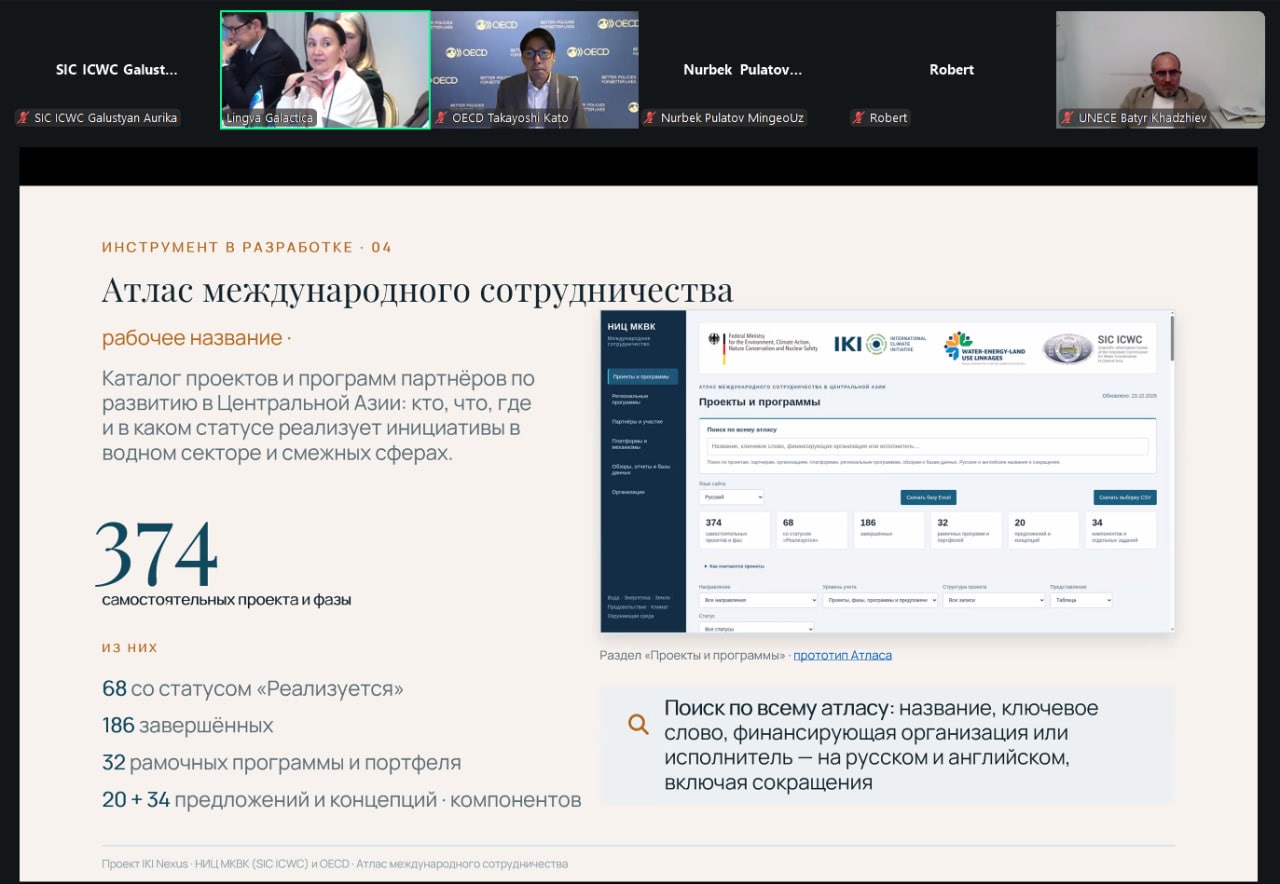
-The Atlas of International Cooperation is a catalog under development that provides information on projects, programs, and initiatives implemented by development partners in the water sector and related fields across Central Asia. The Atlas accumulates information on 374 projects, regional programs, permanent coordination platforms, and organizations.
The digital tools presented attracted interest among participants in the Partnership Dialogue, highlighting the practical importance of digitalization, greater data transparency, and cross-sectoral integration for climate change adaptation and sustainable development in the Aral Sea Basin. SIC ICWC invited relevant government agencies, experts, and international partners to test the platforms, share data, and provide feedback to support their further development and improvement.
SIC ICWC’s participation in the Partnership Dialogue reaffirmed the Center’s role in strengthening regional cooperation, promoting a shared understanding of climate risks, facilitating the exchange of experience, and identifying opportunities for coordinating international support. The digital solutions presented contribute to information and analytical support for coordinated actions among Central Asian countries and promote integrated water resources management that takes climate change into account.
Learn more about the IKI project: “Regional Mechanisms for a Low-Carbon and Climate-Resilient Transformation of the Energy-Water-Land Nexus in Central Asia”