
No. 126 (787) November 2026
Monitoring Mission to EU-UNEP Project Sites in Tajikistan
From 8 to 11 November 2026, a monitoring mission was conducted at project sites in Tajikistan under the EU–UNEP partnership project “Facilitating Region-Specific Approaches to Addressing Climate- and Environmental-Related Risks for Socio-Economic Stability in Central Asia.” The mission was undertaken by Sh. Muminov, Project Leader and Deputy Director of SIC ICWC, and B. Gozhenko, Project Manager for Monitoring and Assessment. The mission aimed to assess progress in subproject implementation, evaluate the results achieved, and identify priorities for further work.
On 8 November, the mission visited facilities managed by the NGO “Agency for the Development of Rural Communities” in Jabbar Rasulov district, Sughd province.
The first site was a 3-ha nursery for drought-tolerant and ornamental plants. In March 2026, diverse tree and plant species were planted at the nursery, including pine, spruce, cherry, apple, elm, chrysanthemums, and paulownia. The plant survival rate exceeded 85%. At the time of the visit, the trees had grown sufficiently and were ready for sale and transplanting.
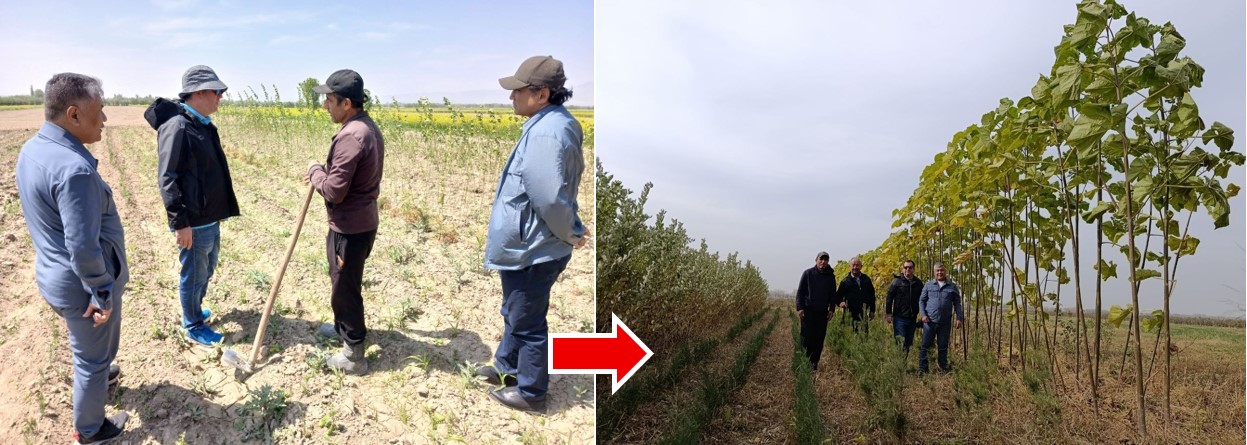
The nursery owner has already secured orders for most of the plants and is generating additional revenue from their sale.
To support further development of the nursery, the mission recommended:
- Expanding the planting area in December;
- Offering seedlings at discounted prices for landscaping activities under other subprojects, including those implemented by the project partner, the NGO “Youth Group for Environmental Protection.”
At the next site, the mission learned about vermicompost production. As part of the subproject, more than 500 kg of high-quality vermicompost has been produced and is ready for sale. The young owner is exploring opportunities to market the product locally.
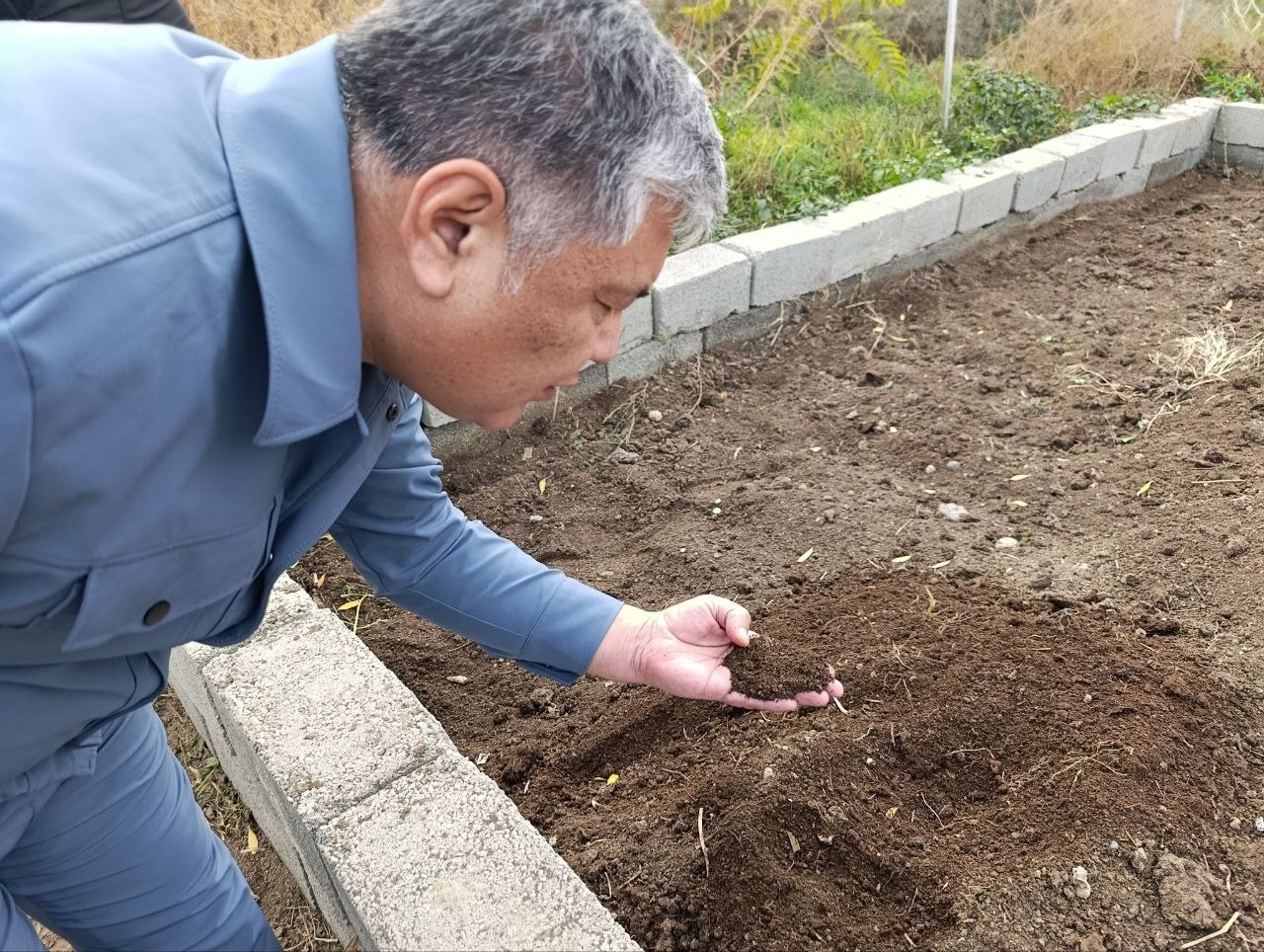
To promote the product, the mission recommended:
- Developing a distinctive brand for the vermicompost;
- Packaging the compost in 0.5–1 kg bag to encourage retail sales.
The mission also visited another subproject site where an irrigation reservoir was constructed and protected using nature-based solutions.
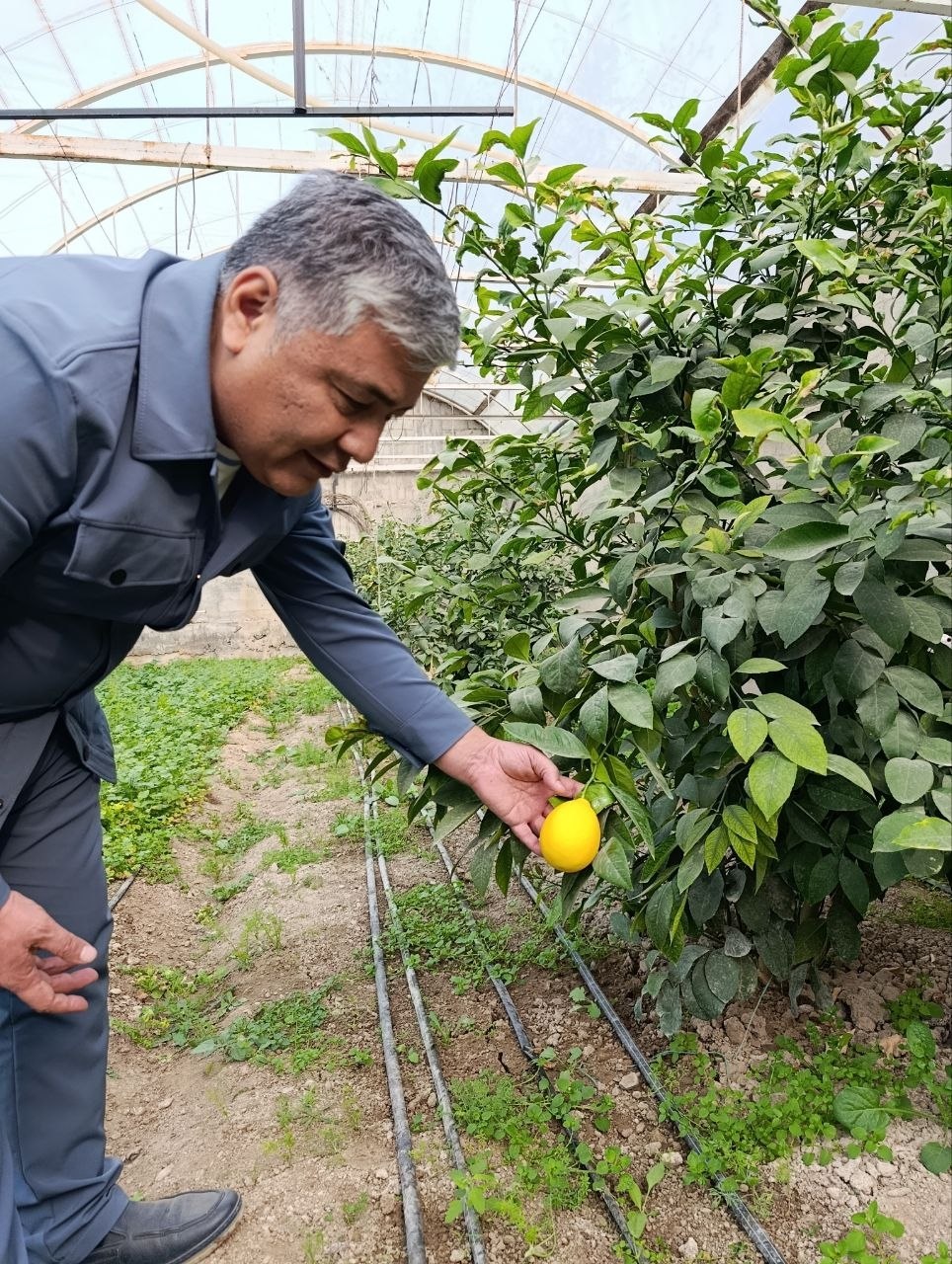
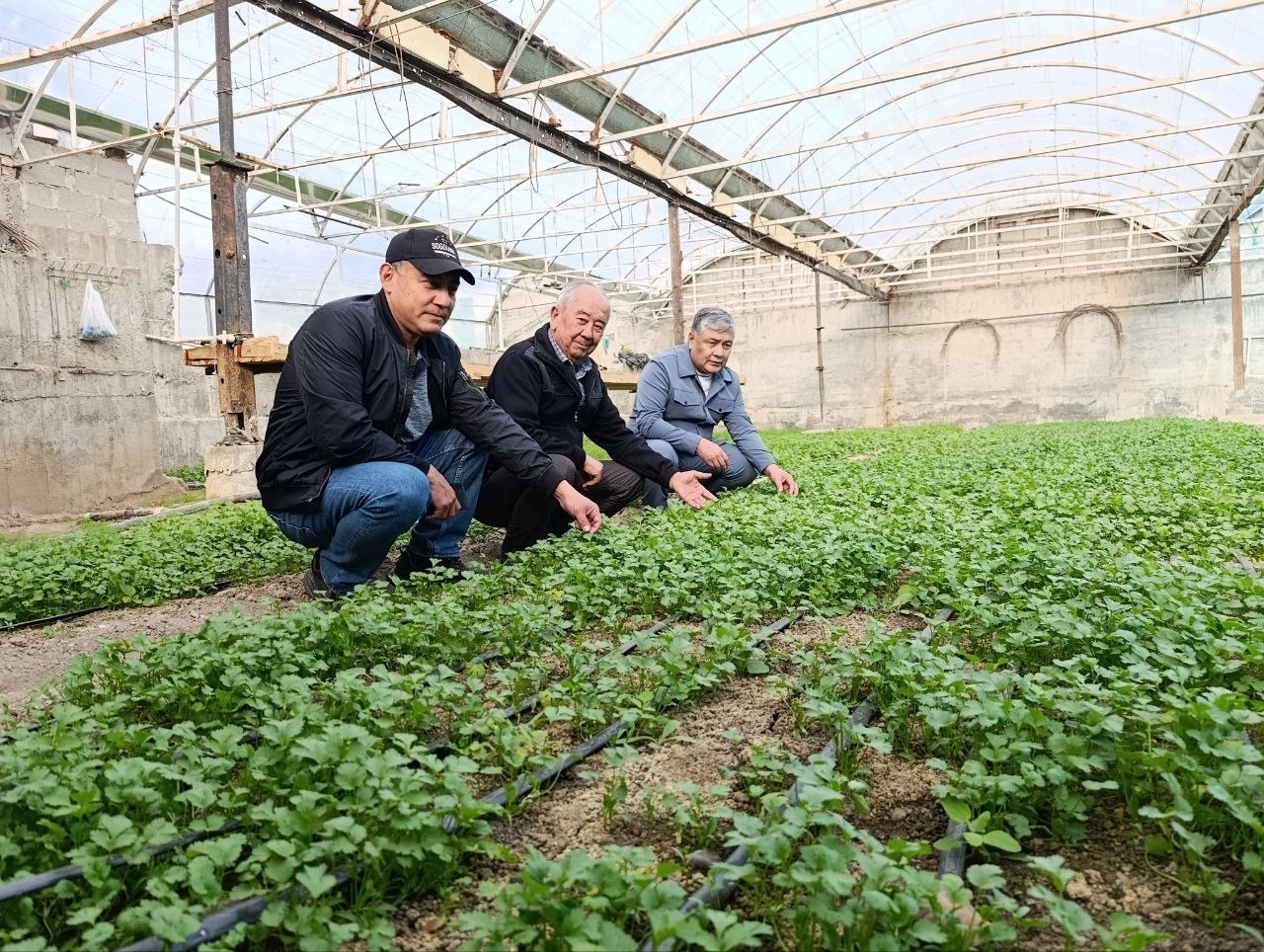
A 60-cubic-meter reservoir was constructed at the site, and a water delivery network was laid to serve 18 households equipped with drip irrigation systems. The mission visited two of these households. With support from the project, the families were able to grow crops both for their own consumption and for sale. At the time of the visit in November, the households were growing leafy greens, lemons, bell peppers, strawberries, and other crops.
Based on the findings of the visit, the mission recommended:
- Conducting a series of hands-on training sessions at pilot farms on the operation of drip irrigation systems and the application of effective agricultural practices;
- Developing a landscaping plan for the area surrounding the reservoir to protect it from pollution and siltation;
- Align a ditch to facilitate the planned planting activities;
- Using seedlings grown under the another subproject for landscaping.
On 9 November, the mission visited Kukhandier community in Kanibadam district, Sughd province, where the NGO “Youth Group for Environmental Protection” is implementing a subproject to protect the area from mudslides.
The community is regularly affected by mudslides. The protective embankment has been partially damaged, with the most recent reconstruction carried out in 2012. Under the subproject, four of the embankment’s most vulnerable sections, each measuring 30 meters in length, were reinforced with gabions. The combination of gabion structures and vegetation with well-developed root systems is intended to enhance the embankment’s resistance to mudslides. To ensure irrigation and improve plant survival rates during the initial establishment period, a water reservoir and a drip irrigation system were installed.
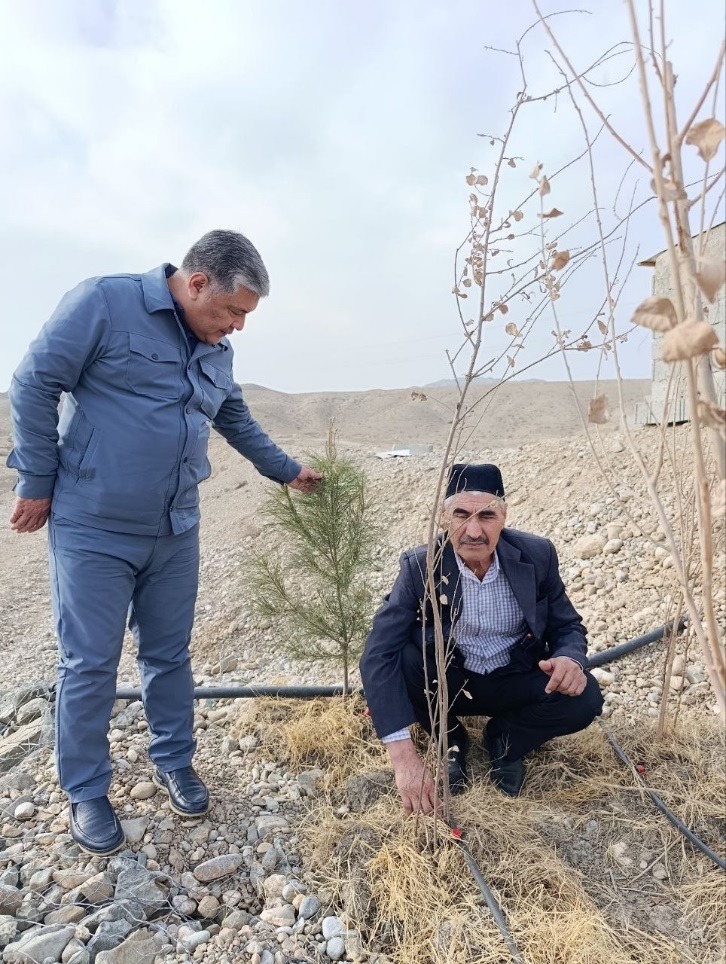
To strengthen the protective vegetation, the mission recommended:
- Consulting agronomists to select suitable tree, shrub, and grass species for planting in the areas reinforced with gabions;
- Where possible, using seedlings from the nursery operated by the project partner, the NGO “Agency for the Development of Rural Communities”;
- Restoring the well located near the site to ensure regular watering of the seedlings during the first year after planting.
In Patar community, the mission inspected a collecting drain, where more than 1,800 meters of the channel had been cleaned under the subproject. The work aims to increase the drain’s capacity, lower groundwater levels, and prevent secondary soil salinization in adjacent areas. The subproject also envisages establishing a green belt along the collecting drain to protect it and help reduce soil salinization.
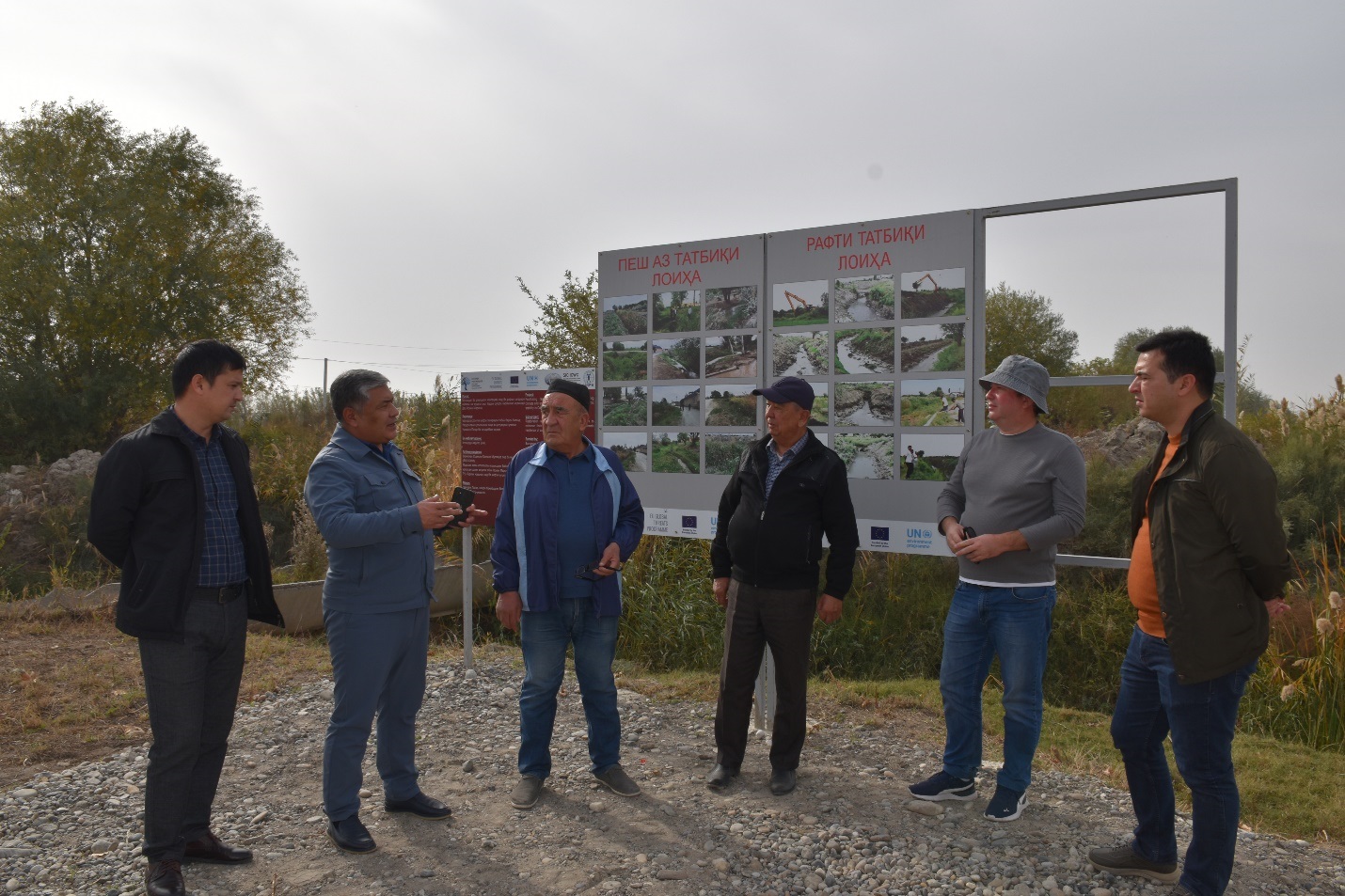
To support further the subproject and assess its results, the mission recommended:
- Consulting agronomists to select suitable tree, shrub, and grass species for planting along the collecting drain;
- Assessing the impact of drain cleaning activities on groundwater levels, crop yields, and household incomes.
On 10 November, the mission visited subproject sites managed by a consortium of organizations OO “Safi” and OO “Subhi Tandurusti” in Asht district, Sughd province.
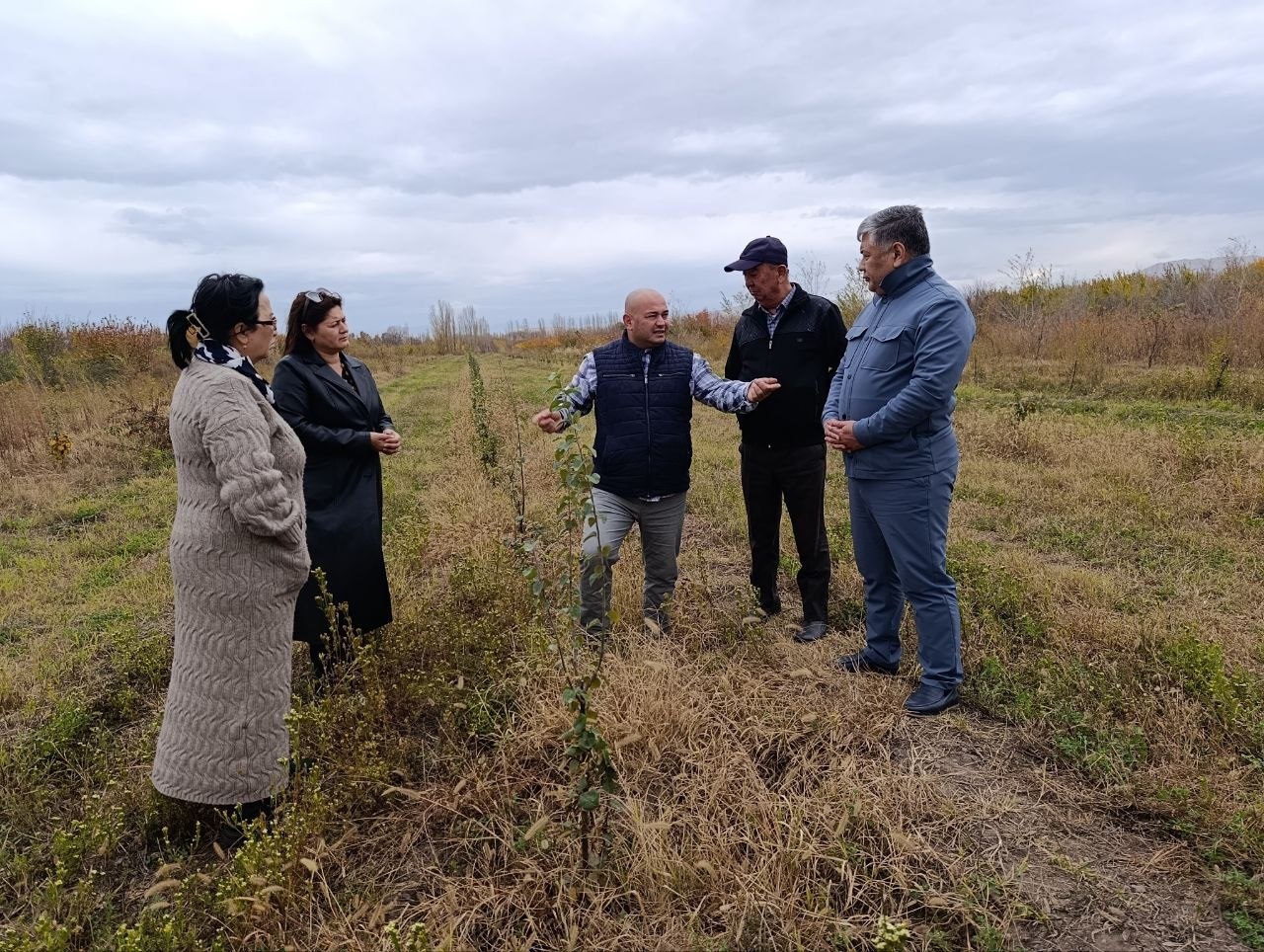
More than 6,000 saplings, including apple, plum, peach, and apricot trees, have been planted in a 6-hectare fruit tree nursery. Asht district has traditionally specialized in apricot cultivation. However, climate change and declining water availability are reducing the profitability of apricot production and increasing the need to diversify orchards by introducing drought-tolerant varieties of other fruit crops.
The mission recommended:
- Replacing seedlings that failed to establish during the winter planting season;
- Expanding the planting area and testing additional drought-tolerant varieties of fruits, taking into account constraints on irrigation water.
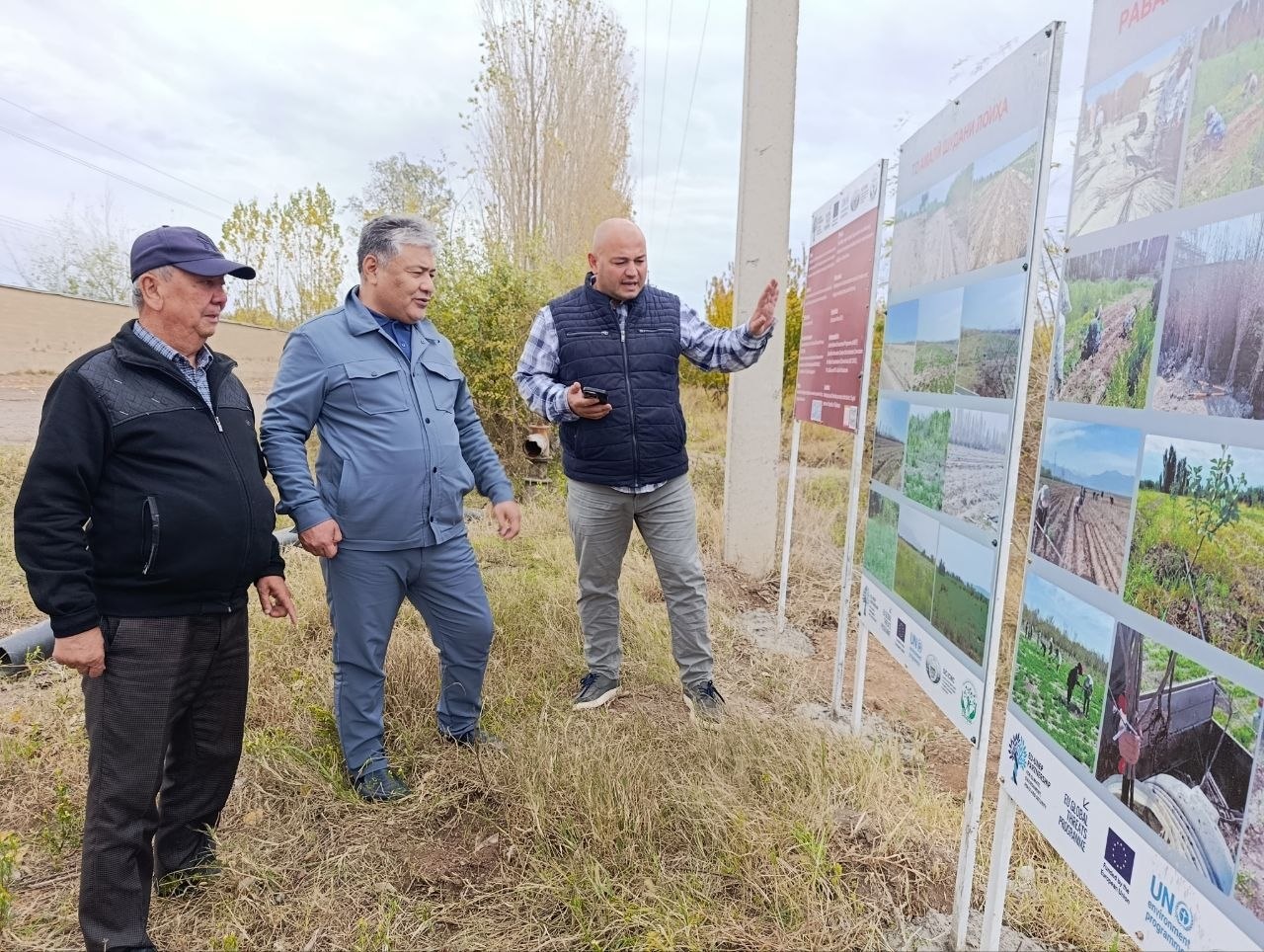
The final site visited was a kindergarten in Mehrobod community, where the consortium is implementing a subproject. As part of the subproject, a water pipeline was installed to supply the renovated kindergarten with water from a rehabilitated well. Nature-based solutions have been implemented around the building to provide protection against strong winds and dust storms. Fruit trees and conifers have been planted, and mung beans have been sown. Each tree has been assigned to a child attending the kindergarten, with a name tag placed next to it. A greenhouse has also been established on the premises to grow leafy greens, onions, and lemons for the kindergarten’s own use.
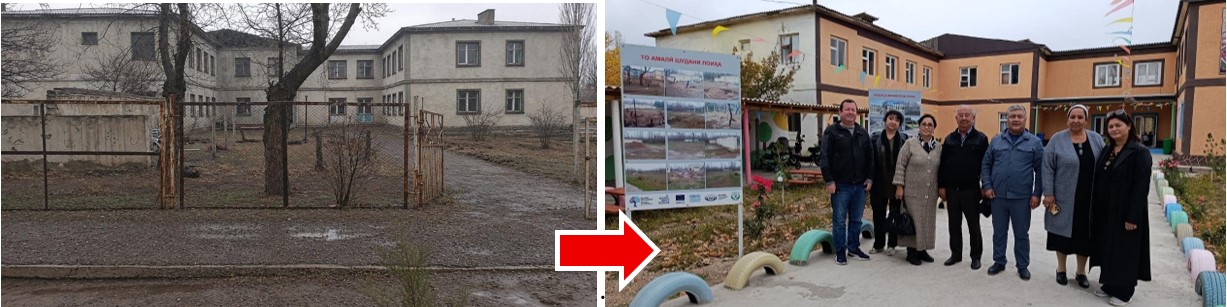
The restoration of water supply encouraged local residents to accelerate the renovation of the kindergarten. Their joint efforts demonstrated the community’s ability to mobilize and work together to address a shared challenge. The renovated kindergarten has already welcomed its first 60 children, with more than 120 others on the waiting list.
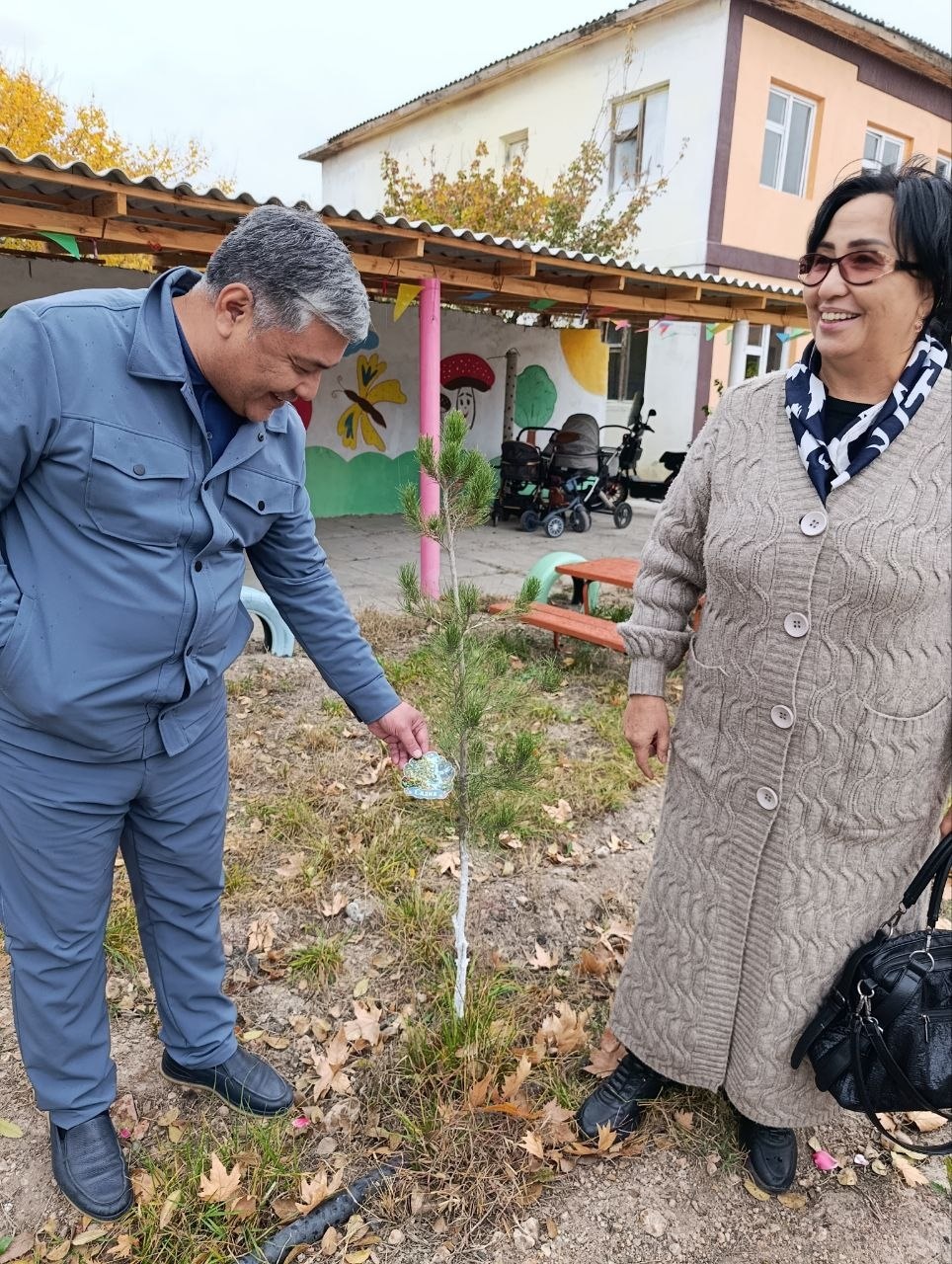
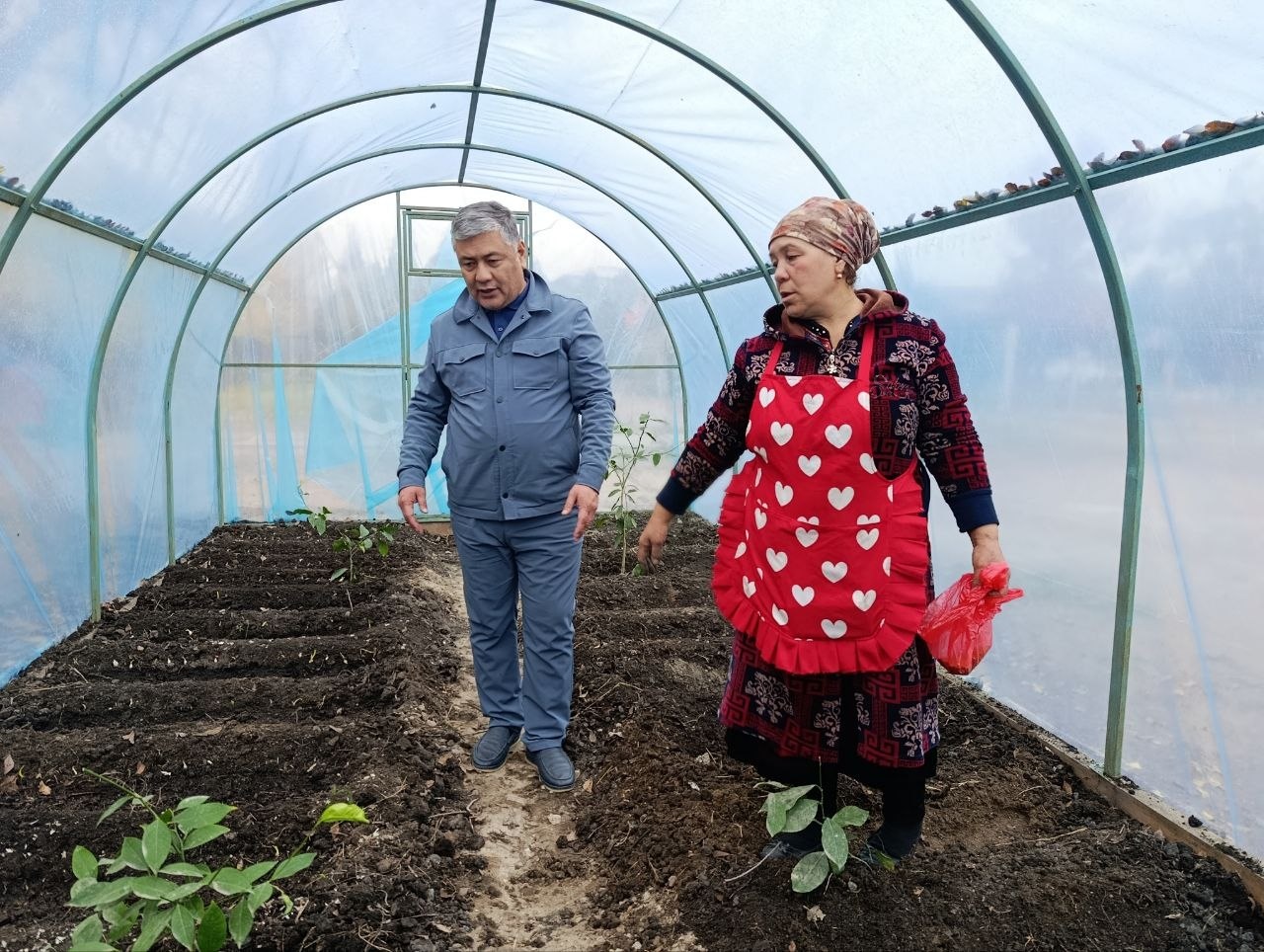
Based on the findings of the site visits, the mission noted the progress achieved since the launch of the subprojects in March 2026.
Community cohesion, nature-based solutions, and green technologies are helping local communities adapt to climate change. Tangible results are already evident, including additional revenues from plant sales, improved access to drip irrigation for households, and the reopening of a kindergarten. The mission’s recommendations are aimed at sustaining and building on these achievements, maintaining planted vegetation, and assessing the environmental and socioeconomic impacts of the subprojects.