
No. 127 (788) November 2026
From Data to Decisions: SIC ICWC Participates in the WE-ACT Project Final Conference
On 16 November 2026, the final conference of the international WE-ACT project, Water Efficient Allocation in a Central Asian Transboundary River Basin, was held in Tashkent in a hybrid format. The event, under the theme “Developing a Robust Decision Support System for Water Allocation in Central Asia under Climate Change,” was organized by the International Water Management Institute (IWMI) and the Technical University of Munich (TUM), together with consortium partners and with the participation of the Central-Asian Institute for Applied Geosciences (CAIAG).
The project, implemented from 2023 to 2026 under the European Union's Horizon Europe programme, brings together 13 partners from Europe and Central Asia. It aims to develop a climate-sensitive decision support system (DSS) for coordinated water allocation in the Syr Darya River Basin, with a particular focus on the transboundary Naryn and Kara Darya river basins in the upper reaches of the Syr Darya.
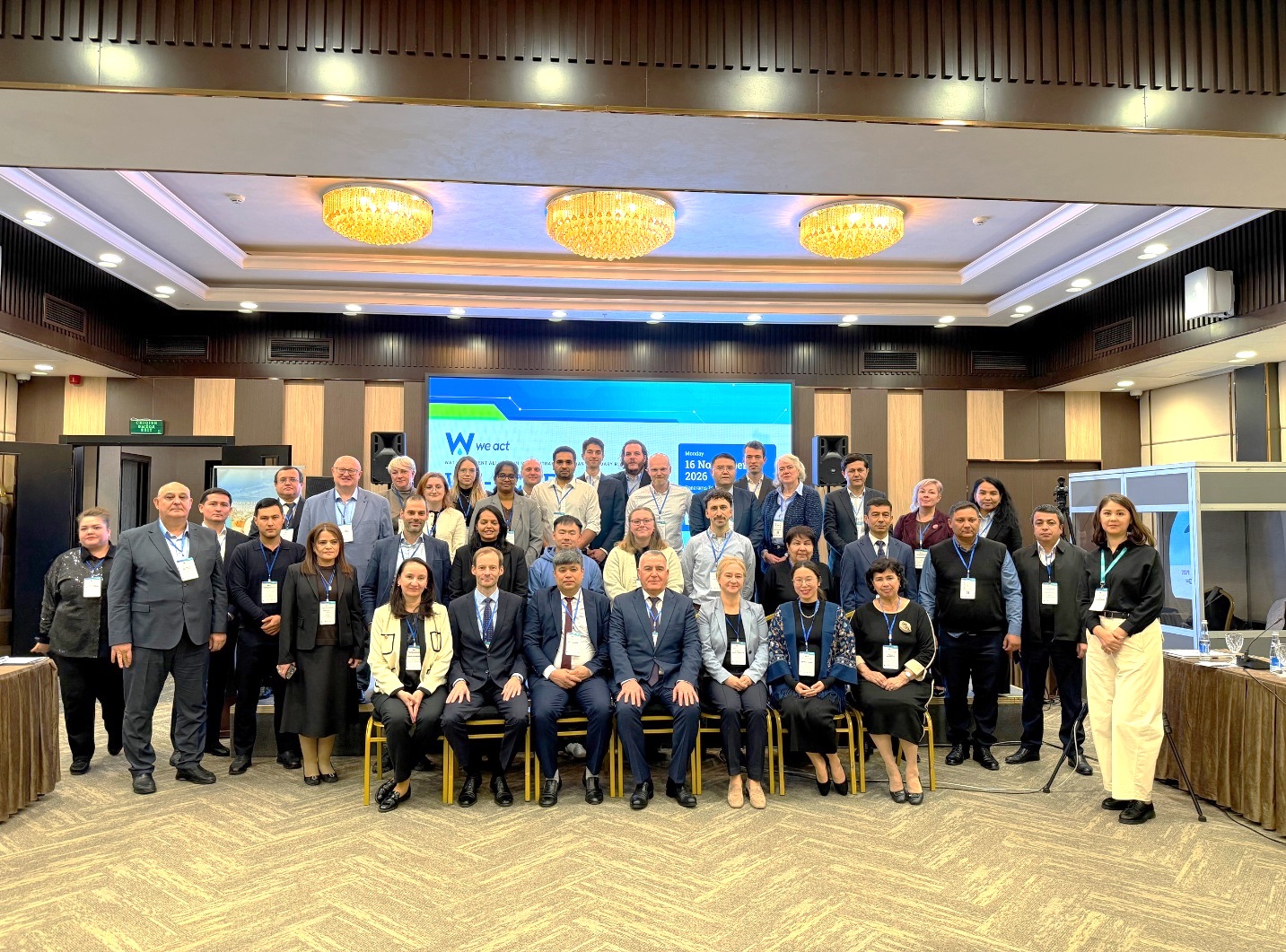
The conference was attended by the Director, a Head of Division, and a Leading Specialist of the Scientific Information Center of the Interstate Commission for Water Coordination in Central Asia (SIC ICWC). Other participants included representatives of the Ministry of Water Resources and the Ministry of Agriculture of the Republic of Uzbekistan, BWO Syr Darya, IWMI, TUM, HAEDES, GIZ, UT, CAIAG, research institutions, and universities involved in the project.
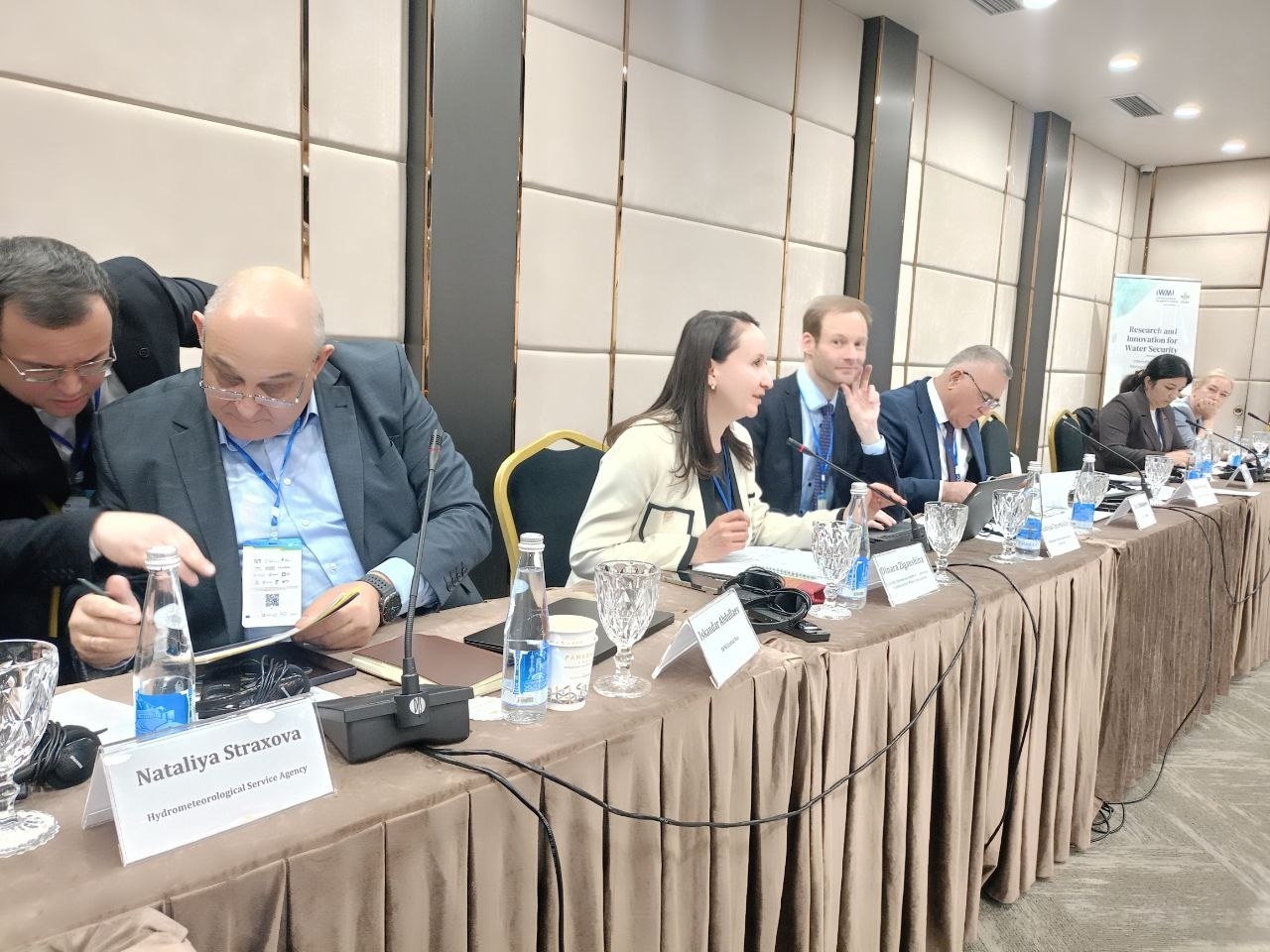
During the panel session “Stakeholder Perspectives and Discussion,” Dinara Ziganshina delivered a presentation “Current Challenges, Priorities, and Opportunities for Climate-Resilient Water Resources Management in Central Asia”.
Project Coordinator Jinshui Huang presented the results of four years of project implementation. She noted that 11 automatic gauging stations (six in Uzbekistan and five in Kyrgyzstan), 12 automatic meteorological stations (five and seven, respectively), and three automated glacier ablation stakes had been installed to monitor hydrometeorological processes in real time. All collected data undergo quality control before being uploaded to the Lizard data management platform. Regional climate modelling at a spatial resolution of approximately 12 km, combined with hydrological modelling that accounts for glacier processes, makes it possible to assess changes in precipitation, evaporation, and glacier melt through 2100. Machine learning models also enable the reconstruction of long-term river discharge records at monitoring stations where observations have been interrupted.
The combined application of climate, socioeconomic, and water management scenarios (RCP/SSP), covering 27 water allocation scenarios, demonstrated that future water security depends not only on climate conditions and water demand but also on coordination among stakeholders. Under the project's scenarios, moving from a low to a moderate level of cooperation reduces unmet water demand by approximately threefold.
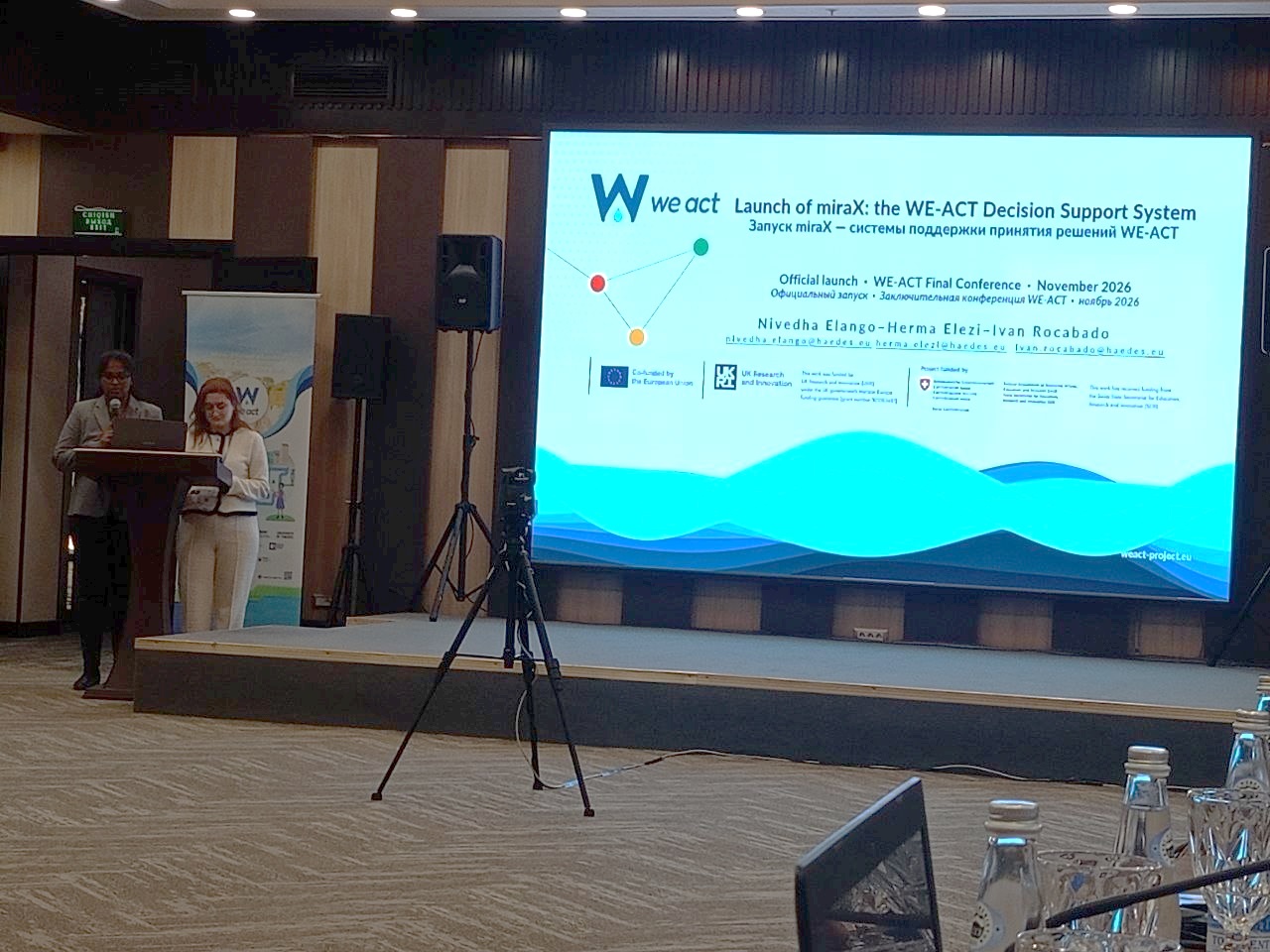
A key highlight of the conference was the official launch and demonstration of the miraX Decision Support System, developed by HAEDES. This cloud-based platform uses digital twins of water systems to integrate data from sensors and Internet of Things (IoT) monitoring stations, modelling results, satellite observations, and open data sources. It enables users to compare “what-if” scenarios and generate reports through both web and mobile interfaces. The demonstration version features a monitoring station network and time-series data for the Fergana Valley.
Particular attention was given to stakeholder engagement. Z. Gafurov (IWMI) presented the results of cooperation with water management organizations in the basin, including workshops and consultations held in Tashkent, Osh, and the Fergana Valley in 2023. He also outlined proposals for a voluntary template to facilitate regular and operational data exchange, including information on floods and droughts, through designated contact persons, as well as a set of tools for assessing the benefits of the DSS.
The conference also featured projections of water availability, demand, and allocation based on the SWAT+ and WEAP models, results of river flow reconstruction using machine learning methods, and opportunities for water management organizations in Uzbekistan, including the Ministry of Water Resources and BWO Syr Darya, to apply the tools developed under the project.
The project results also draw on water withdrawal data and baseline reservoir release data used to establish the baseline period in the WEAP water allocation model.
Participation in the conference provided SIC ICWC with an opportunity to review the project's results, discuss with partners the potential use of the miraX DSS and project data, and identify areas for further cooperation.
During the closing session, participants discussed how to ensure the continued use of project results after its completion and explored prospects for future collaboration. SIC ICWC will use the materials obtained and contacts established to further develop the regional information system CAWater-IS, strengthen scientific and analytical support for water management organizations in the region, and prepare joint projects on transboundary water resources management under climate change.
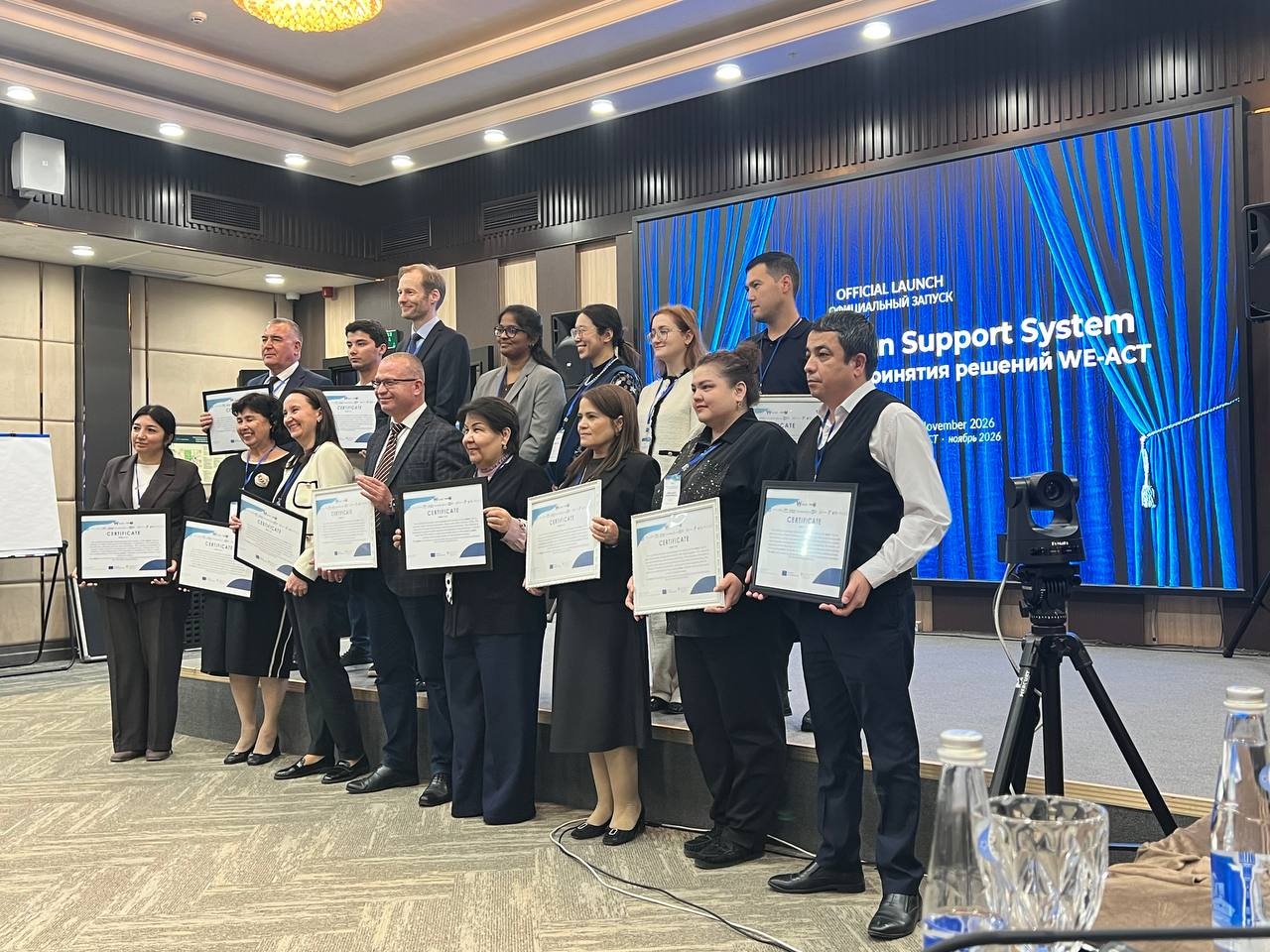
At the conclusion of the conference, all participating organizations, research and educational institutions, and universities received certificates granting access to the miraX software developed by HAEDES under the WE-ACT project. This will help ensure the continuity and long-term use of project results by making the tool available for practical water resources planning, scientific research, and professional training in the Syr Darya Basin countries beyond the project's completion.
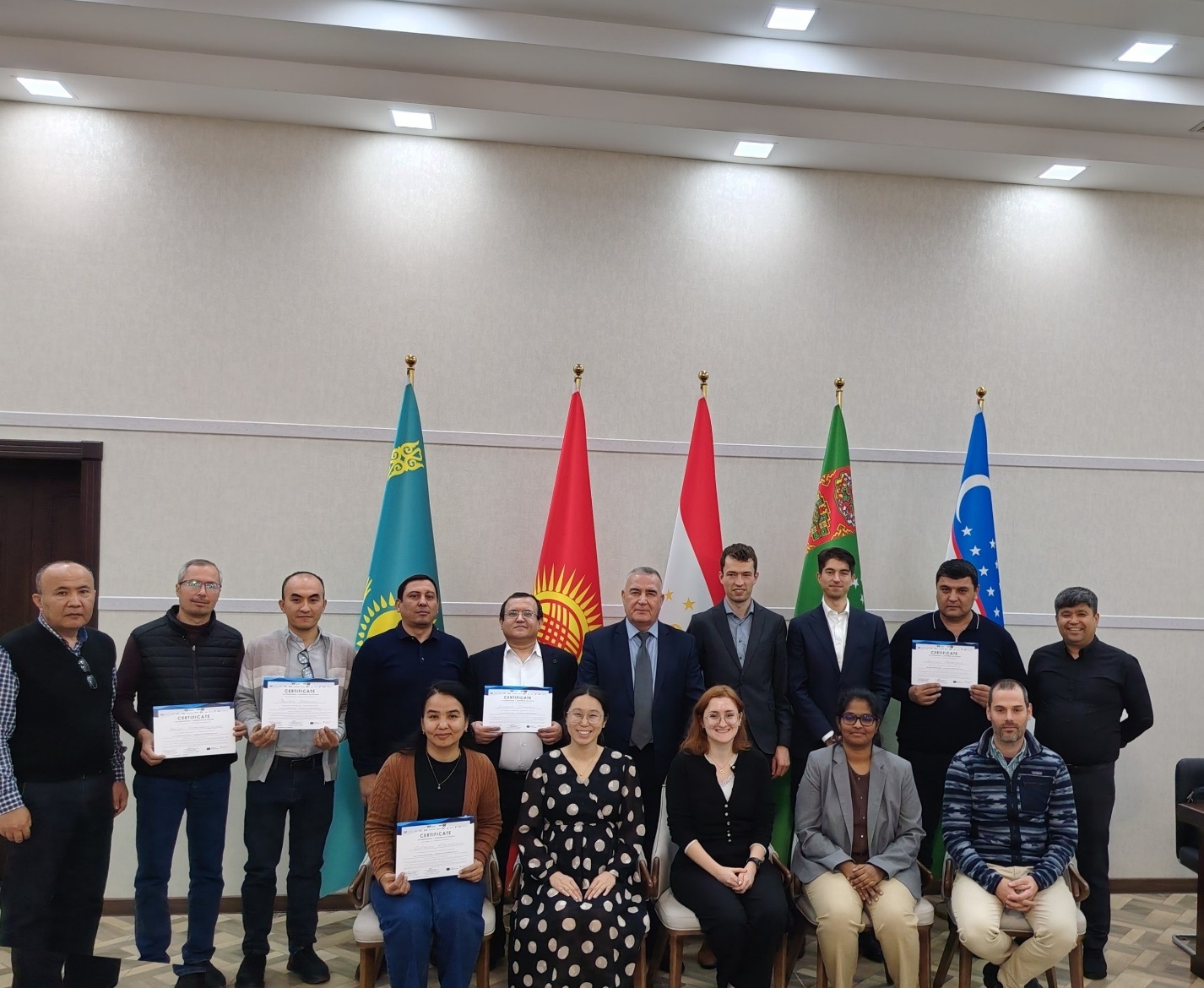
On 17 November, a practical training session was organized for specialists from BWO Syr Darya and SIC ICWC on the use of two digital tools developed under the project: the miraX DSS (developed by HAEDES) and the Lizard data management platform (developed by Nelen & Schuurmans).
Through hands-on exercises, participants gained practical experience in using both platforms and explored potential applications in the day-to-day activities of their organizations.
Following the discussions, SIC ICWC put forward two recommendations for the further development and application of the project's tools:
- Integrate the LEAP model into the miraX DSS to support integrated water-energy analysis and enable hydropower requirements to be taken into account when planning reservoir operation regimes. This proposal was supported by BWO Syr Darya.
- Extend the geographical coverage of the platform to the Amu Darya River Basin, thereby encompassing both major transboundary river basins of Central Asia.