
No. 130 (654) December 2025
5th Meeting of the Regional Working Group on Mutually Beneficial Water and Energy Mechanism
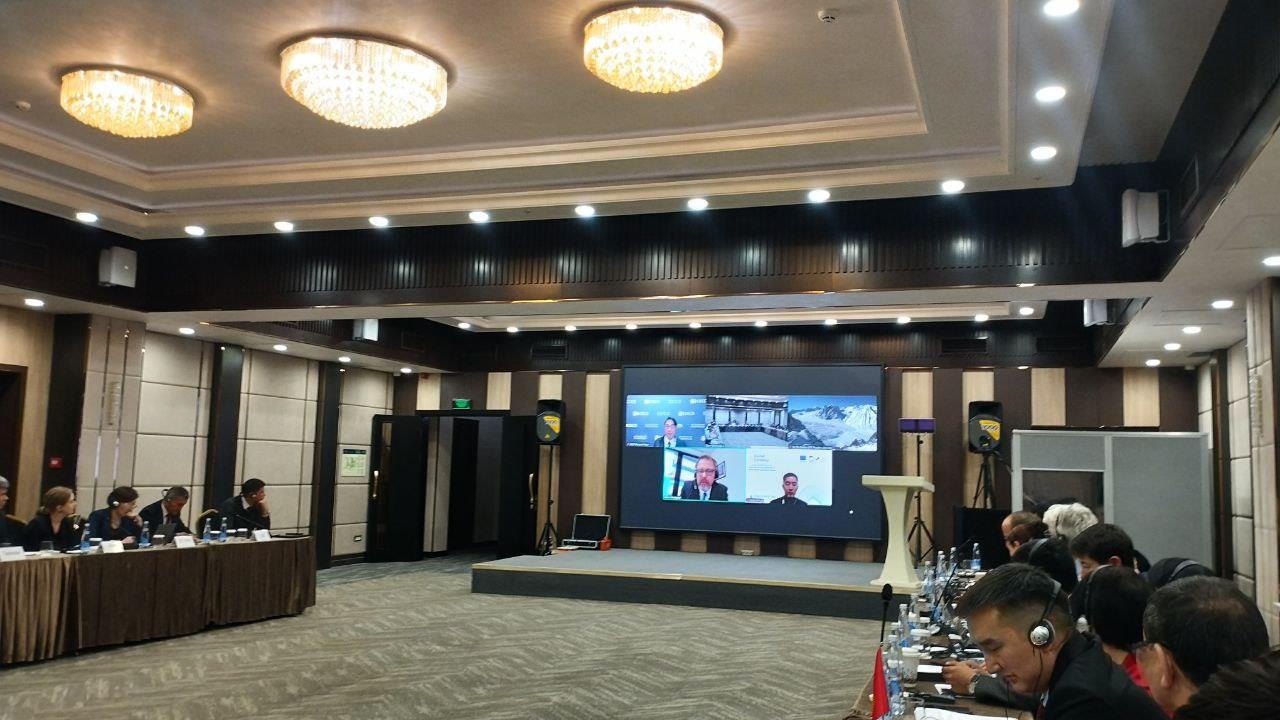
On 4 December, the 5th meeting of the Regional Working Group on the Development of a Mutually Beneficial Water and Energy Mechanism in Central Asia was held in Tashkent. The meeting was organized under the Green Central Asia initiative and the IKI project “Regional Mechanisms for a Low-Carbon and Climate-Resilient Transformation of Energy-Water-Land Nexus in Central Asia” implemented by OECD, SIC ICWC, and UNECE, with the financial support of the German Federal Ministry for Economic Cooperation and Development (BMZ). The Working Group aims to support dialogue among the Central Asian countries on opportunities for enhanced cooperation in effective and sustainable water and energy management.
The 5th meeting focused on reviewing existing models for water and energy coordination and assessing their potential to support practical decision-making. The event brought together representatives of Foreign Ministries and relevant agencies of Central Asian countries, EC IFAS, SIC ICWC, as well as international and regional partners including GIZ, UNECE, World Bank, ADB, Swiss Agency for Development and Cooperation (SDC), GFZ, PIK and others.
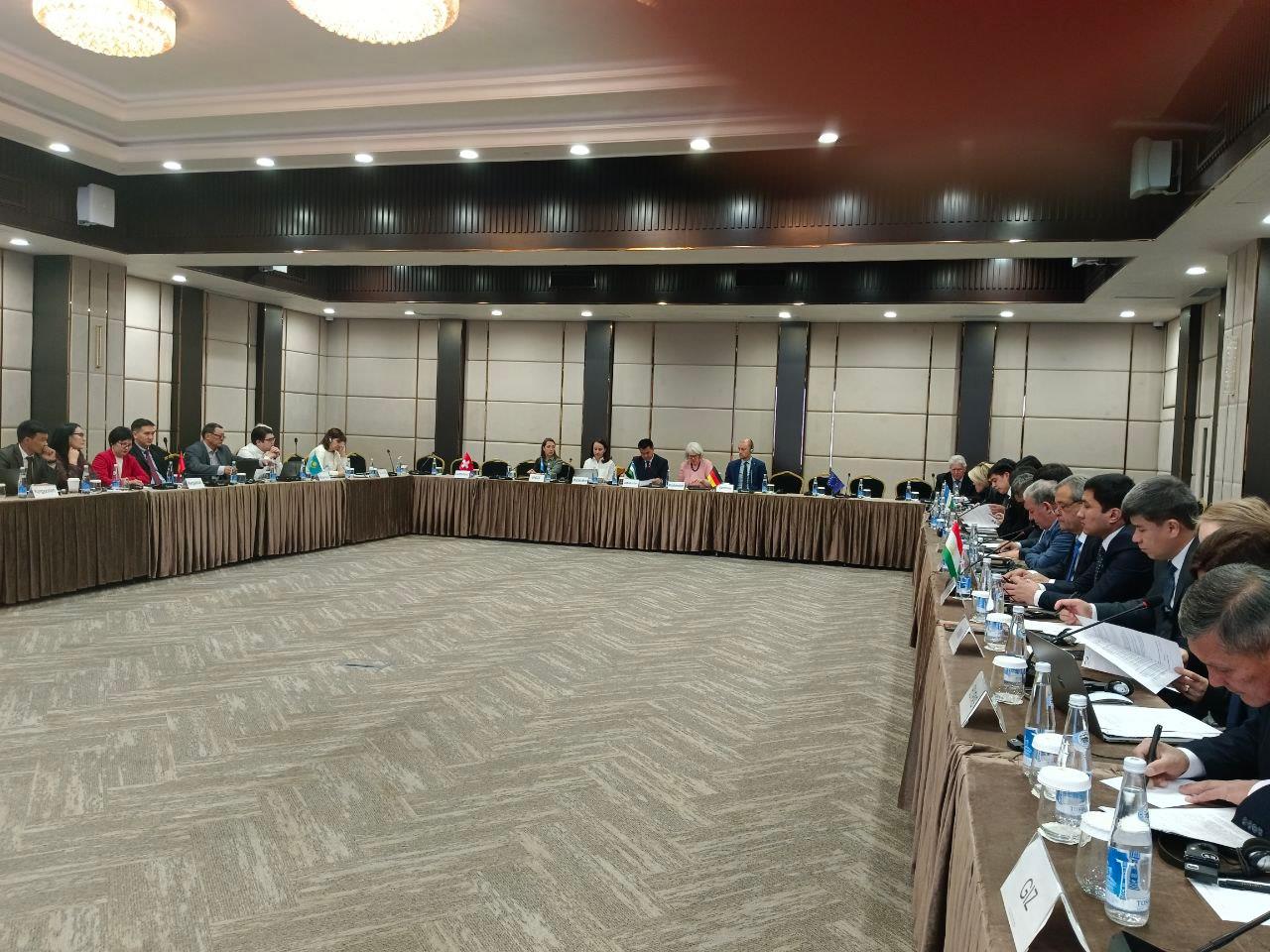
The key addressed topics included:
- country and regional organizations’ needs for models and tools (“needs–models” matrix);
- capabilities of existing models and tools to respond to these needs.
Delegation of SIC ICWC —comprising D. Ziganshina, A. Sorokin, L. Sychugova, and A. Galustyan—took part in the meeting.
SIC ICWC Director D. Ziganshina moderated key technical sessions on the use of modelling tools in support of decision-making on water and energy, the integration of climate into water–energy–economic modelling, and the development of sustainable regional energy systems. In her opening remarks, she emphasized the importance of aligning country requests with the capabilities of available analytical models/tools, as well as strengthening regional dialogue through enhanced transparency, data sharing, and common approaches.
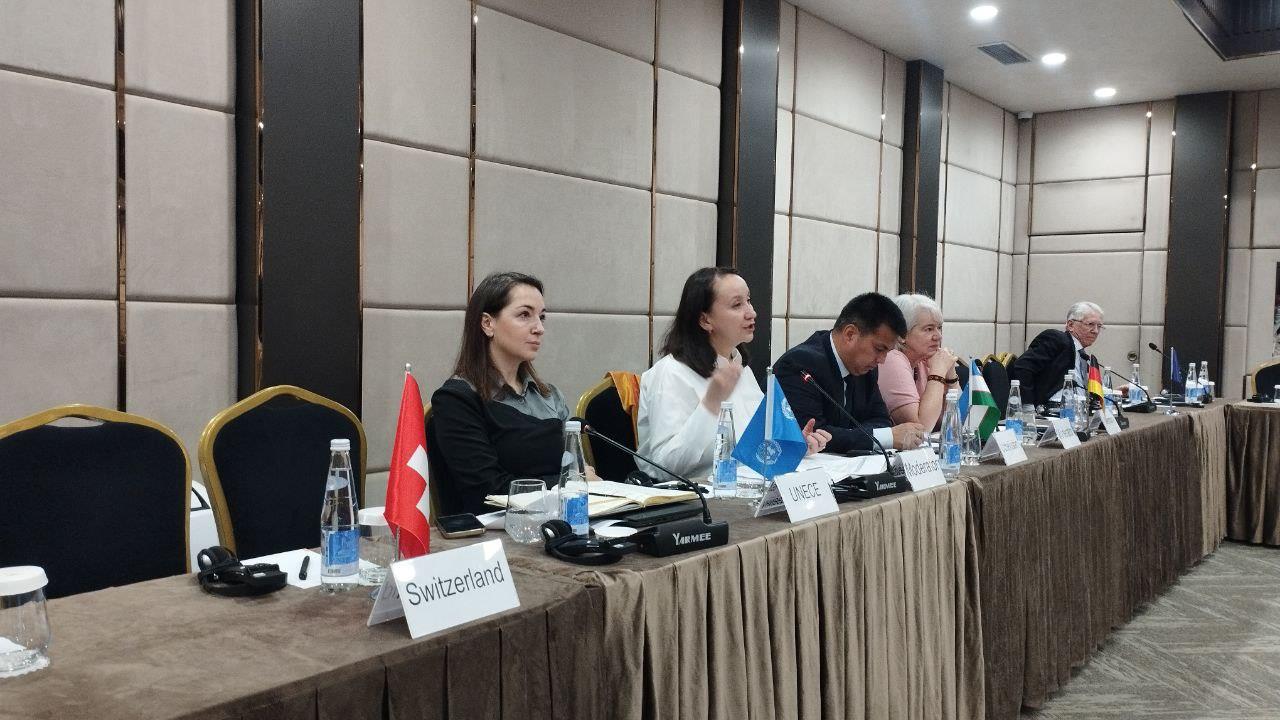
A. Sorokin, SIC ICWC leading expert, contributed to two sessions. At the session “Models’ contribution to water and energy”, he presented HPm-GAMS, CHPm, and WAm models designed to evaluate the benefits of regional water–energy cooperation. He demonstrated how these models can be used to analyze scenarios of flow, water consumption, and energy production, and outlined data requirements, outputs, limitations, and directions for further adaptation. The presented materials are based on the research conducted by SIC ICWC and national experts within the IKI project.
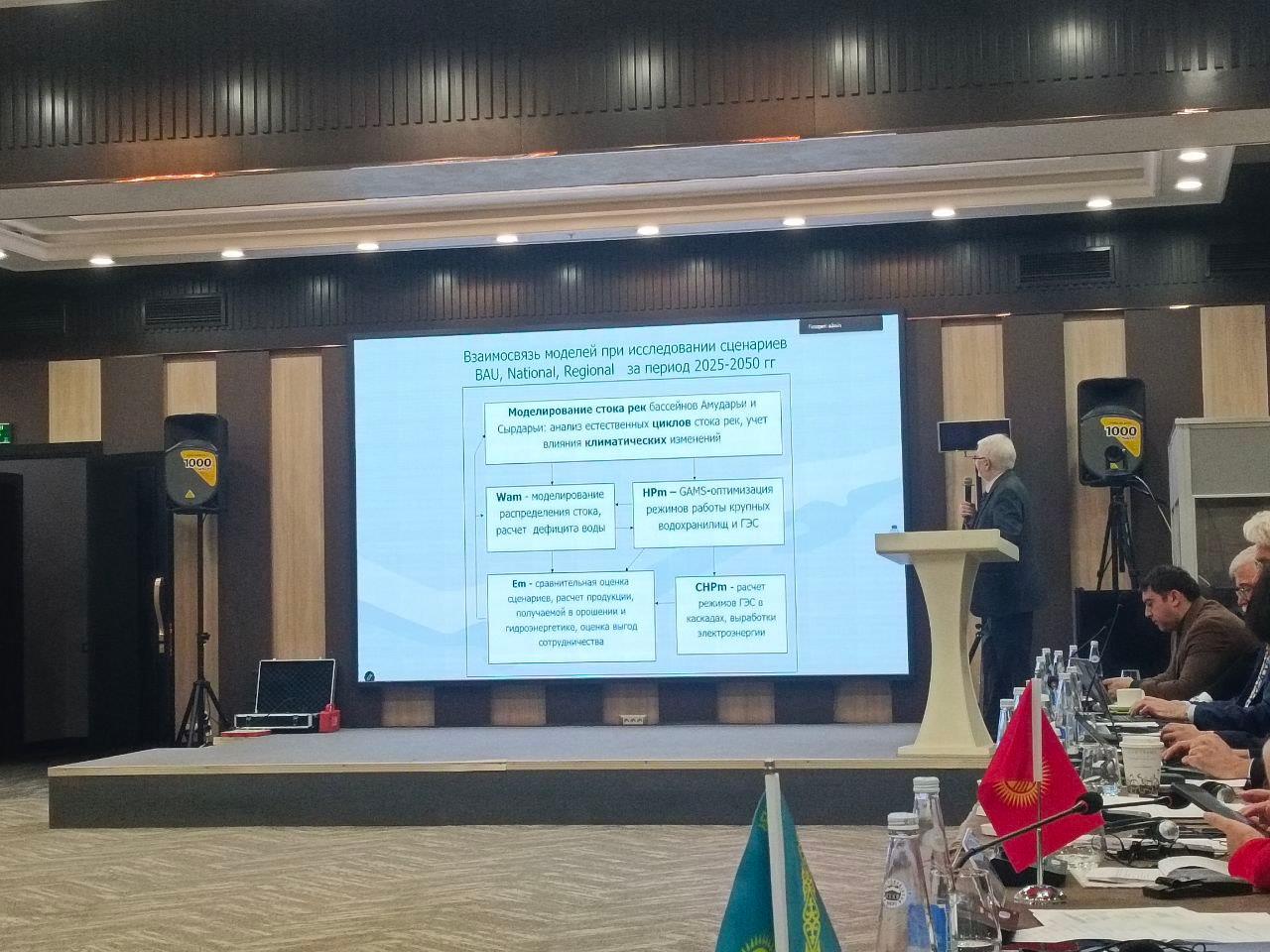
During the session “Studying integrated hydroeconomic modelling” Mr. Sorokin presented the Em model (IKI project), which assesses the economic effects of management decisions in the water–energy sectors. The model compares economic effects of various water-use options, takes climate factors into account, and supports cross-sectoral planning. His report included examples of integrating the Em model with climate and hydrological models developed by international partners, expanding potential of the former for regional analysis.
Participants were also introduced to: the World Bank’s integrated WEAP–LEAP model for water–energy scenario assessment and decision support; CDC “Energy” tools for analyzing energy regimes and optimizing resource use; the MODSNOW (GFZ) model for daily snow cover monitoring and river flow forecasting; the SWIM (PIK) model for short-term forecasting of water flow and volume; modelling approaches for sustainable energy system development presented by ADB, GIZ, and UNECE.
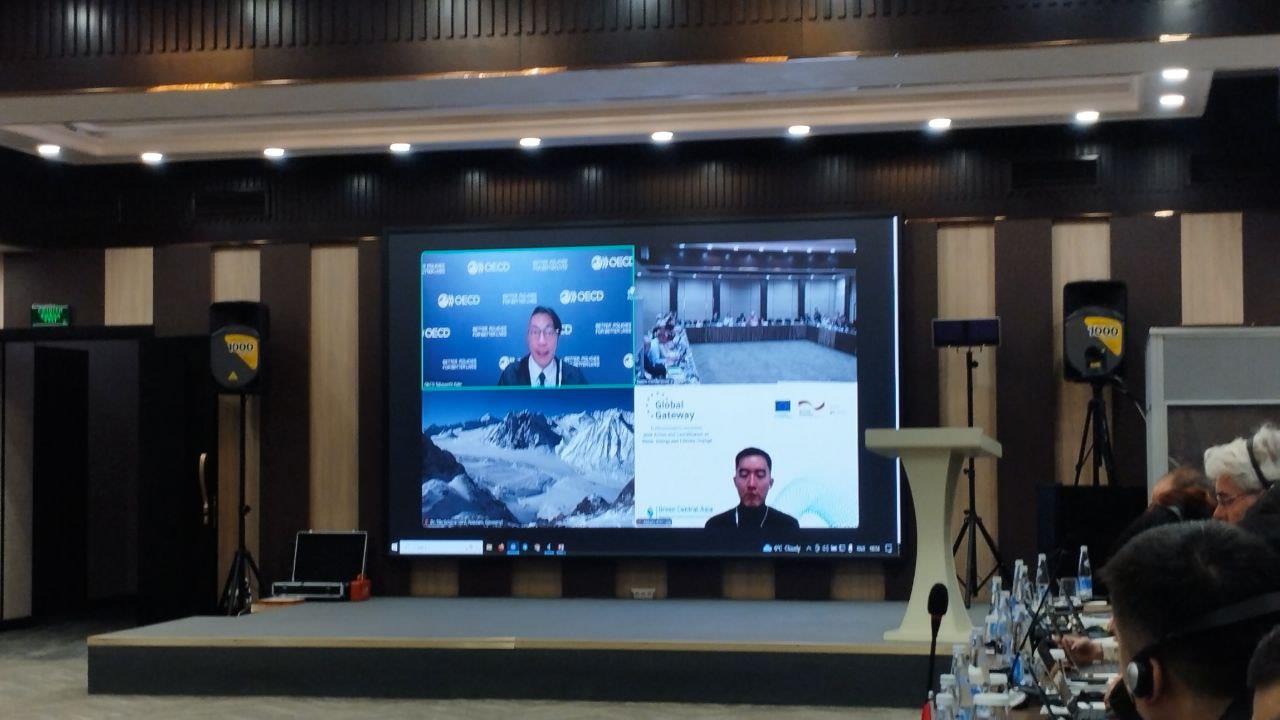
In conclusion, participants agreed on next areas of activity of the Working Group, including the agenda for the 6th meeting, which is scheduled to take place in May 2026 in Dushanbe.