
No. 134 (658) December 2025
Meeting of the Regional Working Group on Water Quality and the 8th Meeting of the Uzbek-Kazakh Working Group on Environmental Protection and Water Quality in the Syr Darya River Basin
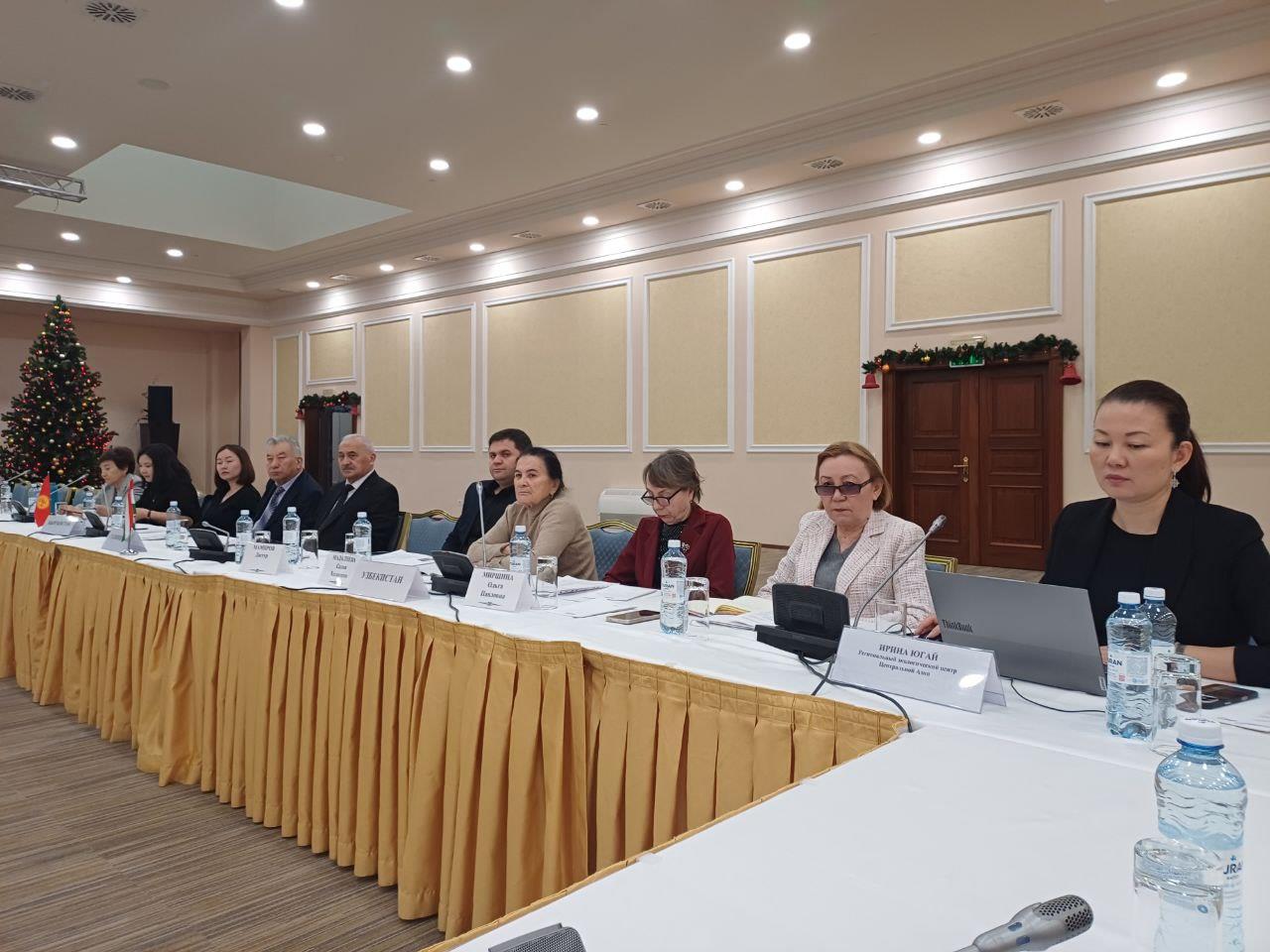
On 10–11 December, Astana hosted a meeting of the Regional Working Group on Water Quality (RWG-WQ) and the 8th meeting of the Uzbek-Kazakh Working Group on Environmental Protection and Water Quality in the Syr Darya River Basin.
Since 2019, RWG-WQ has been supported by the Blue Peace Central Asia Initiative (BPCA) funded by the Swiss Agency for Development and Cooperation (SDC). The new phase of the BPCA project (2025–2029), implemented by IWMI and IUCN in partnership with the Regional Environmental Centre for Central Asia (CAREC), aims to strengthen trust and cooperation among countries in the region.
Based on three key pillars, such as water diplomacy, innovative projects on small transboundary watercourses, and capacity building, BPCA promotes regional dialogue on joint water management, paying particular attention to transboundary water quality.
The first component, 'Water Diplomacy', aims to enhance transboundary water management in Central Asia through evidence-based policies and dialogue.
The meetings brought together representatives of authorized bodies responsible for environmental protection, water management and hydrometeorological services from Central Asian countries (Kazakhstan, Kyrgyzstan, Turkmenistan, Tajikistan and Uzbekistan), as well as representatives of universities (CoP4WASH), international partners and development organizations (UNECE, GIZ and FAO), and water quality and water diplomacy experts from the Blue Peace Central Asia project (IWMI, IUCN and CAREC).
The meeting aimed to discuss further development and capacity building of RWG-WQ to ensure alignment with regional interests and the priorities of the BPCA project. In this context, the strategic vision and action plan of RWG-WQ for 2026–2029 were discussed.
Participants discussed updates on water quality in the countries, ongoing projects and joint surface water monitoring initiatives, as well as progress in cross-border cooperation.
Mrs. Zulfiya Yarullina made a presentation on “Development of recommendations for updated regulations on classification and protection of surface water bodies in the Republic of Uzbekistan”, in which she shared the country's experience in updating and modernizing quality standards for water bodies.
As part of the meeting, a strategic vision for RWG was presented to international experts. This vision highlighted three thematic areas: methodology and monitoring of water quality; technologies and approaches that reduce pressure on water resources; and joint monitoring of surface water and groundwater, including 2026–2029 action plan.
Following the discussion, the first two points were adopted as a basis.
Experts also presented information on investments in municipal systems in Central Asian countries, a regional groundwater initiative and a protocol on water and health. Currently, two countries are parties to the protocol - Uzbekistan and Kazakhstan. The projects addressing agrochemical pollution were also presented.
In line with the agenda of the 8th meeting of the Uzbekistan-Kazakhstan Working Group on Environmental Protection and Water Quality of the Syr Darya River Basin (11 December), the parties exchanged on progress of the work plan adopted at the 7th meeting.
The discussions covered the assessment of joint quarterly water sampling conducted at four points along the Syr Darya River, as well as the inventory of sources of pollution of water bodies, including the Arys River and Toksansay collector in Kazakhstan, and Salar Canal and VZhD collector in Uzbekistan.
The reports highlighted that, alongside municipal and industrial wastewater, collector-drainage runoff continues to pose a significant challenge. Consequently, it was proposed that the study of the condition and management of collector-drainage systems be included in the work plan for 2026.

Overall, nine actions were fully completed out of 11 action points set for 2025, while the remaining two actions have been incorporated into the 2026 work plan with agreed deadlines.
It is also noteworthy that representatives of Kyrgyzstan and Tajikistan and, for the first time, experts from Turkmenistan participated in the meeting as observers.
The session concluded with the adoption of a draft protocol and the 2026 work plan of the Uzbek-Kazakh Working Group on Environmental Protection and Water Quality of the Syr Darya River Basin.