
No. 135 (659) December 2025
Field Work Continues in the Fergana Valley to Select Additional Experimental Plots and Assess Winter Wheat Under Various Irrigation Methods
From December 15 to 17, 2025, the team of the “Correction of hydromodule zoning of the Syr Darya River Basin using remote sensing data and satellite mapping technologies for correction of water consumption and irrigation regimes for agricultural crops cultivated in the region” Project organized another field trip to the study area of the Fergana Valley.
The project manager and expert from SIC ICWC, project executors, and representatives of the International Water Management Institute (IWMI), the Ministry of Agriculture of the Republic of Uzbekistan, water management organizations and farms of three provinces took part in this field trip.
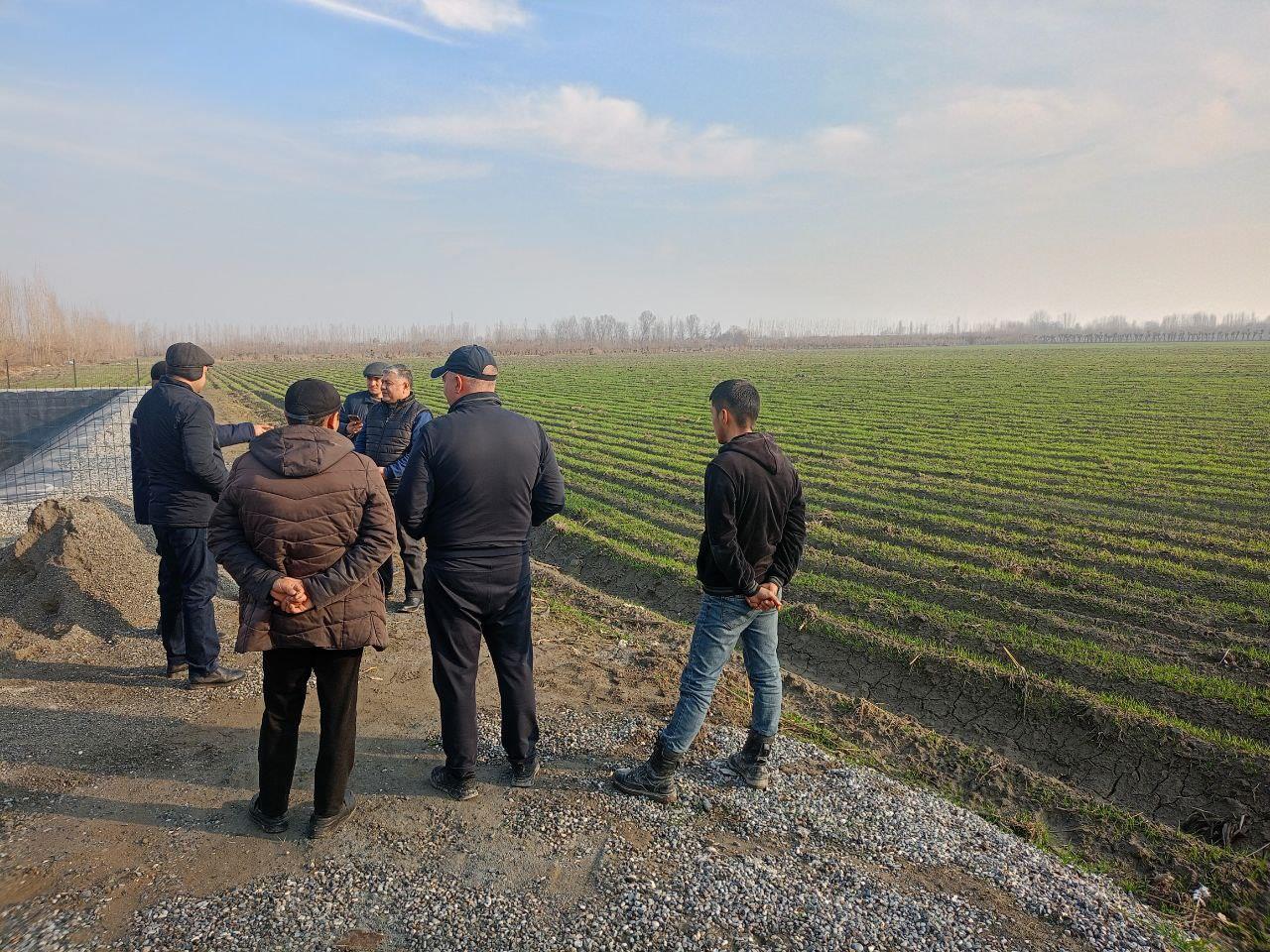
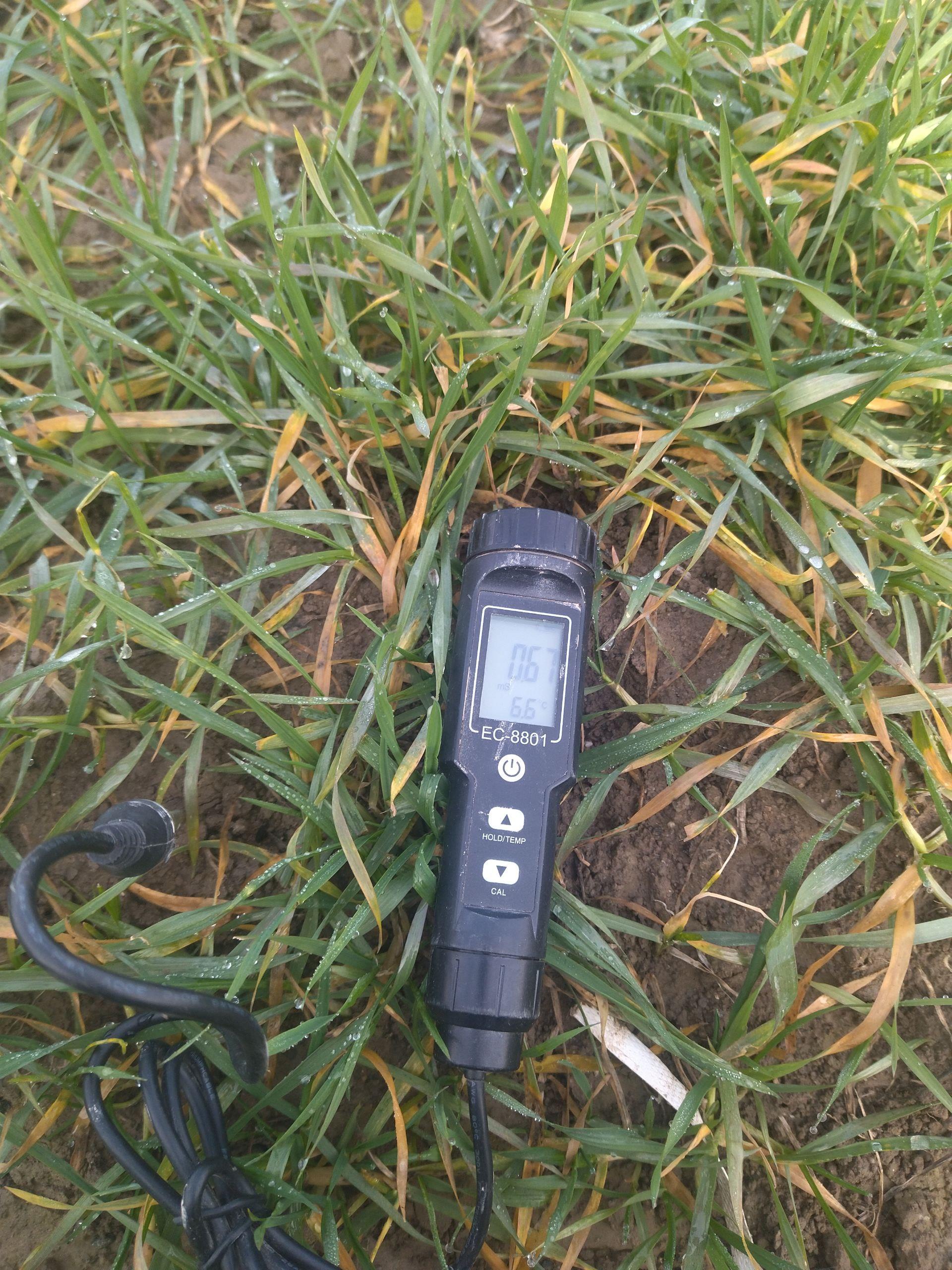
Detailed phenological survey of early stages of winter wheat development was conducted during the fieldwork. Particular attention was paid to crop growth and development under different irrigation methods. In addition, soil salinity measurements were taken, using the electrical conductivity indicator.
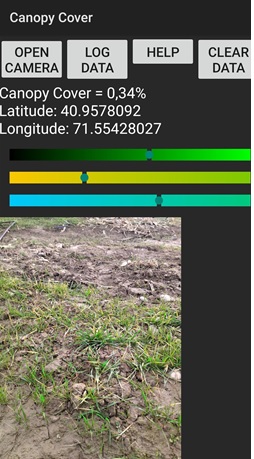
As part of the visit, the team selected additional experimental irrigated plots, where modern water-saving technologies are adopted to ensure more efficient water use. Thus, seven new plots were added to the existing set of fourteen experimental plots that currently use traditional furrow irrigation. Among the newly selected plots, two are irrigated by drip and four by sprinkling systems.
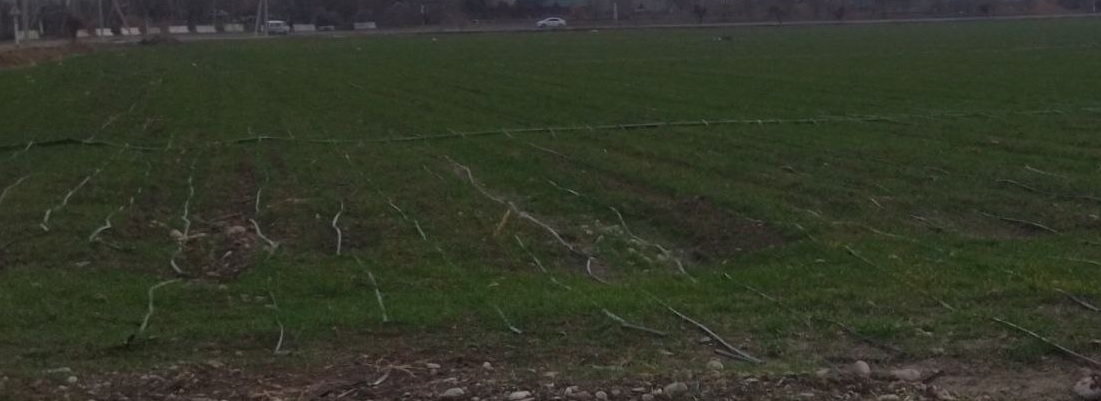
Winter wheat, 7.4 ha – drip irrigation, land plot of Musaffo Iklim Trans Service farm, Namangan district, Namangan province.
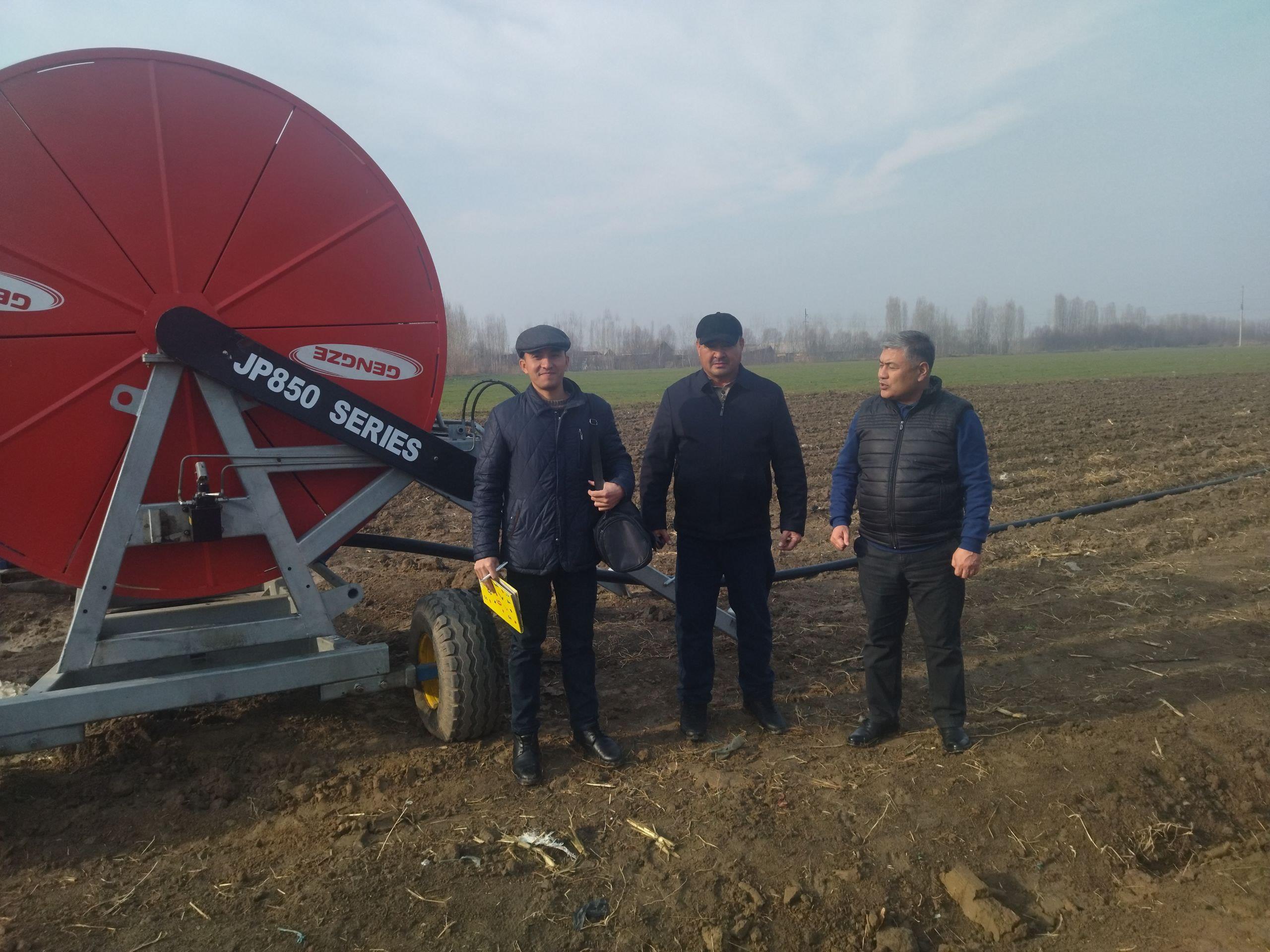
Winter wheat, 15 ha – mobile sprinkler irrigation, land plot of Oltin Zamin Sabzavotlari farm, Asaka district, Andijan province.
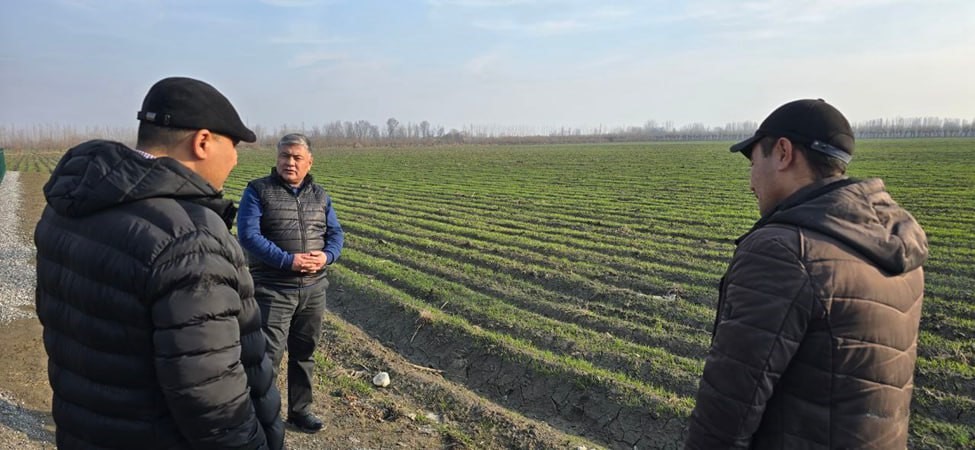
Wheat field, 19 ha (two plots of 7 and 12 ha) – sprinkler irrigation, land plots of Aminjon Buva farm, Tashlak district, Fergana province.
These experimental plots are particularly important for accurate accounting of actual water delivery and for refining and adjusting irrigation regimes, based on local climatic conditions, soil characteristics, and agronomic practices. The collected data will help to improve water management and enhance crop resilience to water stress.
In addition, as part of the project, local executors received one computer and one GPS navigator each to arrange effective fieldwork, facilitate data collection, and ensure accurate georeferencing of phenological observation sites on experimental irrigated plots in the Fergana Valley.