
No. 43 (704) May 2026
The SIC ICWC Co-Organized the Dialogue on Transboundary Waters in Dushanbe
On May 23, 2026, a Dialogue on Transboundary Waters titled “International Law and Solutions to Regional Water Challenges: Focus on Central Asia” was held in Dushanbe. The event took place at the Academy of Public Administration under the President of the Republic of Tajikistan as part of the Blue Peace Central Asia initiative. It brought together representatives of basin organizations, national agencies, as well as academic and expert communities from across the region.
The SIC ICWC served as one of the co-organizers of the Dialogue, with support from the IKI project “Regional Mechanism for a Low-Carbon and Climate -Resilient Transformation of the Energy-Water-Land Nexus in Central Asia (IKI-Nexus) The Center also played an active role in shaping the substantive program of the event.
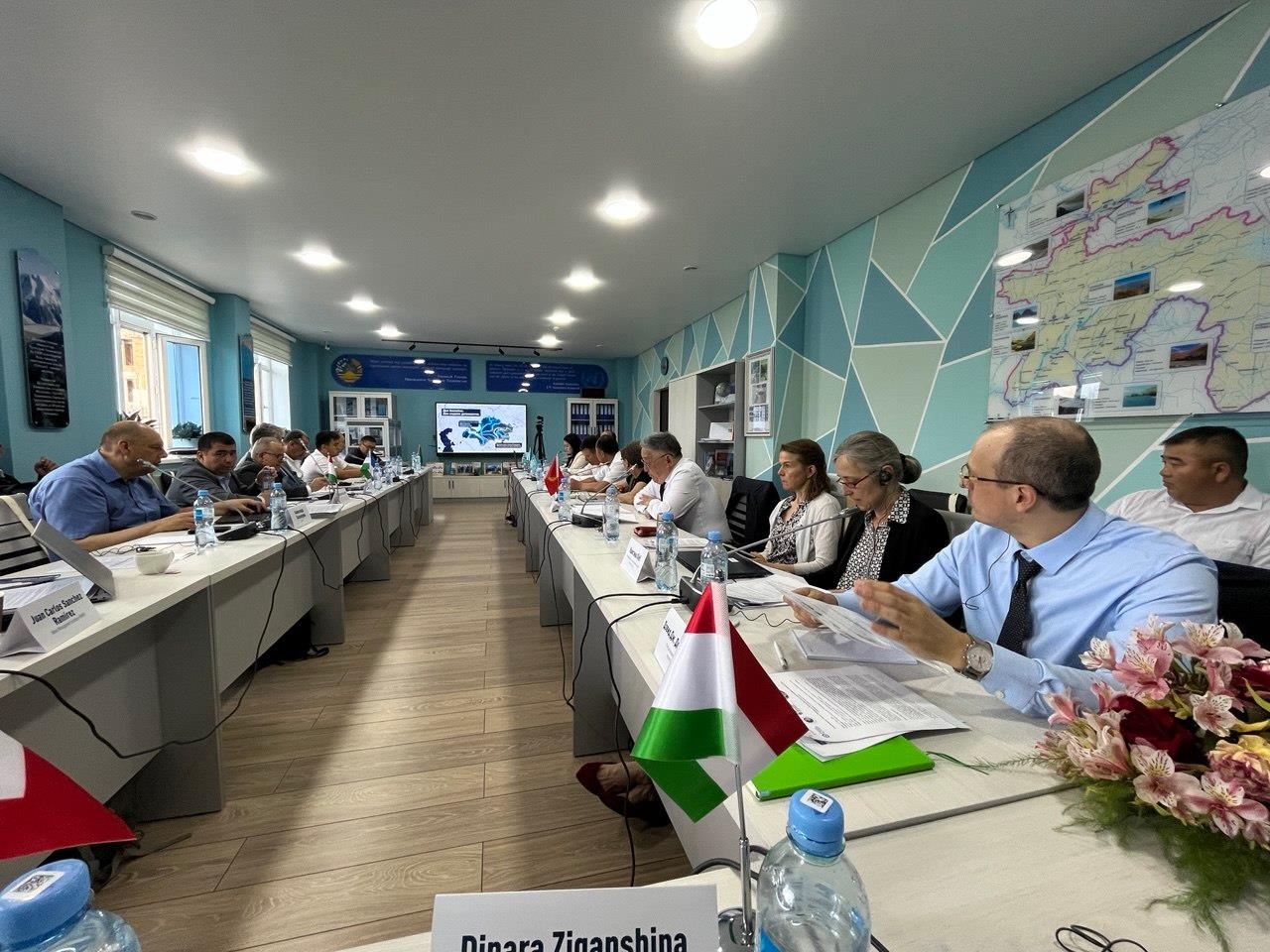
During the session on freshwater systems in international water law and multilateral environmental agreements, D. Ziganshina presented a report on surface water management from the perspective of international law. The presentation addressed key principles such as equitable and reasonable use, prevention of significant harm, data exchange, notification and consultation procedures, environmental impact assessment, ecosystem protection, and the role of joint institutions.
Particular attention was given to the understanding that surface waters—including rivers, tributaries, lakes, wetlands, floodplains, and deltas—function as interconnected hydrological systems. In this context, international law was presented as a practical tool for fostering a sustainable culture of interstate cooperation, reconciling interests, supporting informed decision-making, and preventing disputes.
The SIC ICWC also presented publications based on the results of a study of the Amu Darya River basin ecosystems, conducted with support from GIZ as part of the basin dialogues. In particular, the materials provide detailed information on the participating countries’ implementation of multilateral environmental agreements, the conservation of wetlands, and the development of specially protected natural areas as key elements of sustainable transboundary basin management.
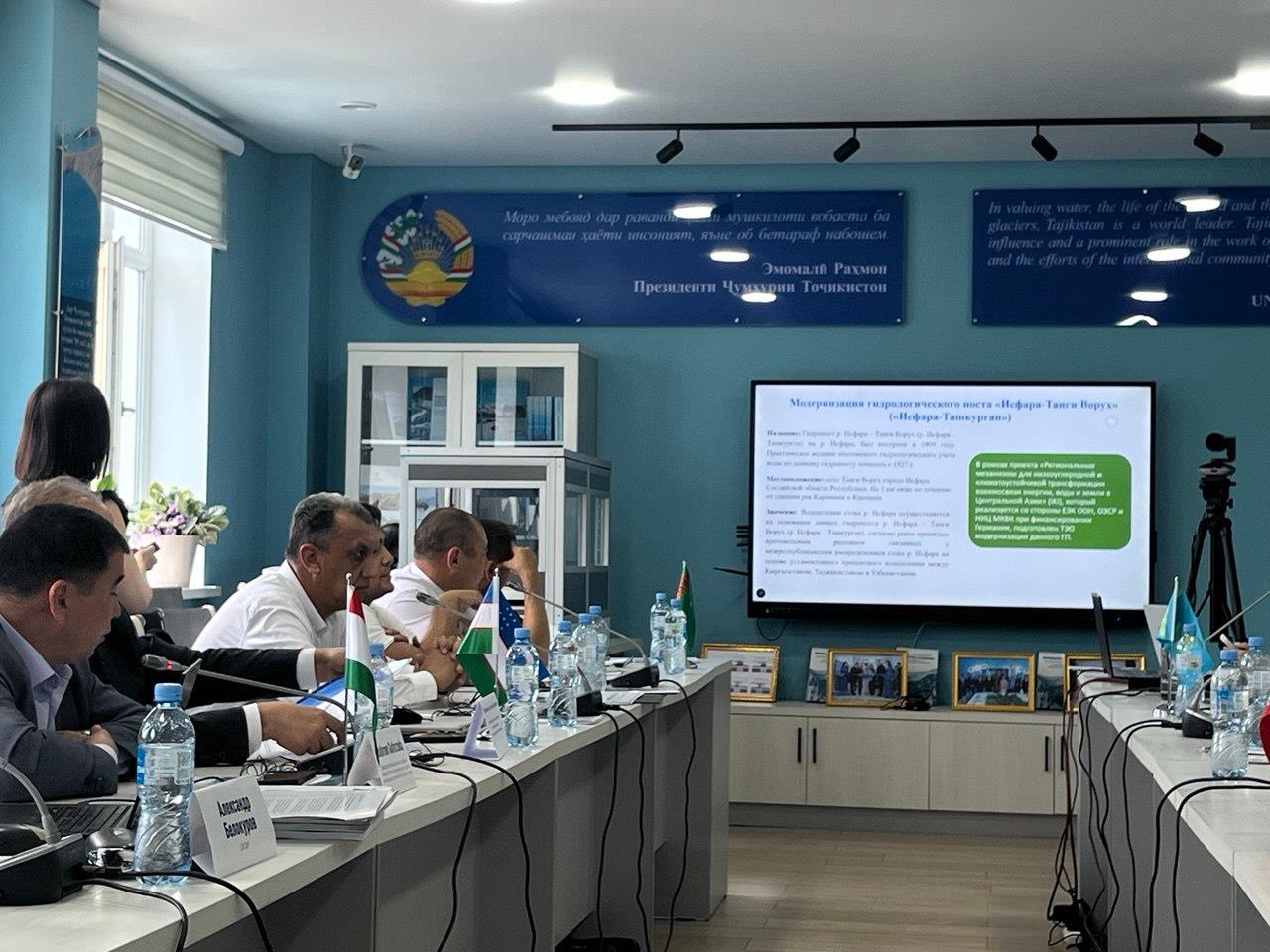
During the second session, regional examples of the practical implementation of transboundary water cooperation were presented. In particular, Bakhrom Gaforzoda, Head of the Secretariat of the National Commission on Irrigation and Drainage under the Agency for Land Reclamation and Irrigation of the Government of the Republic of Tajikistan, delivered a presentation on the development and modernization of water management infrastructure. Among other topics, he discussed the feasibility study prepared for the Vangi–Torukh project (Isfara River), which was carried out with support from the IKI-Nexus project, highlighting the importance of such studies in enhancing the sustainability and efficiency of water management infrastructure.
The Dialogue also featured regional case studies on the development and modernization of water management infrastructure, the protection of mountain ecosystems, the prevention of land degradation, and issues related to groundwater. Following the discussions, participants emphasized the need to further strengthen the practical knowledge and skills of basin-level specialists.
In particular, representatives of basin authorities expressed interest in additional training sessions on a wide range of practical water management and cooperation topics, including hydrometry, data exchange, monitoring, and water resources assessment.
The SIC ICWC reaffirmed its commitment to continue facilitating expert dialogue, strengthening the capacity of basin organizations, and promoting practical tools of international water law for the sustainable management of shared water resources in Central Asia.
More about the IKI-Nexus project
More about the GIZ project