
No. 121 (782) November 2026
SIC ICWC Took Part in the Fourth Meeting of the Amu Darya and Syr Darya Basin Dialogues
On November 10, 2026, representatives of SIC ICWC participated in the Fourth Meeting of the Amu Darya and Syr Darya Basin Dialogues held in Tashkent as part of the regional program “Climate-Sensitive Water Resources Management in Central Asia.”
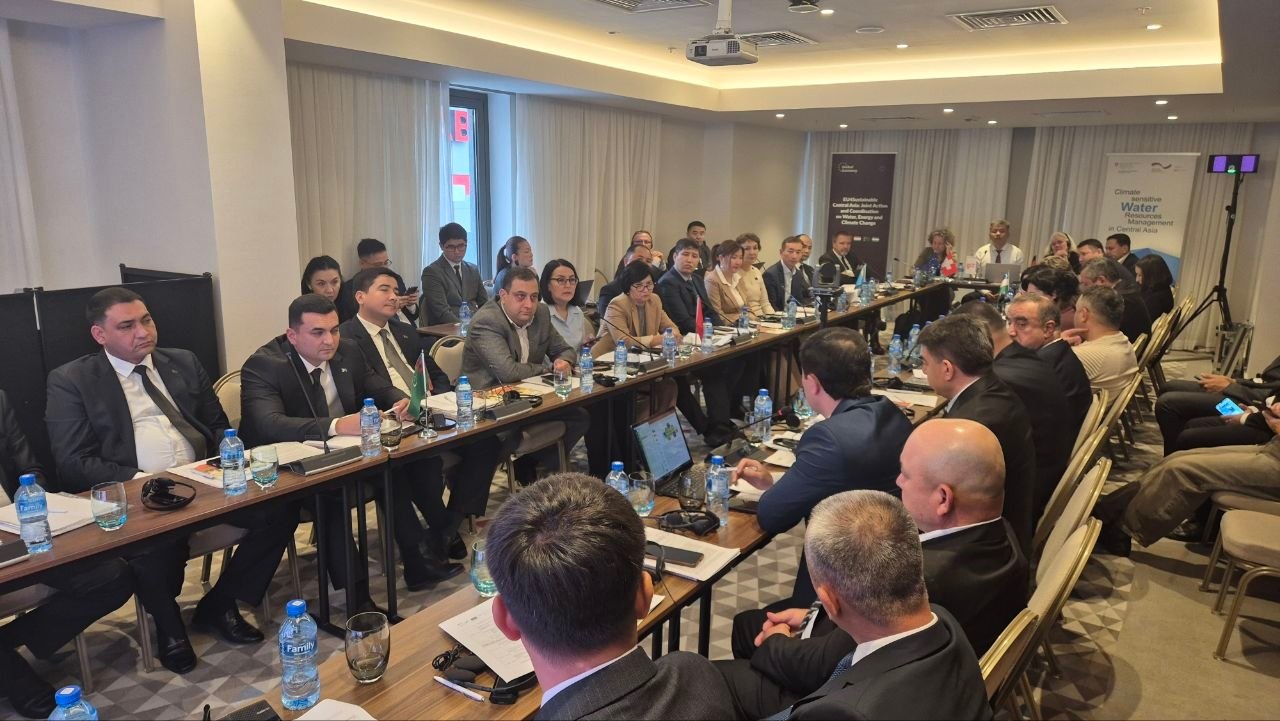
Organized with support from the Deutsche Gesellschaft für Internationale Zusammenarbeit (GIZ) under the Green Central Asia initiative, the meeting brought together representatives of national water authorities, regional organizations, and international partners. Discussions focused on strengthening regional water cooperation, adapting water infrastructure to climate change, and improving economic mechanisms of water management.
At the meeting, SIC ICWC presented the findings of two analytical studies conducted in cooperation with national experts from the region. For the Syr Darya River Basin, Alexander Dolidudko presented the study “Climate Resilience of Water Infrastructure in the Syr Darya River Basin: A Nexus Approach.”
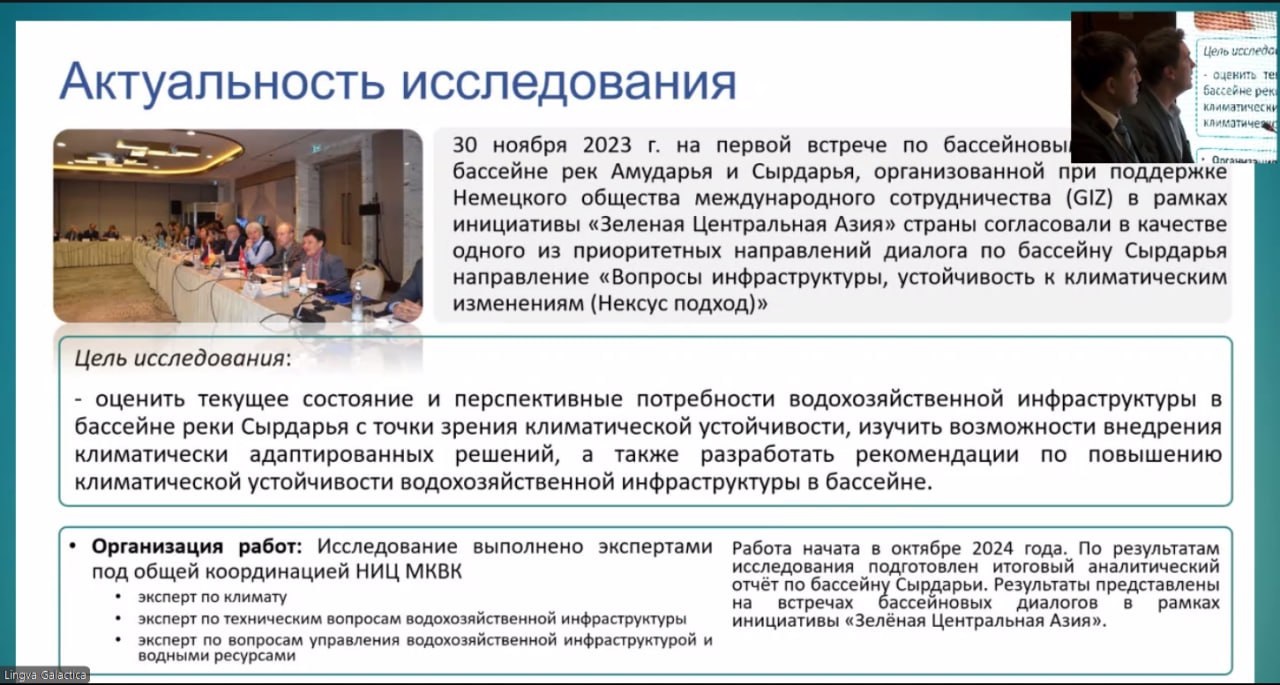
The study assessed the current condition of basin water infrastructure, analyzed climate risks, and identified future modernization needs under projected climate change. It covered infrastructure in four basin countries: Kazakhstan, the Kyrgyz Republic, Tajikistan, and Uzbekistan.
The analysis examined temperature and precipitation trends, climate projections, the technical condition of hydraulic structures, experience in modernizing major facilities, and reservoir cascade management. Particular attention was paid to droughts, floods, mudflows, shifts in seasonal river runoff, and infrastructure deterioration.
Based on the findings, recommendations were developed to strengthen the climate resilience of water infrastructure. They include integrating climate assessments at all stages of the investment cycle, improving technical standards and operating rules for hydraulic structures, strengthening monitoring and data exchange, coordinating reservoir operations, and securing financing throughout the infrastructure life cycle.
For the Amu Darya River Basin, SIC ICWC Director Dinara Ziganshina presented the study “Economic Mechanisms for Enhancing Water Management Efficiency in the Amu Darya River Basin.”
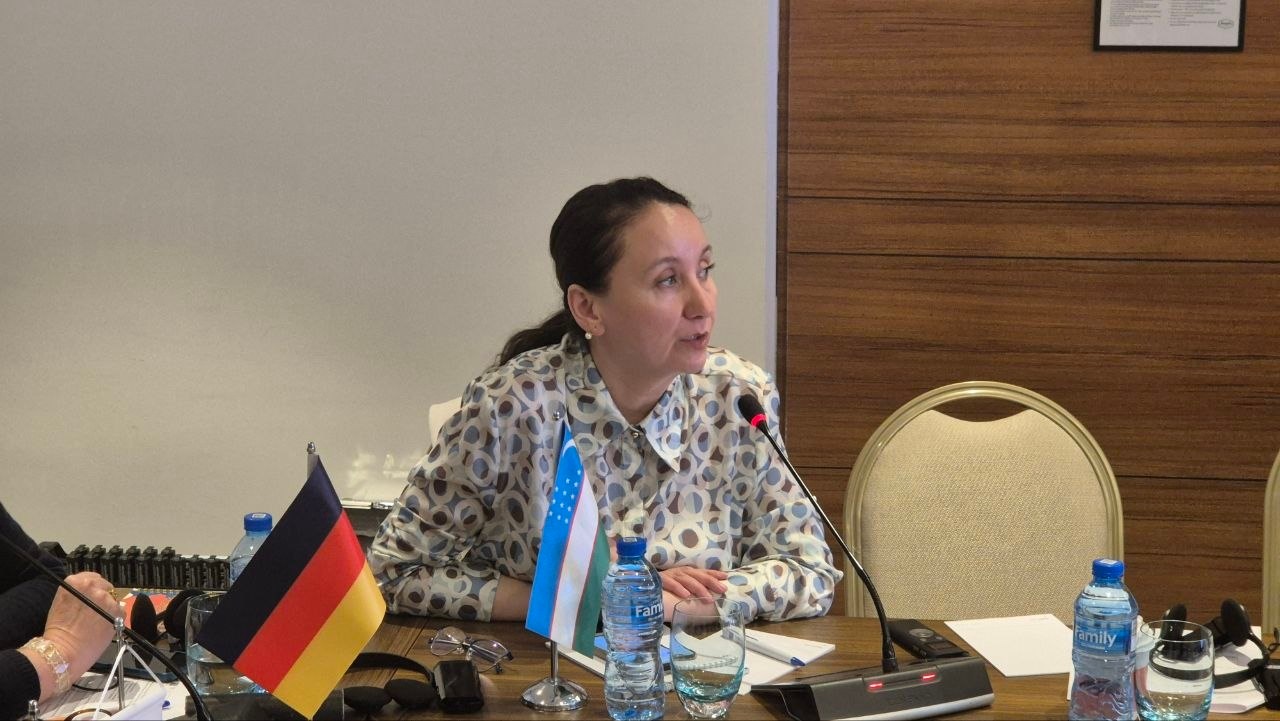
Covering Kyrgyzstan, Tajikistan, Turkmenistan, and Uzbekistan, the study assessed existing economic instruments in the water sector, including tariffs and water service charges, subsidies, concessional lending, tax mechanisms, and contractual arrangements among water management stakeholders. It focused primarily on irrigated agriculture, the basin's largest water user.
The study compared national water sector financing systems, water allocation mechanisms, water delivery arrangements, incentives for water conservation, and private sector participation in infrastructure management.
A key finding was that economic instruments alone do not guarantee more efficient water use. Their effectiveness depends on three interrelated conditions: adequate authority and resources, meaningful economic incentives to change behavior, and reliable measurement of results. Accurate water accounting is particularly important for linking payments to actual consumption and verifying water savings.
The study identified priorities for improving national mechanisms and strengthening basin cooperation. These include greater transparency in water accounting and allocation, sustainable financing for infrastructure operation, improved contractual relations between water suppliers and users, and joint approaches to assessing investment effectiveness and water savings.
The two studies provided a basis for discussing practical measures to strengthen water system resilience and improve water management in Central Asia's two largest river basins. Their findings also offer analytical support for continued cooperation among the countries under the agreed priorities of the basin dialogues.
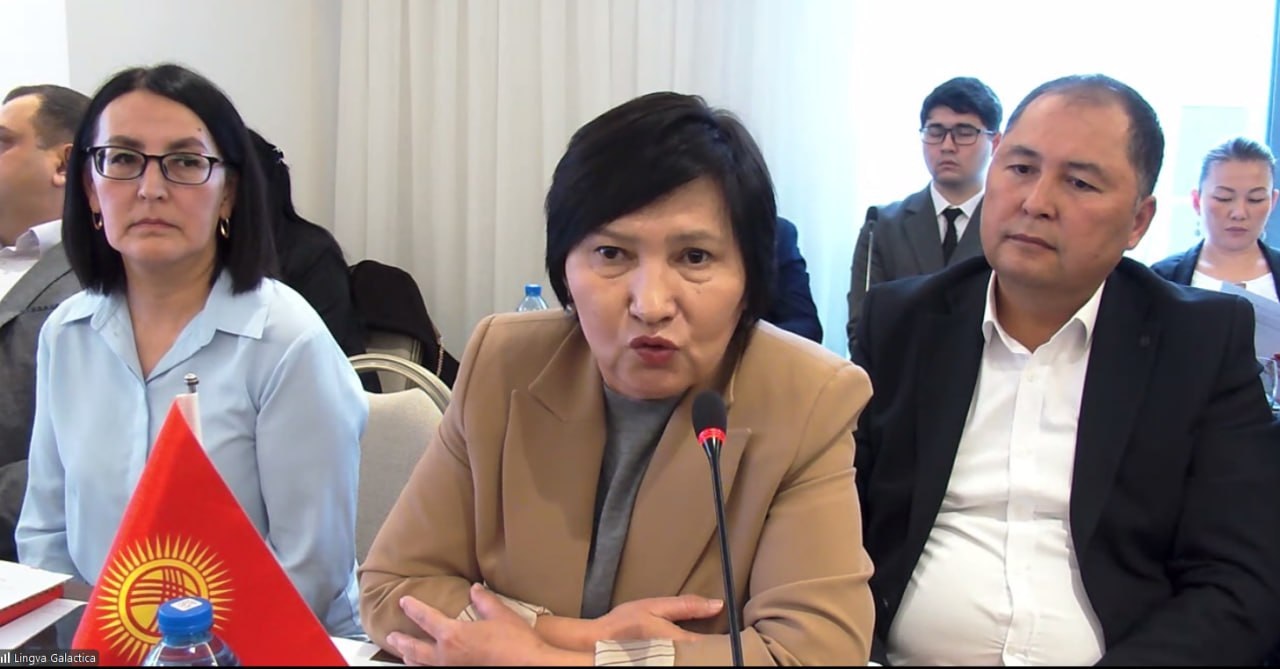
Beyond the SIC ICWC presentations, the meeting featured exchanges on water monitoring, flood protection and hydraulic structure safety, national water information systems, and initiatives to engage young people in water management and environmental issues.
SIC ICWC's participation in the basin dialogues reaffirmed its role in providing expert and analytical support for regional cooperation, developing evidence-based recommendations, and promoting integrated water management in response to climate change in Central Asia.
More information about the studies is available here.